
Is a heat pump enough for winter in Columbus, GA

Hand it over

Winters in Columbus stay mild, and most homes here already heat with electricity, so a heat pump fits the climate. Whether yours is sized right, holds its charge, and still runs efficiently after however many winters it's seen is a different question, and not one you can answer by guessing. If you're weighing a new install or wondering whether the one you have is still the right call for this area, the next step is getting someone qualified to look at your home and your equipment. You could spend the afternoon calling around Muscogee County, explaining your system to one contractor after another, and stacking up quotes to compare. Or you could send this form once and let that legwork land on someone else. A licensed installer gets your details and reaches out, and from there the sorting out is theirs to do, not yours.

Will my heat pump keep up in winter here in Columbus, GA?

You've got a heat pump and you're wondering if it can actually handle a Columbus winter, or if you'll be reaching for a space heater come January. It's a fair question. Heat pumps lose some of their punch as the outdoor temperature drops, and that makes people nervous, especially if they've heard stories about heat pumps struggling up north.

Yes, a heat pump handles winter here fine

A heat pump loses efficiency as the temperature outside drops, but winters in Muscogee County rarely push it to that point. Nights here dip into the 30s and occasionally the 20s, not the single digits that force a heat pump into constant backup heat. The unit pulls heat from outside air even when it's cold, and in this climate it stays well within its working range most of the winter. What matters more than the climate is the equipment itself: whether it was sized for your house, whether it still holds its refrigerant charge, and whether age has worn down its output. A heat pump that's right for Columbus can carry a home through winter without leaning on backup heat strips.

  1. The system pulls heat out of the outside air, even when it's cold.

  2. A reversing valve switches the flow from cooling mode to heating mode.

  3. Refrigerant carries that heat inside and releases it through the indoor coil.

  4. Below about 35 degrees, backup electric strip heat kicks in to help.

What does a Columbus winter actually ask of your heat pump?

  • Winter nights average 37°F

    37°F is where a heat pump still works fine on its own, before backup heat has much reason to kick in on most nights.

  • Heat runs November through March

    Five months of run time means November through March is when a weak capacitor or low charge finally shows itself.

  • Cooling runs May through September

    Five months of cooling the rest of the year means the system gets little rest either way, so both sides of it matter.

NOAA nClimDiv 1991-2020

When the heat pump alone is enough

Most nights in Columbus sit well above where a heat pump struggles. The system pulls heat from the outside air and moves it inside without help, and on a typical January night here that's all it needs to do. Your energy bill stays lower this way, since backup heat costs more to run than the compressor alone. If your unit is sized right for your house and the refrigerant charge is where it should be, it can carry most of the winter on its own, with backup heat stepping in only on the coldest mornings.


When backup heat has to carry it

A hard freeze or a run of nights in the 20s asks more of the system than the outside air can give it. That's when backup heat, usually electric resistance coils, kicks in to make up the difference. It costs more to run than the heat pump alone, so a few cold snaps show up on the bill. If backup heat is running on mild nights too, something's off, a weak capacitor, low refrigerant, or a thermostat set wrong, and it's worth having that checked before the next cold stretch.

An older man with gray hair in a navy quarter-zip fleece reclines on a light upholstered sofa with his eyes closed, beside a potted plant and large sunlit windows.
A woman in a cream knit sweater sits with eyes closed in an armchair beside an open window showing orange and yellow autumn foliage, with a mug and books on a small side table.

You notice it in pieces before you notice it all at once. The bedroom at the end of the hall stays a few degrees cooler than the rest of the house. The system runs longer than it used to, and it doesn't quite catch up on the coldest mornings. The electric bill in January climbs past what you remember from last year, and nothing else in the house changed. Any of these on its own could be nothing. Together, they usually mean the heat pump is working harder than it should to do the same job. A unit that's the right size, holds its charge, and defrosts the way it's supposed to will heat the house evenly and hand off to backup heat only when it actually needs to. When something's off, the backup strip ends up carrying weight the heat pump should be carrying, and that cost shows up on the bill before it shows up anywhere else. The thermostat settings matter here too. The wrong setup can call for backup heat on nights when the heat pump alone would've handled it fine.

What a struggling system looks like

  • A system that's too small for your house will run constantly on the coldest mornings and still fall short of the thermostat setting.
  • If the backup heat strip is doing more work than it should, your electric bill in January will show it.
  • A heat pump low on refrigerant works harder to reach the same temperature, and that shows up as longer run times.
  • An outdoor unit that's iced over and not defrosting properly will blow cold air until the problem is fixed.
  • A thermostat set wrong for your system can call for backup heat on nights when the heat pump alone would've been enough.
  • Rooms farthest from the indoor unit are often the first place you'll notice if the system is struggling to keep up.
A man in a green sweater reclines in an armchair with his eyes closed and a slight smile, beside a window with plants, a small table holding a mug and folded newspaper, and bookshelves behind him.
A man in a gray sweater leans back with closed eyes in a brown leather armchair beside a wooden side table holding a dark mug and a folded newspaper, with bookshelves and a window seat behind him.
A man with greying hair and a dark sweater leans back on an armchair with his eyes closed and a slight smile, in a living room with a bookshelf, plant, folded newspaper and mug on a wooden table.
A man in a gray sweater reclines in a brown leather armchair with his eyes closed, beside a wooden side table holding a mug, a folded newspaper and a potted plant, with a bookshelf and sunlit window behind him.

28°F

That's about the typical low on a cold January night in Columbus. A properly sized heat pump still pulls heat from air that cold without strain.

Describe it once

One coil, year round

The same outdoor coil that cools your house in July has to pull heat from the air in January. A dirty or damaged coil costs you in both seasons.

Describe it once
An outdoor air conditioner condenser unit on a concrete pad beside a light gray vinyl-sided house, with an electrical disconnect box and conduit on the wall and bare soil in the foreground.
Before you get your heat pump installation
A gray outdoor condenser unit on a concrete pad beside a house with horizontal lap siding, connected by conduit and lines to a wall-mounted disconnect box, with a shrub and gravel bed to the left.
After you get your heat pump installation
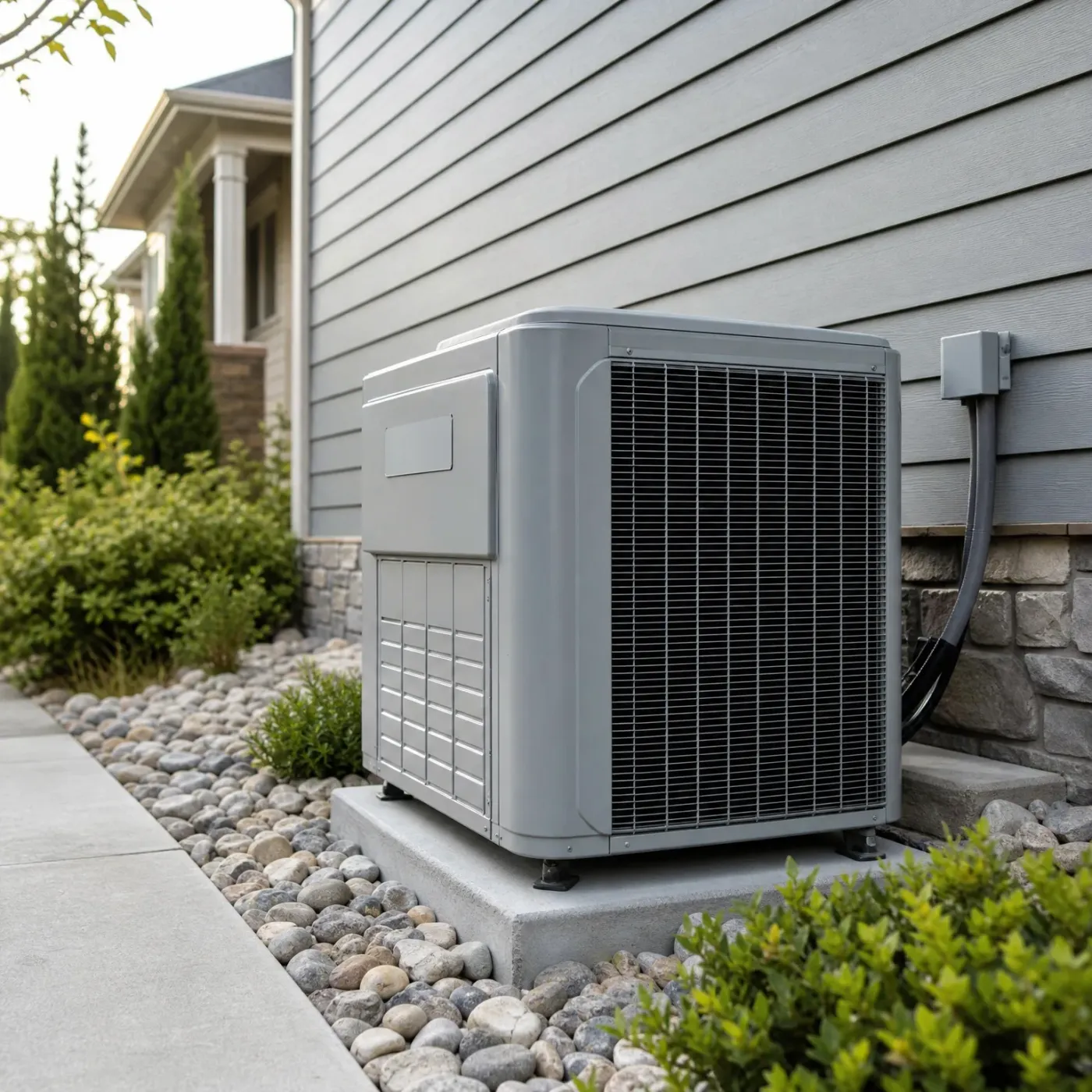
A gray outdoor heat pump unit on a concrete pad beside a house with light gray horizontal lap siding and a stone base, surrounded by river rock and shrubs next to a concrete walkway.

Stop chasing a heat pump pro

Skip collecting and comparing quotes for the new heat pump.

Send the form and stop researching installers for the new heat pump.

Hand off my installation

No fee to send it, and nothing to sign.

Why does it feel colder inside than the thermostat says

You set the thermostat to 70 and the house still feels like 65. The air coming out of the vents feels cool, almost room temperature, instead of warm. That's often backup heat not kicking in when it should, or a system that's been losing capacity for a while. You might hear it run longer than it used to, or notice it cycling on and off more through the morning. Some households notice the outdoor unit caked in ice that doesn't melt off during the day. Left alone, a system working that hard on cold mornings is also running up your electric bill without actually closing the gap between the house and the setting.

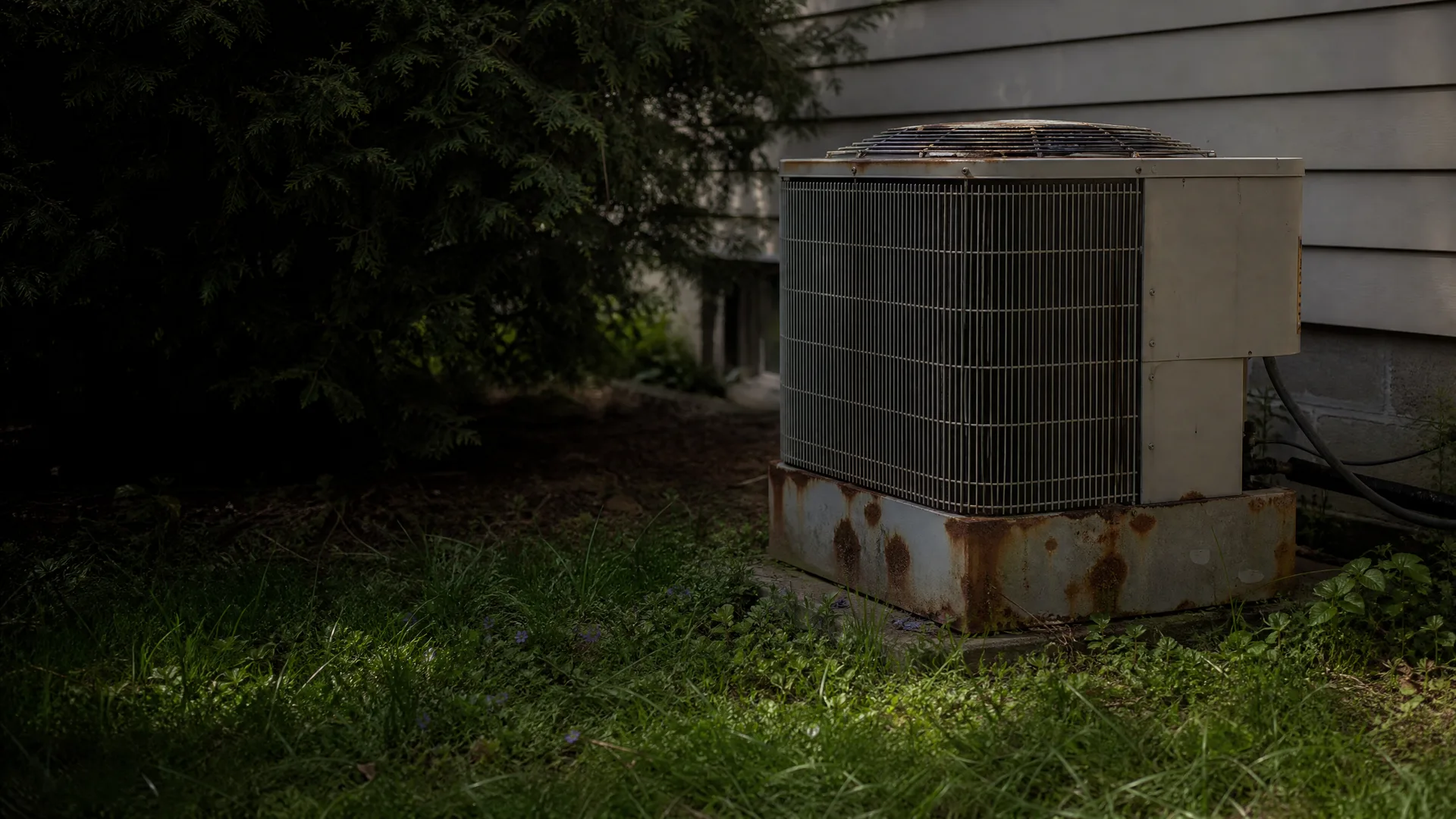
An outdoor air conditioner or heat pump condenser unit sits on a rusted concrete pad beside a house with horizontal siding, surrounded by grass and dark evergreen foliage.

The sun's out but there's still a bite in the air, the kind of March morning Columbus gets before it decides spring is really here. You're out in the side yard checking on the unit because the house felt off this morning, not warm enough even with the thermostat up. The outdoor unit is old, you can see rust creeping along the base where it meets the pad. The fan isn't running. You crouch down and look closer, like that's going to tell you something. It's been through a lot of winters, more than you can remember counting. You straighten up, brush your knees off, and head back inside to call someone who'd know.

A gray outdoor condenser unit on a concrete pad beside a light-colored lap-sided house, with a wall-mounted disconnect box, refrigerant lines, mulch bed and shrubs, and a concrete walkway in the foreground.
The coil's clear, the lines run clean to the disconnect, and the system is pulling in the heat it needs to.
An outdoor condenser unit sits on a concrete pad beside a house with horizontal vinyl siding, with a gray electrical disconnect box and conduit on the wall and a shrub at left.
Frost that won't clear, a coil fighting for airflow, ice creeping toward the lines means it's lost that fight.

If your heat pump is undersized or running low on charge, you'll notice it first on the coldest mornings, when the house won't climb past 66 no matter where you set the thermostat. The backup heat strips pick up the slack, and those draw a lot more power than the compressor alone, so your electric bill in January and February carries the cost of a problem you might not otherwise see. Left alone through a few winters, a system that's struggling runs longer hours to do the same job, which wears the compressor faster and shortens how many seasons you get out of it before it needs replacing. It also means less margin on the rare night Columbus dips into the 20s, when a healthy system coasts through and a weak one can't keep up at all. None of this shows up as a dramatic failure. It shows up as a house that feels a few degrees off and a bill that's a little higher than last year's, which is easy to live with for a while and expensive to ignore for long.

Power here costs 15.82 cents per kilowatt-hour

At 15.82 cents per kilowatt-hour, running on backup heat strips instead of the heat pump itself shows up fast on your bill. A heat pump that's holding its charge and sized right for your house keeps most of that cost off you, even on the coldest mornings.

EIA-861 2025

A light gray outdoor heat pump unit mounted on a concrete pad beside a house with horizontal lap siding, with refrigerant lines and conduit running to a wall-mounted electrical box, gravel and a leafy shrub nearby.

The coil clean, the lines tight

The coil on this one is clear and the refrigerant lines run straight from the unit to the disconnect on the wall. Air moves through it the way it's supposed to, so the system can pull heat out of cold air without working harder than it has to.

An outdoor air conditioner condenser unit on a concrete pad beside a house with horizontal lap siding, with refrigerant lines entering the wall and a shrub on bare soil to the left.

The coil choked with debris

This coil is clogged, and that cuts off the airflow the heat pump needs to pull heat from the outside air. On a cold Columbus morning that means longer run times, more reliance on backup heat, and a system straining to do a job a clean coil would handle on its own.

A closed dark gray laptop and a ceramic mug on a wooden table in a kitchen, with a window, potted plant, bowl on a counter, and cutting boards near white cabinets in the background.

A heat pump handles winter here, if it's set up right

Columbus winters don't ask much of a heat pump. Most nights stay well above the point where the system needs help, and a unit that's sized right and holding its charge will keep the house warm on its own through most of the season. The exceptions are the cold mornings, and whether your system handles those comes down to how it was installed and what shape it's in now.

If you've been going back and forth between contractors, trying to get someone out to look at the unit, or comparing quotes that all explain the problem differently, that's the part that takes the time. Send the form and that search is done. Someone licensed to look at your specific system, in your specific house, takes it from there.

A gray upholstered sofa with a beige cushion and knit blanket beside a curtained window, with a white mug and a book on a dark wooden table in the foreground and a lit lamp in the background.
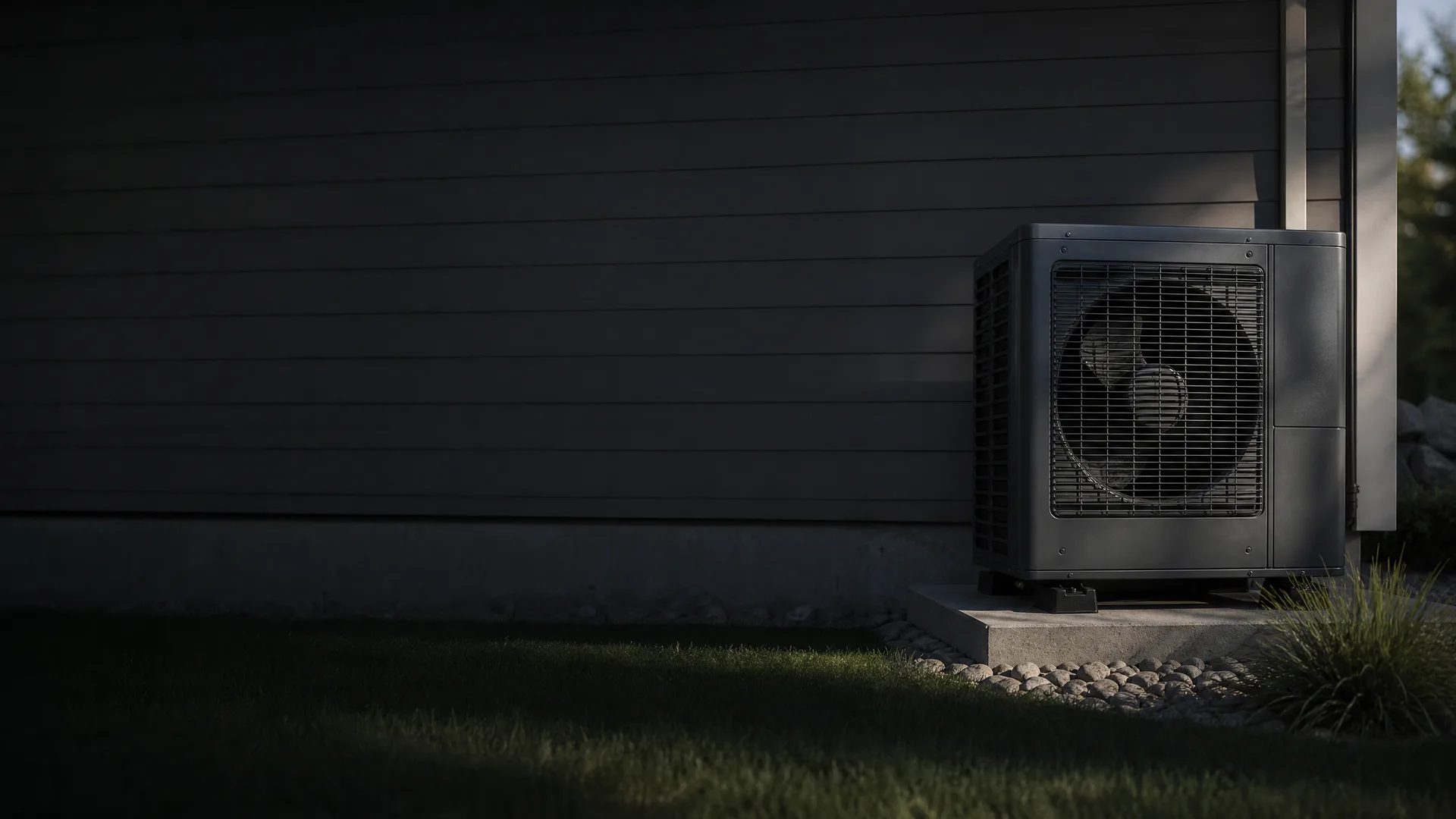
An outdoor air-source heat pump unit with a large fan grille stands on a concrete pad beside a dark horizontal-slat clad house wall, bordered by gravel, grass and an ornamental grass clump.

Send one request and you're done looking

One form replaces the calls you'd make to find a heat pump pro.

New system or replacementHeat PumpMuscogee County, GA
Step 1 of 2

What ZIP code is the job in?