





Two illuminated white Southern-style houses with wraparound porches and staircases, framed by a Spanish moss-draped tree on a quiet street at night.

Heat Pump Repair in Warner Robins, GA

Tell us about the job

Takes about a minute. No obligation.

RepairHeat PumpHouston County, GA
Step 1 of 2

What ZIP code is the job in?

Houston County saw 137 severe weather events between 2015 and 2024, most of it damaging wind. The county also had its share of hail and a handful of tornadoes in that stretch. A heat pump's outdoor unit sits outside through all of it, exposed to hail and flying debris. It can take a hit and keep running for a while before the damage shows up as a refrigerant leak or a bent coil that cuts into airflow. Statewide, close to a third of Georgia households lost power for a day or more last year, and a heat pump that sits dead that long is worth a second look once the power comes back.

5 months
November through March, your system heats
5 months
May through September, it cools
38°F
the average winter night it heats against
91°F
the average summer afternoon it cools against
Isometric line illustration of a cutaway house showing interior rooms, an air handler with ductwork in the attic space, and an outdoor condenser unit beside the exterior wall.
Your system heats November through March and cools May through September.

NOAA nClimDiv, 1991–2020 normals

Half the homes in Houston County were built in 1994 or later.

A heat pump that age has likely got years left in it, so a repair call makes more sense than a replacement call.

Five months of heat, five of cooling, back to back with barely a break

Cooling runs May through September
Heat runs November through March
115 damaging wind events from 2015 to 2024

Wind is the main thing this county deals with, 115 damaging wind events between 2015 and 2024. Your outdoor unit sits right in that path with no cover besides its own housing. A branch or a piece of debris doesn't have to hit it hard to bend a fin or knock a panel loose, and once airflow across that coil is off, the system works harder to do the same job. That extra strain is often what turns a small dent into a refrigerant leak or a failed compressor down the line. If your heat pump has been through a windstorm, even one it seemed to shrug off, it's worth having someone check the coil and the lines before the next one hits.

If your outdoor unit went through a storm, get it looked at

If your heat pump has taken hail or wind damage this year, or sat dead through an outage, don't wait for a bigger failure to call someone out. A coil check now can catch what a storm started before it turns into a refrigerant leak or a compressor job.

Find a contractor
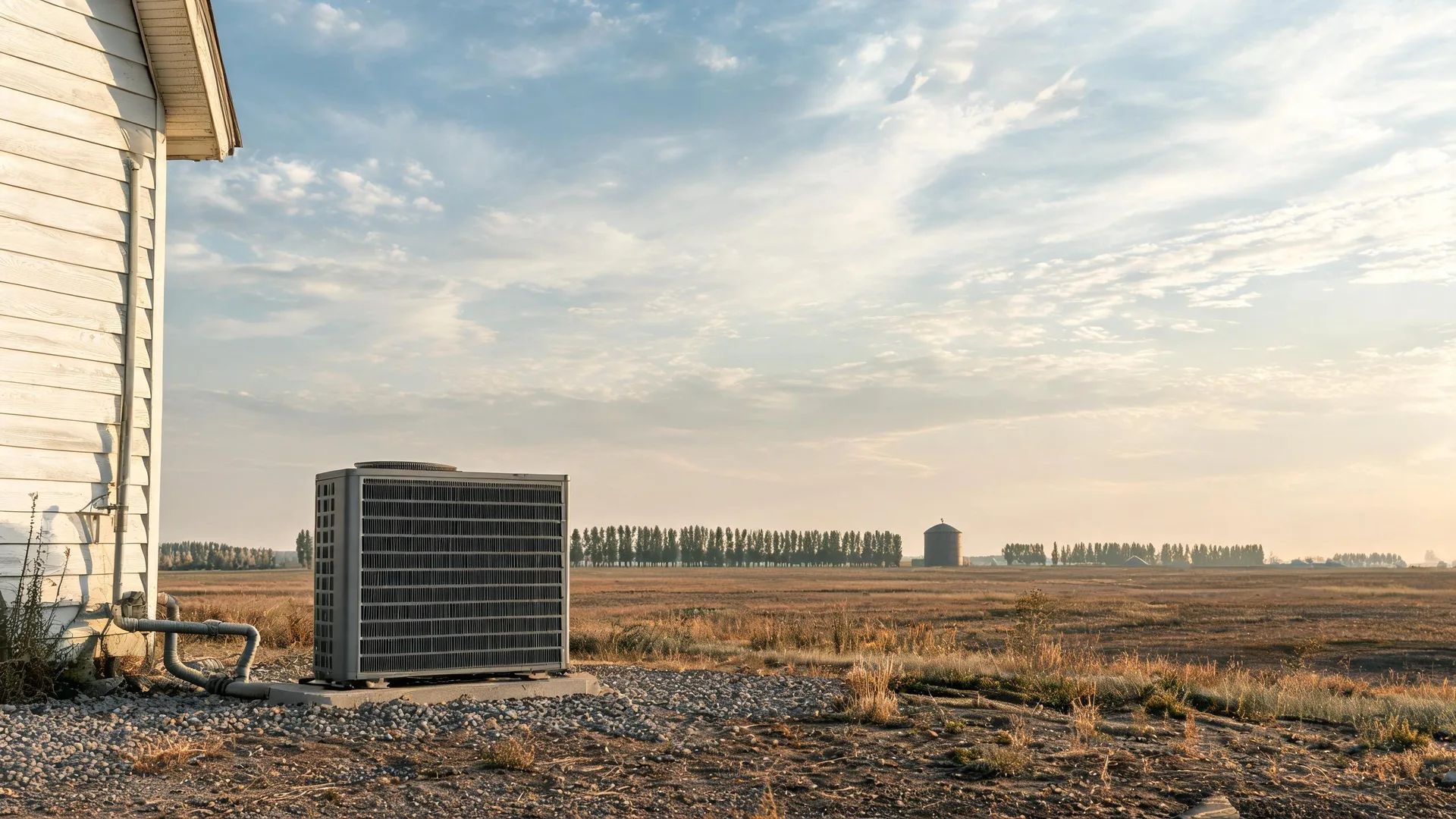
A white mini-split heat pump outdoor unit mounted on a concrete pad beside a gray-sided house, surrounded by gravel and green shrubs.

Still within its working life

If your heat pump is original to the house, check the year it was built against the year the system went in, most installers tag the unit. A system installed within the last decade or so is still well inside its working life, and whatever's acting up now, a bad capacitor, a stuck reversing valve, a low charge, is worth paying someone to fix rather than ripping out.

It's running but not keeping up

A heat pump that runs constantly and still can't hit the thermostat setting is losing a fight somewhere, a dirty outdoor coil, a low charge, a reversing valve stuck between modes. It won't fix itself by running longer. The compressor is the part absorbing the strain while the rest of the system struggles.
Sounds and smells are your early warning

Banging, screeching, or a burning smell from the indoor unit or the outdoor cabinet means something is grinding, loose, or overheating right now. These signs show up before the system quits outright, and catching them at this stage usually means a single part gets fixed instead of several failing at once.

Before you call, go outside and look at the unit. Check that the outdoor fan is actually spinning, not just humming, and clear away any leaves, grass clippings, or ice built up around the cabinet so air can move through it. Inside, check the thermostat is set to heat or cool as you expect and the batteries aren't dead, then check the air filter and swap it if it's gray with dust. Walk around and make sure no vents are blocked by furniture or rugs. If the system still won't respond after that, or you hear it trying and failing, that's past what you can fix from the outside and it's time to get a tech out.

A repair makes sense as long as the fix addresses one part doing one job badly. A bad capacitor, a worn contactor, a low charge from a small leak, these are isolated problems with isolated fixes. Replacement starts to make more sense when the compressor itself is the thing failing, since that's the part moving refrigerant through the whole system and there's no patching it. The other thing worth weighing is how the system's been acting before this breakdown. One sudden failure in a unit that's otherwise run fine points to repair. A unit that's needed a tech out for something different every season is telling you the fixes are keeping pace with new problems, not solving them, and that pattern matters more than the number on the install tag.