
Running clean
This is a heat pump keeping up with its workload. The pad is clear, the fins are open to the air, and nothing is blocking the sides where it breathes. A unit kept like this can run its full years without added strain.
A heat pump in Warner Robins runs most of the year. Summers here are muggy and long, winters are mild, and most homes in Houston County heat with electricity from the same unit that cools them. That means more hours on the compressor than homes in colder climates see, and it means a new install should be sized and set up right the first time. If you're planning a replacement, you're probably weighing how much life is left in the old one against the work of finding someone to install the new one: calling a few companies, explaining the same thing to each, waiting on quotes, trying to tell a fair price from a bad one. Submitting this request skips that. It goes to one licensed, local contractor who installs heat pumps in this area and knows what the climate here asks of them, not several companies competing for your callback. You get one call, one quote, one person who already understands the job.
You've had the same heat pump for a while now, or maybe you just moved into a house with one already installed, and you're wondering when you'll need to start budgeting for a replacement. It runs nearly year round here, cooling the house most of the summer and carrying the heat all winter, so it's fair to wonder if that wears it out faster than it would somewhere else.
A heat pump in Warner Robins typically lasts 10 to 15 years. The compressor is the part that usually decides this, and since most homes in Houston County heat with electricity, the same unit runs for cooling in the muggy summers and heating through the mild winters. That adds up to more total hours than a system that only runs half the year would see. A unit that's kept up with regular service tends to land toward the higher end of that range, while one that's been neglected or undersized for the house can wear out closer to 10 years. If your heat pump came with the house, it's worth finding out its age and watching for signs it's nearing the end, like longer run times or repairs that start coming more often.

This is a heat pump keeping up with its workload. The pad is clear, the fins are open to the air, and nothing is blocking the sides where it breathes. A unit kept like this can run its full years without added strain.

These fins are caked with dust and debris, and the grille is choked with it. A unit working through buildup like this has to run longer to move the same heat, and that extra strain cuts into the years you'd otherwise get from it.
Winter nights average 38°F
Winter nights here only average 38°F, so your heat pump isn't fighting hard freezes, just steady mild cold for months at a time.
Heat runs November through March
Five months of heat, November through March, means the compressor switches modes and keeps working long after summer ends.
Cooling runs May through September
Five months of cooling, May through September, adds to that same compressor's workload instead of giving it time off.
NOAA nClimDiv 1991-2020
A heat pump that runs this many months a year will show its age in ways you can feel before it ever quits outright. You'll notice the upstairs rooms warming up slower on August afternoons, or the unit running longer stretches without shutting off. Your power bill tells the same story a season or two before the equipment does, climbing a little more each summer even though you haven't changed the thermostat. Once a heat pump passes ten or twelve years of this kind of duty, a failed compressor or a refrigerant leak can cost more to fix than the unit is worth, and you're deciding between a repair and a replacement at the worst possible time, usually mid-July with the house already warm. The risk isn't that it fails without warning. It's that it keeps running just well enough that you wait too long to plan the replacement on your own terms instead of an emergency one.


A heat pump doesn't make heat the way a furnace does. It moves it. In summer it pulls heat out of your house and dumps it outside, the same as any air conditioner. In winter it reverses that flow, pulling what heat it can out of the outside air and pushing it indoors. The reversing valve is the part that makes that switch happen, and it's doing that job every time your thermostat changes modes between a warm afternoon and a cool night this time of year.
Because the outdoor unit is working the outside air in both directions, it has to manage ice. On cold mornings, moisture in the air can frost the outdoor coil, and the unit runs a defrost cycle to clear it, briefly reversing again and sometimes running a strip of electric heat to keep the house warm while it does. That's normal operation, not a sign of trouble.
The compressor is the part under the most strain through all of this, in both seasons, and it rarely fails in an instant. It tends to signal first: a hard start where the fan hesitates, a hum with no spin, or a breaker tripping only on the hottest afternoons. A slow refrigerant leak, too small to notice in the house, wears the compressor down well before you'd ever smell or see gas missing. The blower motor inside logs hours right alongside it, since one system is carrying both your heating and your cooling here instead of two separate machines splitting the load.




A licensed installer who works in Houston County gets your project.
Asking costs nothing, and the choice to hire stays yours.
A heat pump's compressor carries a design life measured in run hours, not calendar years. Manufacturers build toward a figure in the neighborhood of 15 years under normal use, assuming the coil stays clean and the refrigerant charge stays correct. Around Warner Robins, that compressor is cycling on through five months of heat and most of the summer too, so it's logging more of those hours per year than the same unit would in a milder climate. The rating doesn't change. What changes is how many years it takes to use it up.
Few heat pumps die of old age in the sense of just wearing out evenly. More often, one part fails, the reversing valve sticks, the compressor seizes after running low on charge for too long, and replacing that part costs close to what a new system runs. At that point the age of the unit decides whether it gets repaired or replaced. A five-year-old unit gets the part. A sixteen-year-old unit usually doesn't, because the rest of it is on the same clock.
At 14.96 cents per kilowatt-hour, your heat pump's long run from November through March and the long cooling stretch in summer both land on your bill at that rate. A unit that's lost efficiency with age pulls more kilowatt-hours to do the same job, so the cost of putting off a replacement shows up every month, not just at the end.
EIA-861 2025

This unit sits open on its pad, with room on every side to pull in air. The cabinet is clean, the line to the disconnect is tidy, and nothing nearby is blocking the coil. A heat pump kept this way can run its full stretch of years without the compressor working harder than it has to.

Dust has built up across the fins here, and the cabinet shows years of weather with nothing wiped down. When a coil sits like this, the unit pulls harder to move the same air, and the compressor pays for it season after season. Left alone, that's what cuts a heat pump's life short.
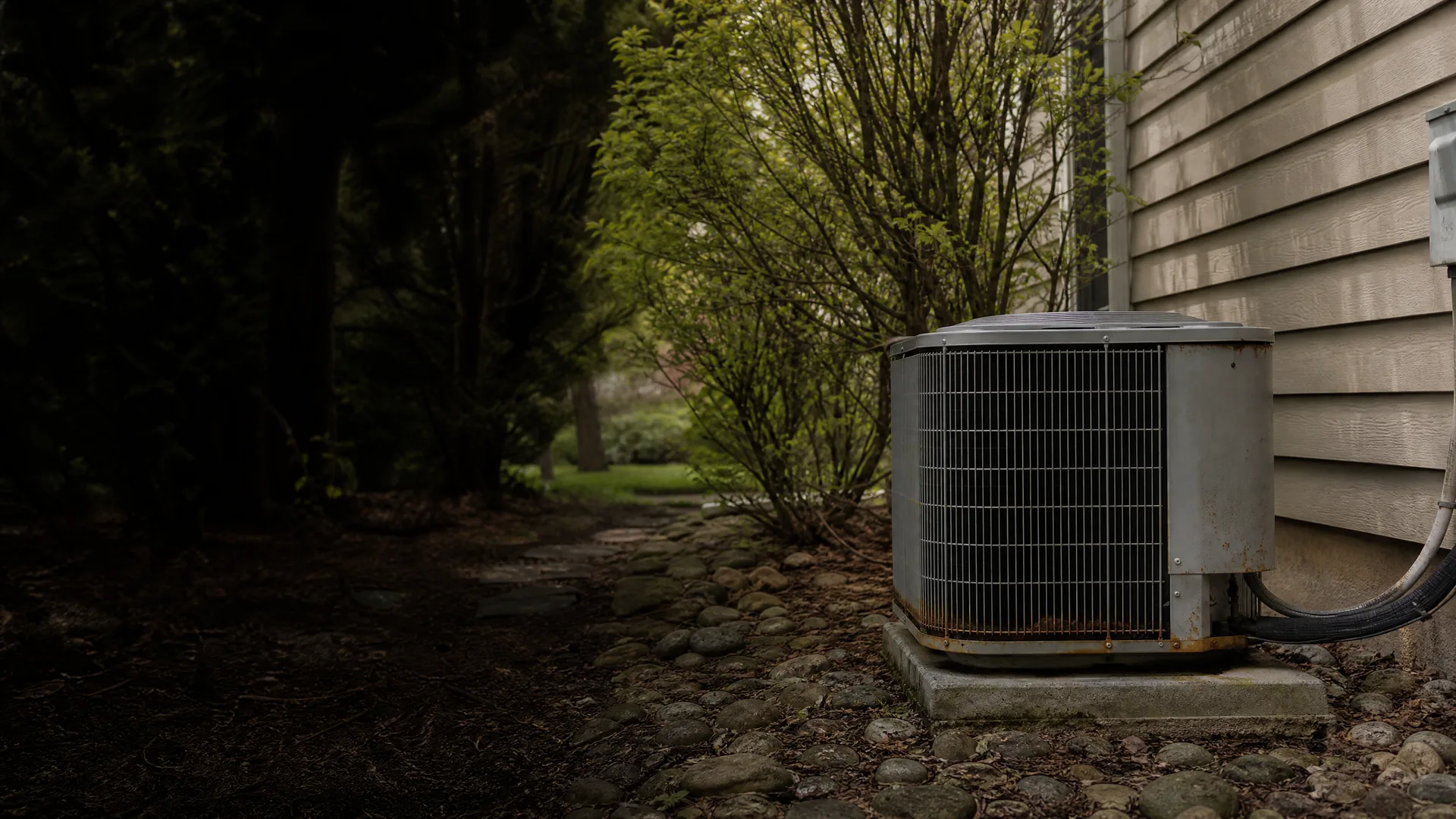
It's a clear morning in early spring, warm enough already that the unit kicks on while you're drinking coffee on the back steps. You walk over to check the mail and notice it then, the rust creeping along the base of the cabinet, worse than you remembered from the fall. The paint above it has gone dull and chalky. You crouch down and the ground underneath is soft, a little low where water's been sitting against the pad after the winter rains. The fan is running fine, the air coming off the top feels normal, but that rust line stays with you as you walk back inside.

A heat pump in Warner Robins runs 12 to 15 years under normal use, less if it's gone without maintenance, more if the coil's stayed clean and the refrigerant charge has stayed correct. The exact number for your unit depends on how it's been run and what's been done for it, not on the calendar. If it's holding temperature through the cold mornings and the muggy afternoons without struggling, it's still doing its job, whatever the nameplate says about its age.
If yours is getting close to that range, or you're already past it and want a straight read on whether to repair or replace, that's a call worth getting from someone who works on these units around Houston County every season. It saves you the usual run-around: searching for a contractor, calling a few, explaining the same thing each time, then sitting with quotes trying to compare them against each other. One licensed, local contractor looks at your system and tells you where it stands.



One form, no calling around
A licensed pro who works in Houston County gets your request.

