





A row of single-story houses with porches behind a manicured lawn and trimmed hedges, framed by large oak trees draped with Spanish moss.

Mini Split Installation in Peachtree Corners, GA

Tell us about the job

Takes about a minute. No obligation.

New system or replacementMini-splitGwinnett County, GA
Step 1 of 2

What ZIP code is the job in?

Gwinnett County saw 185 severe weather events between 2015 and 2024. Most of that was wind, 143 damaging wind events over that same stretch, plus 20 hail events, a tornado, three tropical storms or hurricanes, and five winter storms with snow or ice. An outdoor condenser sits outside through all of it, exposed to whatever hail or wind blows through. And when the power goes out, it tends to stay out longer than you'd like: close to a third of Georgia households went at least a full day without power last year. A mini split that handles both heating and cooling means an outage hits one system instead of two.

6 months
November through April, your system heats
5 months
May through September, it cools
34°F
the average winter night it heats against
87°F
the average summer afternoon it cools against
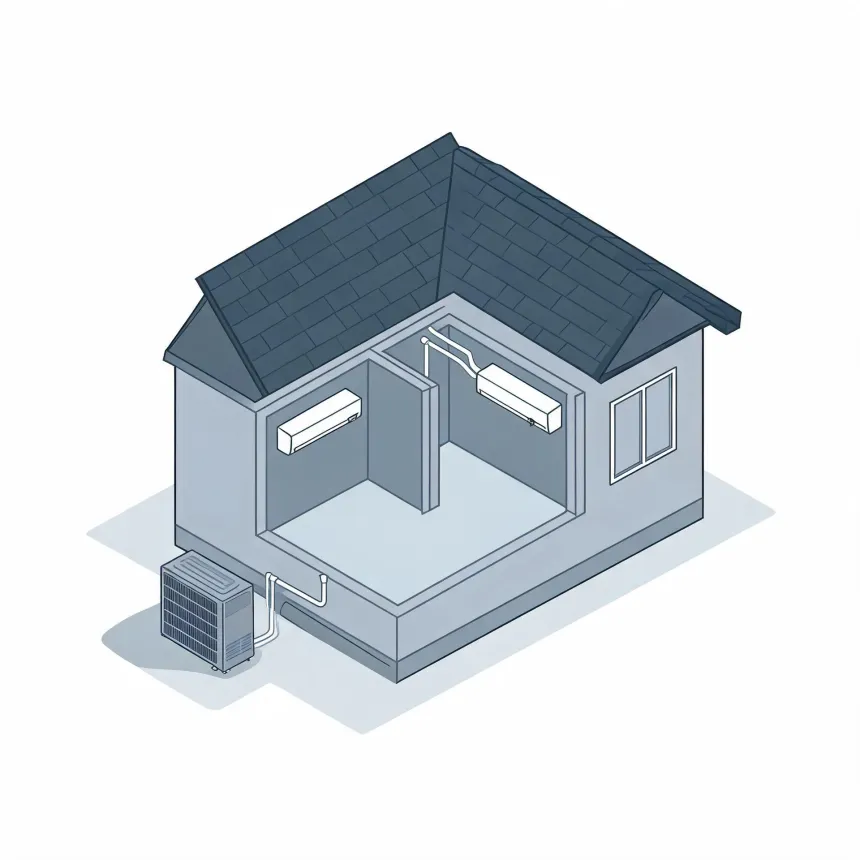
Isometric line illustration of a cutaway house with a shingled gable roof, showing two wall-mounted indoor air conditioning units connected by piping to an outdoor condenser unit on the ground outside.
Your system heats November through April and cools May through September.

NOAA nClimDiv, 1991–2020 normals

Gas heats 61.2% of homes in Gwinnett County, more than any other fuel.

If your house already runs on gas heat, a mini split adds cooling and backup warmth without touching the furnace.

Five months of heat, 143 storms to run it through

Cooling runs May through September
Summer afternoons average 87°F
143 damaging wind events from 2015 to 2024
Time it before MayCooling starts in May here, so April is when this install should happen, not during the first hot week.

Gwinnett County falls in climate zone 3A, warm with a long cooling season and only a short mild winter. Any mini-split installed here has to clear the federal split-system heat pump minimums that apply to units made on or after January 1, 2023: at least 14.3 Btu of cooling for every watt-hour it draws, and at least 7.5 Btu of heat for every watt-hour it draws in winter. That's the floor, not a selling point. When you're pricing out a system, ask the manufacture date and the rated numbers, and check them against that floor yourself. A system that clears it may also qualify for the federal energy efficiency tax credit, which is worth checking against the specific model.

Plan the install around the weather, not just the heat

Where the outdoor unit goes and how it's mounted matters here. Ask the installer to walk you through placement and bracketing before the job starts, not after. And since a mini split can carry both heat and cooling, think through what you want it to cover if the power drops: one zone that keeps running still beats none.

Find a contractor
A white outdoor air conditioner condenser unit mounted on metal wall brackets against gray horizontal siding, with a blue sky and white clouds behind it.

Five months a year of hard running

Five months of cooling, running at an 87 degree average through the hottest stretch, puts real hours on a compressor before it ever sees a storm. That's the baseline load the unit has to be sized for, not an afternoon here and there. When you're comparing quotes, ask for the load calculation behind the number, not just a system that matches what was there before. Undersized and it runs flat out all summer. Oversized and it short cycles. Either way, the parts most exposed to wind and heat are the ones that give out first.

The outdoor unit isn't the whole cost

Pricing covers more than the compressor and the indoor head. Line sets run between the two, carrying refrigerant, and they need to be the right length and properly insulated. Someone has to run a dedicated electrical circuit to the outdoor unit. A condensate drain has to be routed somewhere water can actually go. Each of those is labor and material before the equipment itself even turns on.
Where things go changes what the job takes

A straight shot through an exterior wall costs less to run than a line set that has to travel through an attic or drop down from a second floor. Mounting the outdoor unit on a pad is simpler than mounting it on brackets off a wall. The more distance and the more obstacles between the indoor head and the outdoor unit, the more line set, more wall penetrations, and more time on site.

The efficiency number on a mini split, the one measured in Btu per watt-hour, tells you how much heat it moves for the power it draws. It's not a measure of how much heat or cooling it can put out. Two systems can carry the exact same size house and burn very different amounts of power doing it, and that number is where the difference shows up. Higher means the compressor is getting more work out of every watt, which matters most across a long cooling stretch when the thing barely shuts off. It also tends to track with build quality. A compressor built to hit a higher rating usually has better controls behind it, finer modulation, a coil sized to actually use the refrigerant passing through it. Ask for the rated number on the specific model you're quoted, not a range, since the same product line can ship at different ratings depending on what's paired with it.

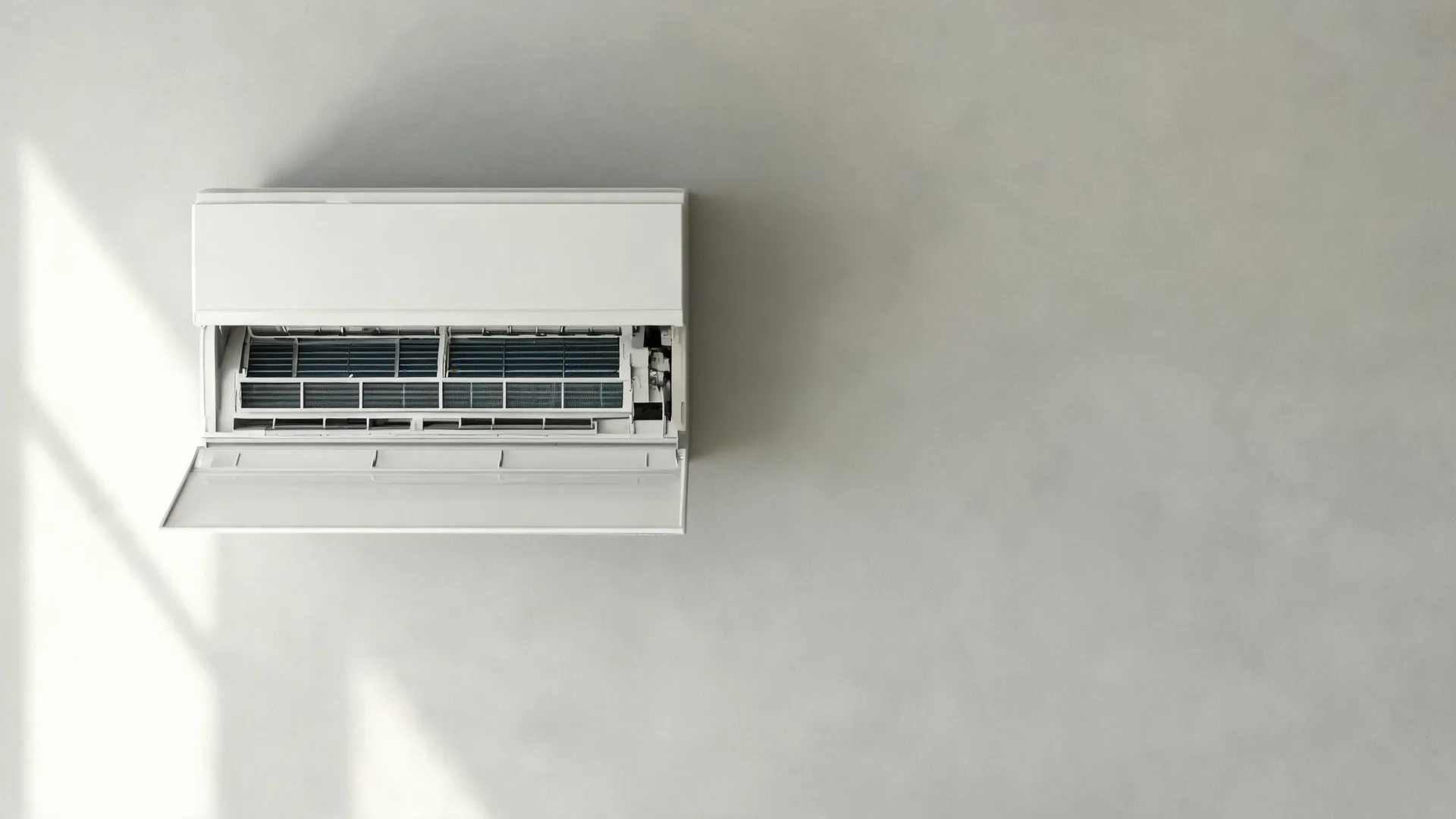
Installation day starts with a walkthrough, confirming where the indoor head and outdoor unit go before anyone touches a drill. Once that's set, the crew mounts the indoor unit on its wall bracket and cuts a small hole through the wall for the line set. That line set carries refrigerant lines, a condensate drain, and electrical wiring, all bundled together and run from the indoor head out to the condenser. Outside, the unit goes on a pad or wall brackets, then gets connected to its dedicated circuit. After everything's joined, the lines get pulled down to a vacuum to clear out moisture and air before refrigerant ever flows. The last step is charging the system and running it through both heating and cooling to check the temperature split and make sure the head is actually conditioning the room it's in.