


35 degrees
Below this, most heat pumps in Georgia start leaning on auxiliary heat to keep up. If your system runs it far above that, something's making it work harder than it should.
You saw "AUX" or "EM HEAT" light up on your thermostat and you want to know what your heat pump is doing and whether it should worry you. Most homes in Georgia heat with electricity through a heat pump, so when this light comes on during a cold snap, it changes how the system runs and what it costs to keep the house warm.
A heat pump moves heat from the air outside into your house, but as it gets colder outside, there's less heat out there to move. Below a certain outdoor temperature, usually somewhere in the 30s, the unit can't keep up with the heat it's losing, so a set of electric heating elements switches on to make up the difference. That's auxiliary heat. Georgia winters don't stay that cold for long, so you'll mostly see it on the coldest mornings, not for weeks at a stretch. It's supposed to come on in those conditions. The thing to watch for is auxiliary heat running when it's 45 or 50 degrees outside, or staying on long after the house warms up. That points to the heat pump itself not doing its job.
Outside air gets too cold for the heat pump to pull warmth from it.
The outdoor unit can't keep up, so indoor temperature starts to drop.
The thermostat calls for backup heat to make up the difference.
Electric resistance coils in the air handler switch on.




Below this, most heat pumps in Georgia start leaning on auxiliary heat to keep up. If your system runs it far above that, something's making it work harder than it should.
If the light stays on during mild weather, the heat pump itself may not be pulling its weight. That's worth having someone look at.
You notice it on the power bill before anything else. A heat pump leaning on auxiliary heat for weeks at a time, when a Georgia winter rarely asks for that, costs more to run than the heat pump working alone. You might also notice the air from the vents feels different when AUX kicks in, warmer at the register but the house takes longer to catch up. If the light comes on during a mild afternoon, or stays lit long after a cold snap breaks, that's not normal wear. Left alone, a system stuck on backup heat all season is usually covering for something else wrong with the heat pump, and that part doesn't fix itself.

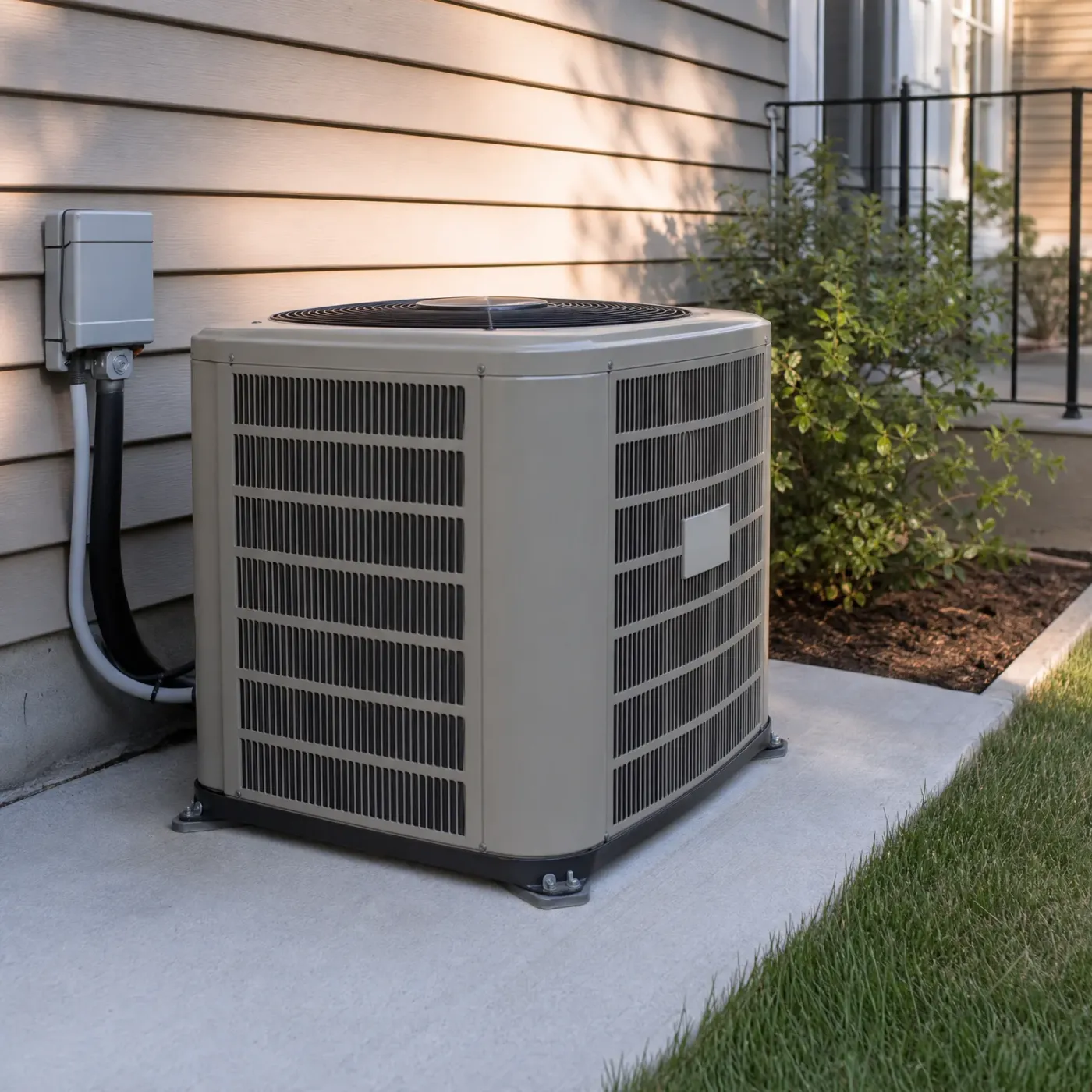
The outdoor unit pulls warmth from the air on its own, no aux light, no backup coils kicking on. The disconnect box, the lines, the pad, all doing what they're supposed to do without the system reaching for extra help.

An older unit like this one works harder to pull the same heat out of the air. If yours is showing its age and the AUX light won't quit, that's worth having someone look at before the coils run most of the bill.

You'll feel it before you understand it. The air coming out of the vents feels warmer than usual, because resistance coils heat differently than the heat pump alone. Then the bill comes and it's higher than last January, sometimes by a lot, because those coils use far more electricity than the outdoor unit does on its own. If your thermostat has a usage history, check it. A heat pump that's leaning on AUX for days at a stretch during a normal Georgia cold snap is telling you something isn't right, whether that's low refrigerant, a failing part outdoors, or a thermostat set wrong.
Figuring out which one it is isn't something you do yourself, and finding someone who can usually means calling a few places, explaining the AUX light and the power bill each time, then sitting with quotes trying to guess who's right. Send the form instead and that part is handled. You won't be the one tracking down who's available or repeating the story to a third contractor.



If AUX is staying on longer than it should, or kicking in when it's only mild outside, that's a heat pump not pulling its weight. Could be low refrigerant, a failing outdoor unit, a thermostat set wrong for how the system is supposed to switch over. Figuring out which one takes someone looking at the actual equipment, not guessing from the thermostat screen. Right now that means finding a contractor who works on heat pumps, explaining what the AUX light is doing, waiting on a callback, then doing it again with the next name on your list if the first one can't get to you soon. Send the request here and that part is done. One contractor gets it, and getting your heat back to running the way it should becomes their job instead of yours.
A heat pump that leans on auxiliary heat right through January can double what you'd pay running the outdoor unit alone, and most people don't catch it until the bill lands. The other cost is wear. Resistance coils aren't built to carry the house the way the heat pump is, and a system that reaches for them every night is covering for something else, a refrigerant leak, a compressor losing strength, a thermostat set up wrong for how your system is supposed to switch over. Left alone, that's the outdoor unit failing slower instead of faster, and a repair now instead of a replacement later. You don't have to track down who handles heat pumps in your part of Georgia, or call three places and explain the AUX light three times, or sit on hold waiting for someone to call you back. Send the form once and that search stops being yours to run.
At 14.74 cents a kilowatt-hour, those resistance coils add up fast once they're carrying the house instead of the heat pump. A furnace in another state might cost less to run on backup heat. Here, aux heat running for days instead of hours shows up clearly on your next bill.
EIA-861 2025 statewide residential average
The short answer is the one you came for: AUX is the backup heat kicking in because the heat pump alone isn't keeping the house warm. For a few hours on a cold morning, that's the system doing what it's built to do. For days at a stretch, through a Georgia winter that rarely gets that hard, it's a sign the outdoor unit isn't carrying its share anymore.
What causes that split comes down to a short list. Low refrigerant, a failing outdoor unit, a thermostat set up wrong for how the system is supposed to switch over. Any one of those can push a heat pump onto backup heat sooner than it should need to, and the thermostat can't tell you which one it is. It just tells you AUX is running.
Left that way, it costs you twice. The power bill climbs because resistance coils are a more expensive way to heat the house than the heat pump running alone. And the coils themselves wear faster carrying a load they weren't sized to handle every day.
A contractor who checks the outdoor unit, the charge, and the thermostat settings can tell you which of those it is, and whether it's a quick fix or something bigger. That's the part that's hard to do on your own, calling around, explaining the same AUX light to three different companies, trying to sort out who actually knows heat pumps from who's guessing. Sending the details once and having someone qualified reach out skips that entirely.
One form replaces the calls you'd make to find a heat pump pro.
Asking costs nothing, and the choice to hire stays yours.