68°F average dew point
That much moisture in the air means your system has to run longer to dry the house out, and a room with weak airflow never catches up.
 Get my match
Tell a local repair pro what your air conditioner is doing.
One room runs warm no matter how low you set the thermostat. Maybe it's the bedroom over the garage, or the one at the end of the hall. The rest of the house feels fine, so the system isn't broken, it's just not getting air where it needs to go. That's a different problem than a dead AC, and it usually comes down to how the air is balanced or lost between the unit and that one room.
In Georgia, a room like that doesn't just feel uncomfortable, it runs the whole system harder trying to chase a temperature it can't reach. Humidity makes a warm room feel worse than the number on the thermostat suggests, and a system working overtime in July doesn't get a break until fall.
Figuring out why that one room won't cool usually means someone looking at the actual duct run, the vents, the insulation around that part of the house, maybe the system's airflow overall. That's not a guess you make from a search page. It takes someone standing in the room and tracing the problem back to its source.
You could spend an afternoon calling around, explaining the same thing to three or four different contractors, asking what they charge to come look, waiting on callbacks. Or you could skip that part. Answer a few questions here and a contractor who handles this kind of repair in your area will reach out to you directly, already knowing what room you're dealing with and what it's doing.
No promises about what they'll find once they're in that room. But you won't be the one tracking down who to ask.
A room that stays hot while the rest of the house is fine usually comes down to airflow, not the compressor outside. The duct feeding that room may be too long, pinched somewhere in the attic, or splitting off a trunk line that was never sized to also carry air that far. If that room sits over the garage or at the end of a hallway, it is often the last stop on the duct run, so it gets whatever air is left after every closer room has taken its share. In Georgia, where the air outside is heavy with moisture most of the summer, a room that already runs a few degrees warm also holds more humidity, so it feels worse than the thermostat number suggests. None of this means the system is failing. It means the air isn't reaching that room the way it should, and that's something a contractor can trace room by room rather than something you can fix by turning the thermostat down further.




Air leaves the air handler through one trunk line, then splits into branches that feed each room. The room at the far end of that split is already working with less pressure than the one near the start. Add a few elbows to get the duct through the attic framing, and that room falls further behind, since every bend slows the air down a little more. In older additions, it's common for one duct to end up feeding two rooms instead of one, which means neither gets what it was designed for. The duct itself matters too. A run that crosses the attic picks up heat through the metal or flex before it ever reaches the vent, so the air arrives warmer than it left the unit. Sometimes the fix is simpler than any of that. A damper inside the trunk can be pinched down from an old adjustment, or the room might be missing a return vent large enough to let air cycle back and pull supply air in behind it.


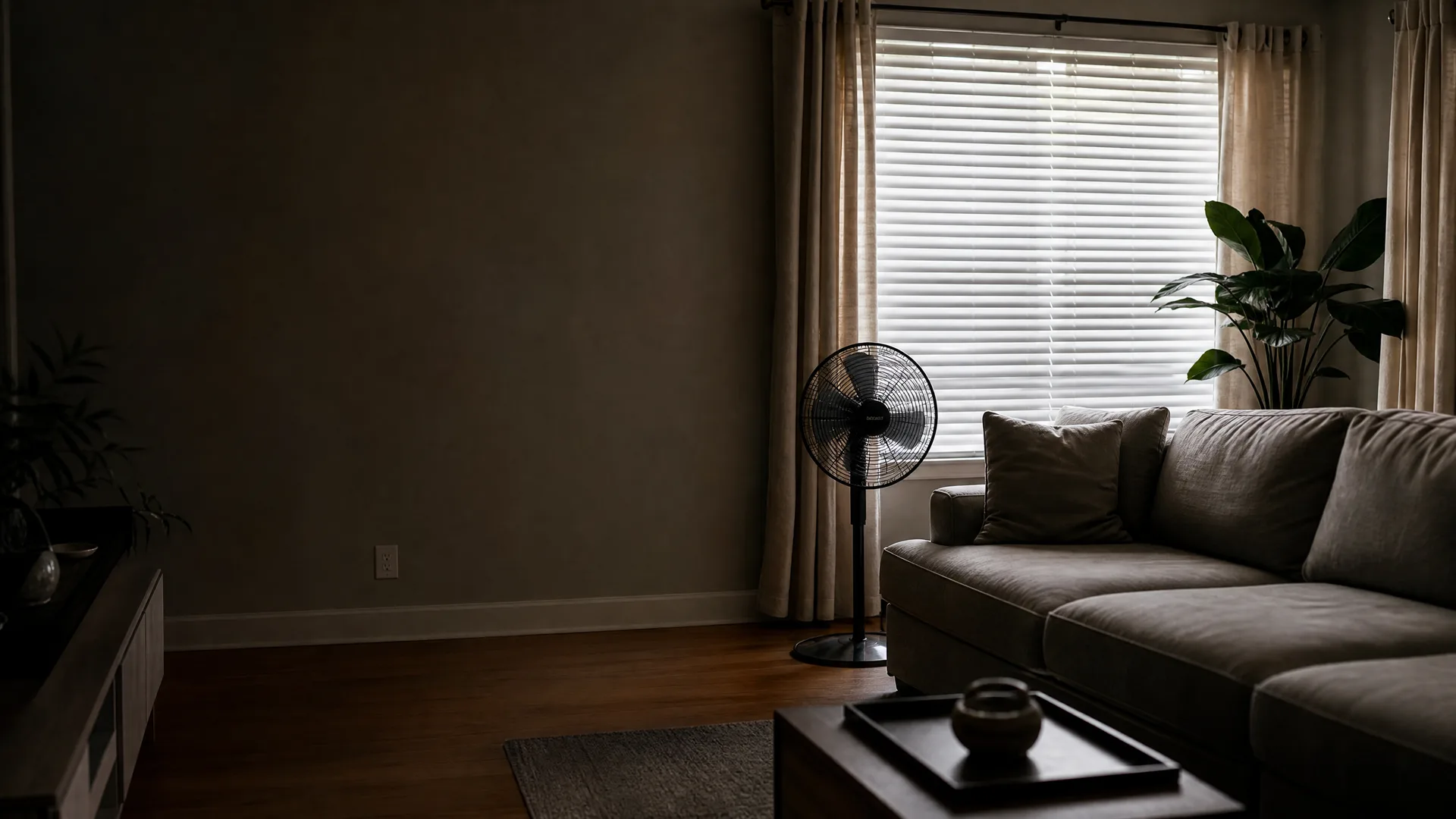
It's a little past three and the blinds in the living room are shut tight against the sun. The floor fan is running next to the couch, pointed at the spot where someone's been sitting most of the afternoon. The thermostat says seventy-two. It doesn't feel like seventy-two. Outside, Georgia is doing what it does in July, and the AC has been running almost without a break since morning. Everyone's learned to just leave the fan out now instead of putting it away between hot spells. It helps enough to get through the afternoon, but it's one more thing plugged in, one more thing to step around, for a room that shouldn't need it.
You've probably already moved a fan in there, or shut the vent in a room you don't use hoping it would push more air down the hall. Sometimes that helps a little. It doesn't fix a duct that's too long or pinched above the ceiling. Finding out which one it is means someone getting into the attic with a flow meter, not more guessing from the thermostat. Chasing that down yourself means calling a few contractors, explaining the same thing to each one, waiting on quotes, trying to tell which one actually knows ductwork and which one just wants to sell you a new system. Hand this off instead. One contractor who works on Georgia homes and this kind of airflow problem gets your request, and you stop being the one running the fan every afternoon at three.
The thermostat only knows the temperature where it hangs. If it's in the hallway, it shuts the system off once the hallway is comfortable, whether or not the back bedroom ever caught up. That's not a defect. It's how a single thermostat with one sensor was always going to work in a house where rooms don't all get the same airflow.
The airflow itself depends on more than the vent in that room. Ducts are sized and balanced as a system, so closing vents in rooms you don't use, or adding a return somewhere, changes the pressure everywhere else, including the room that's already struggling. A duct that got crimped flat going around a joist in the attic can lose half its airflow and give no sign of it, because the vent still blows, just weaker than it should.
Pressure matters on the way out too. A room with no return path for air to leave pushes air back out around the door instead, which means less of what comes in through the supply actually stays to cool the room. And if that room sits over a garage with thin insulation above it, heat is soaking through the ceiling as fast as the vent is trying to offset it. A damper inside the trunk line, if the system has one, can also shift partway shut on its own and starve that one branch while every other room runs normally.


You've probably checked the vent to see if it's even open. The air coming out is weak, maybe just a trickle compared to other rooms, even though the system is running. That room takes longer to cool down after someone's been in there, and by evening it still hasn't caught up to the rest of the house. If it's a bedroom, whoever sleeps there is the one dealing with it at night, when the house is quiet and the gap is easiest to feel. Left alone, it's not just discomfort. Warm, still air in one closed-off room gives humidity somewhere to sit, and in Georgia that's enough to start trouble on walls or furniture over time.

Georgia summers run humid, and the weather service puts the average dew point at 68°F across June, July and August. Air that heavy holds onto its moisture, so your system has to pull more water out of it before the house feels dry and comfortable. That takes longer in a room already starved for airflow. A properly fed room sheds the stickiness fast. The one at the end of a long, pinched duct run doesn't get enough cold air moving through it to keep up, so it stays warm and feels damp on top of that, even with the thermostat holding steady everywhere else.
NASA POWER T2MDEW county cells weighted by homes


That much moisture in the air means your system has to run longer to dry the house out, and a room with weak airflow never catches up.
Every branch off that line shares the same air. A room at the far end gets what's left after the closer rooms take their share.
At 14.74 cents per kilowatt-hour, every extra hour your system runs to chase that one hot room shows up on the bill. A unit fighting weak airflow to one spot still has to keep running for the rest of the house, so you pay for the whole cycle twice over.
EIA-861 2025 statewide residential average

A room that won't cool down with the rest of the house usually points to the ductwork feeding it, not the condenser outside or the thermostat on the wall. That's true whether it's a pinched duct in the attic, a run that's too long, or a trunk line carrying more rooms than it was built for. The fix depends on which one it is, and that takes someone looking at the actual duct, not another guess from the living room.
You could spend a weekend calling contractors, explaining the hot room, the weak vent, the fan you've already moved in there, then doing it again for the next one and comparing what each one quotes. Or you can get matched with a contractor who handles this kind of airflow problem and let them reach out to you, so the next call you make is the only one you need to make.

Matched to your air conditioner job