





Two white Southern-style homes with wraparound porches lit by landscape lighting at night, flanked by live oak trees hung with Spanish moss.

AC Installation in Gainesville, GA

Tell us about the job

Takes about a minute. No obligation.

New system or replacementCentral ACHall County, GA
Step 1 of 2

What ZIP code is the job in?

Hall County saw 106 severe weather events between 2015 and 2024, and most of those were damaging wind. That matters when you're picking where the new outdoor unit goes and what you mount it on. A unit near a fence line or under a tree takes the brunt of flying debris. One set in the open with clear space around it fares better. Hail shows up often enough here that a coil guard is worth asking about. Close to a third of Georgia households lost power for a day or more in 2024, so talk through backup options while the system is still being designed, not after the first outage.

5 months
May through September, your air conditioner is on duty
87°F
the average summer afternoon it cools against
8 hail events
in ten years, and hail bends the fins on outdoor coils
13.4 SEER2
the federal minimum any new unit must meet
Isometric cutaway illustration of a small home interior with furniture and ducting, showing an indoor air handler connected by lines to an outdoor condenser unit on a pad.
Your air conditioner works hardest from June through September.

NOAA nClimDiv, 1991–2020 normals

Matching tonnage on paper does not mean a system is sized right for the house.

Ask for the load calculation, not just a quote on equipment.

Electric heat is the standard here

66.5% of homes heat with electricity
Cooling runs May through September
Summer afternoons average 87°F

Cooling runs May through September here, so April is the month before it starts. Putting in a new system during that month means it's running and checked over before it has to carry the first real load. Wait until the old one fails mid summer and the choice gets rushed, with less time to compare units or wait for the one that fits. April also leaves room to get the load calculation done right and work through the backup and placement questions this county calls for, instead of deciding all of it at once under pressure.

Get a system that meets Georgia's efficiency rules and your household's needs

Any new system installed here has to meet 14.3 SEER2, the Southeast minimum for units under 45,000 Btu/h, higher than what the rest of the country requires. That rules out some lower-efficiency equipment outright and narrows what a contractor can quote you. A federal tax credit is available on top of that for qualifying equipment. Worth asking which units on your list clear both bars before you decide.

Find a contractor
An outdoor air conditioning condenser unit mounted on a concrete pad beside a house, with electrical conduit running to a wall-mounted disconnect box.

The old unit doesn't just get unplugged

An old outdoor unit does not get hauled off the moment the new one goes in. Most installs run both for a short stretch so the contractor can check the new system against the old one before disconnecting it for good. Once it's out, the refrigerant has to be recovered, not vented, and the coil and compressor get scrapped for the metal. If the old unit used a refrigerant that's been phased out, that recovery step matters more, since it can't be vented or reused in anything still being made. A furnace or air handler paired with the old AC may or may not carry over, depending on whether the new coil matches what's already there. That's a question for whoever draws up the install, not something to assume either way.

The ductwork decides more than the equipment does

A system can be sized right and still cost more to install if the ducts can't handle the airflow it needs. Undersized or leaky runs sometimes need rework before the new unit can perform the way it's rated to. That's labor a straight equipment swap doesn't carry.

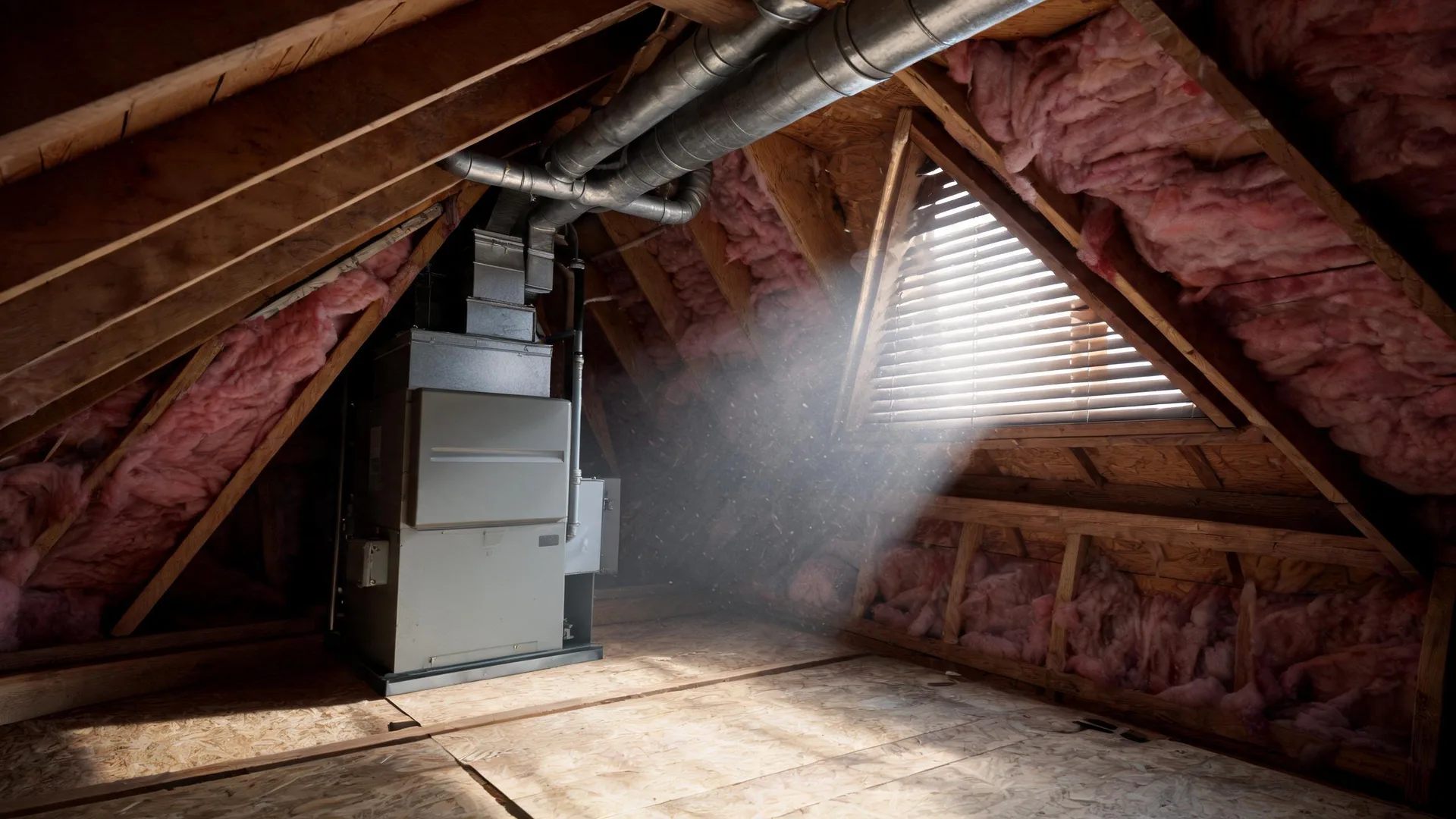
Where the air handler sits changes the job

An attic or crawlspace install takes more time than a closet or basement unit, simply because of what it takes to get the equipment in and out. Tight access can mean extra hands, extra hours, or a different path for running the line set and ductwork altogether.

An outdoor central air conditioning unit mounted on a concrete pad beside a blue-sided house at sunset.

Going above the federal minimum saves little here, about $10 a year.

  • A higher-efficiency unit$280 a year
  • A new unit at the federal minimum, 14.3 SEER2$290 a year

Estimates for a typical Hall County home, from EIA household energy data, Georgia fuel prices and NOAA climate normals. Your home will differ.

The morning starts with power off and the old equipment coming out, or going in next to it if both are staying up for a comparison run. The line set gets run before anything gets charged, and that path matters, since every bend and joint is a place a leak can start later. Once the new coil and condenser are connected, the system gets pulled down to vacuum to clear out moisture and air before any refrigerant goes in. Charging comes next, weighed in or checked against pressure and temperature readings rather than guessed at. Only after that does anyone run the system and check airflow at the vents, check the temperature split between the return and supply air, and look for anything unusual in how the compressor sounds or how the lines are vibrating. A thermostat swap or rewire often happens somewhere in the middle of all that, not at the end.