







A white Southern-style house with a wraparound porch photographed at night, surrounded by Spanish moss-draped oak trees lit by landscape lights.

AC Installation in Griffin, GA

Tell us about the job

Takes about a minute. No obligation.

New system or replacementCentral ACSpalding County, GA
Step 1 of 2

What ZIP code is the job in?

Electricity in Spalding County runs 14.76 cents per kilowatt-hour. That rate applies to every kilowatt a new air conditioner draws, month after month, for as long as it runs. An inefficient unit does not just cost more to buy wrong, it costs more every time it cycles on. Since homes here lean on electric power for most of their heating and cooling needs, that rate touches almost everything the house runs on. A unit sized and installed right pulls less power to do the same job.

5 months
May through September, your air conditioner is on duty
89°F
the average summer afternoon it cools against
6 hail events
in ten years, and hail bends the fins on outdoor coils
13.4 SEER2
the federal minimum any new unit must meet
Isometric line illustration of a cutaway single-story house showing interior rooms, ductwork, an indoor air handler or furnace, and a refrigerant line running to an outdoor condenser unit on a pad.
Your air conditioner works hardest from June through September.

NOAA nClimDiv, 1991–2020 normals

Cooling runs May through September here.

Install in April, before the season starts, so the job happens on your schedule instead of after the system fails in the heat.

Five months of 89 degree afternoons asks more of a system than most places ever do

Cooling runs May through September
Summer afternoons average 89°F
89 damaging wind events from 2015 to 2024
Electric heat means electric cooling tooJust over half of homes in Spalding County heat with electricity, so a new AC often shares a panel and sometimes a budget with the heat.

Spalding County falls in climate zone 3A, and any new split system installed here has to meet 14.3 SEER2, higher than the 13.4 the federal minimum requires for the rest of the country. That is not a suggestion a contractor can talk you out of. It narrows what can legally go into your house to units built for a region that cools hard and heats light. A system rated for a milder zone would not meet code here even if the installer had one sitting on the truck. Beyond the SEER2 floor, a federal tax credit is available for qualifying high-efficiency equipment, worth checking into before you settle on a model.

The system you choose keeps paying you back on the power bill

The rate per kilowatt-hour applies to every month this system runs. Ask about the SEER2 rating before you settle on a model, and whether it qualifies for the federal tax credit. A system that pulls less power to do the same job keeps paying you back after it is installed.

Find a contractor
A man in a dark cap, dark shirt and brown pants, seen from behind, walks up porch steps toward an orange front door while carrying a brown canvas tool bag.
A gray cylindrical air conditioning condenser unit mounted on a concrete pad next to a light-colored vinyl-sided house exterior.

The number on the label is what it costs to run, not what it costs to buy

The SEER2 number on the label tells you how much cooling a unit delivers for the power it draws. A higher number means the compressor and the fan motor are doing the same job with less electricity. That rating is measured over a full season, not on one mild afternoon, so it accounts for the mix of easy days and brutal ones a system actually sees. Two units can cool the same square footage and still land on different sides of your power bill every month, because the one with the higher rating is not working as hard to move the same heat out of the house. It is also worth knowing SEER2 measures efficiency, not capacity. A high rating does not mean a unit is big enough for your home. The size still has to be calculated separately, based on the house itself, or you end up with a system that is efficient and still wrong for the job.

Ask for the load calculation, not a guess

A contractor should measure the house, the windows, the insulation and the layout before naming a size. That is called a load calculation. Going by square footage alone, or by matching the old unit, often lands on the wrong size. A system that is too big cools the air fast and shuts off before it pulls the moisture out, so the house feels clammy even at the right temperature. One that is too small runs constantly and still struggles on the hottest afternoons. The size on the quote should trace back to that calculation, not a rule of thumb.

Ask what happens to the ductwork

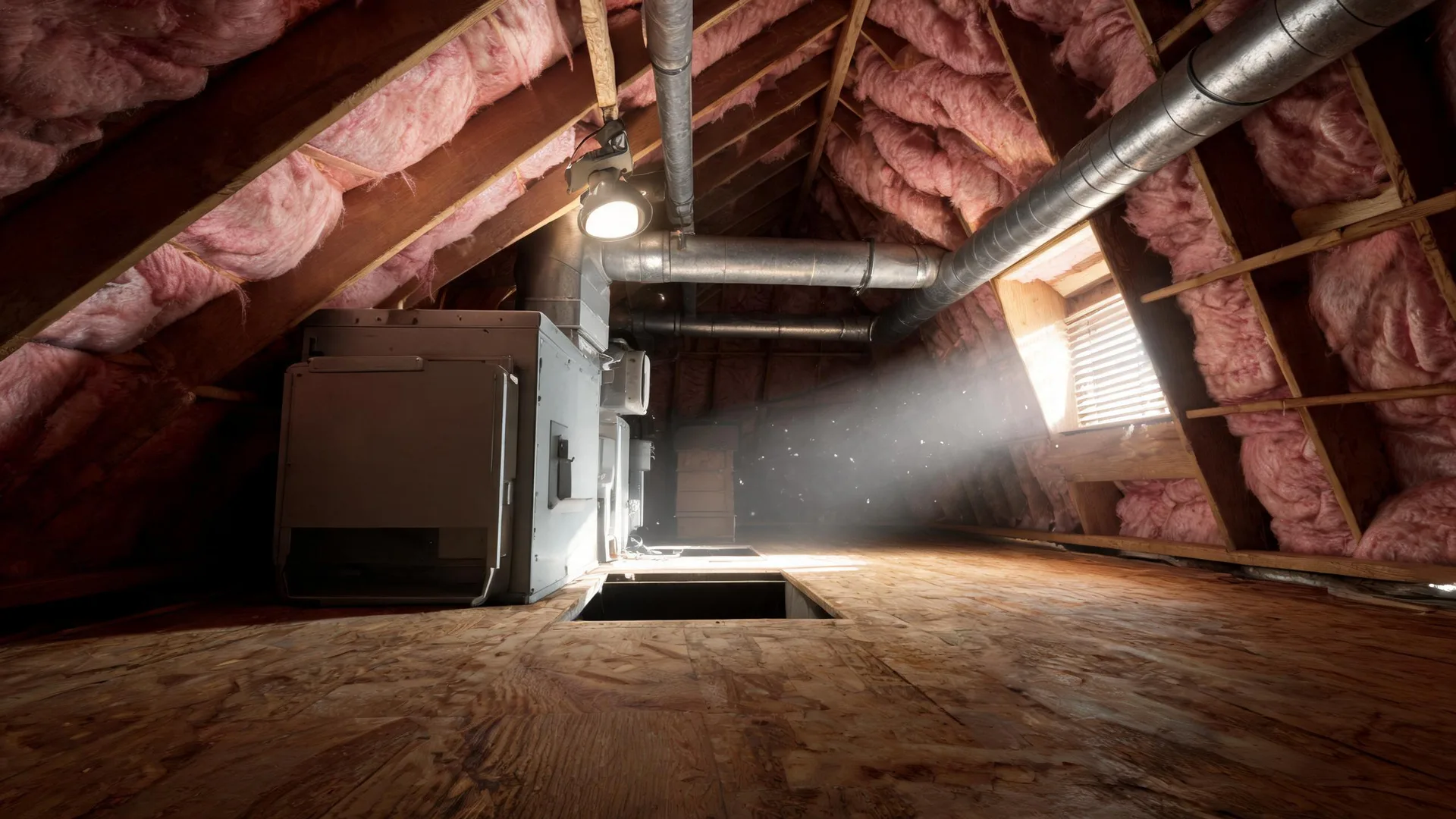
A new outdoor unit paired with old ductwork can lose a lot of what it is paying for. Ducts that leak, or that were sized for a different system, make the new equipment work harder to deliver the same air. Ask whether the ducts were inspected as part of the quote, not just the equipment swapped out. A contractor who looks at the whole path the air travels, not just the box in the yard, is pricing the job that actually gets your house cool.

Aerial view of a gray outdoor air conditioning condenser unit mounted on a concrete pad next to a house with vinyl siding.

Going above the federal minimum saves little here, about $20 a year.

  • A higher-efficiency unit$350 a year
  • A new unit at the federal minimum, 14.3 SEER2$370 a year

Estimates for a typical Spalding County home, from EIA household energy data, Georgia fuel prices and NOAA climate normals. Your home will differ.

Installation day starts before anyone touches the old unit. A contractor should check the new equipment against the load calculation and the ductwork plan one more time, since a size or a duct fix agreed on weeks earlier sometimes shifts once the crew is actually looking at the attic or the crawlspace. The old outdoor unit and indoor coil come out, and the line set gets inspected, since reusing old refrigerant lines on a new system is not always a safe bet. The new indoor coil and outdoor condenser go in, the electrical and refrigerant lines get connected, and the system gets charged to the manufacturer's specification, not just topped off until it runs. Once it is running, a tech should check the airflow at the vents, the temperature split between the air going in and the air coming out, and the refrigerant pressures, because a system can turn on and still be set up wrong. Expect to walk through the thermostat and ask questions before the crew leaves. A job that ends with someone explaining what was done, not just handing you a remote, is one you can trust was finished right.