






Single-story houses, one brick and one with light siding, both with covered porches, behind a mowed lawn and trimmed hedge, under large moss-draped oak branches.

AC Installation in Warner Robins, GA

Tell us about the job

Takes about a minute. No obligation.

New system or replacementCentral ACHouston County, GA
Step 1 of 2

What ZIP code is the job in?

Electricity in Georgia ran 14.08 cents per kilowatt-hour in 2024. An AC that sits a notch below top efficiency pulls more power every time it cycles on, and here it cycles on for most of the year. That difference shows up on every bill it touches, not just one or two. When you're comparing units for a new install, the efficiency rating on the sticker is worth as much attention as the price tag, because you're paying both for a long time.

5 months
May through September, your air conditioner is on duty
91°F
the average summer afternoon it cools against
10 hail events
in ten years, and hail bends the fins on outdoor coils
13.4 SEER2
the federal minimum any new unit must meet
Isometric line illustration of a cutaway house showing interior rooms with ductwork, an indoor air handler, and an outdoor condenser unit connected by lines, on a white background.
Your air conditioner works hardest from June through September.

NOAA nClimDiv, 1991–2020 normals

An oversized air conditioner doesn't cool a home faster, it just shuts off sooner.

A unit that short cycles never runs long enough to pull moisture out of the air, so the house feels damp even at the right temperature.

Most homes here run on electricity, so an electric system is the straightforward choice

86.5% of homes heat with electricity
Cooling runs May through September
Summer afternoons average 91°F

Cooling runs May through September here. April is the month to get a new system in, not May. Once the heat sets in, a failing AC becomes an emergency, and installers booked solid with breakdowns have less time to size and set up a new system properly. Doing it in April means the install happens on a normal schedule, with time to get the sizing and the ductwork connections right, before the unit has to run every day for the next five months.

Your new AC has to meet a higher bar here than in most of the country

Any new system installed here has to meet 14.3 SEER2, the regional minimum for units under 45,000 Btu/h, which is higher than what the rest of the country requires. That rules out some of the cheaper units on the market before you even start comparing. A federal tax credit is available for qualifying high-efficiency equipment, worth looking into while you're weighing options.

Find a contractor
A man in a dark cap, gray T-shirt and brown work pants climbs porch steps toward an orange front door, carrying a worn canvas tool bag, with a potted shrub beside the entry.
A gray residential air conditioning condenser unit mounted on a concrete pad outdoors, surrounded by green grass under a partly cloudy blue sky.

The old unit doesn't come back. It comes apart

The old unit does not get reused or shipped off to run somewhere else. Once it is disconnected, the refrigerant has to be recovered from the lines before anything is cut apart or hauled out. Venting it into the air is against the law. After that the unit is scrapped, the coil and compressor stripped for metal. If the system is a heat pump, the installer is removing the outdoor condenser and the indoor air handler both, since both sides get replaced together. Whatever is left behind, old refrigerant lines, a pad, a disconnect box, usually gets reused or cleared out as part of the same job. None of that is the hard part of the install. The hard part is what it exposes. Once the old unit is gone, the installer can finally see the ductwork and the line set it was hiding, and that is where problems from the old system turn up before the new one goes in.

Ask what size they calculated, not what size you have now

A contractor should run a load calculation on the house, counting windows, insulation and square footage, rather than just matching the old unit. Different installers can walk through the same house and land on different numbers. Ask to see the calculation itself, not just the final recommendation.

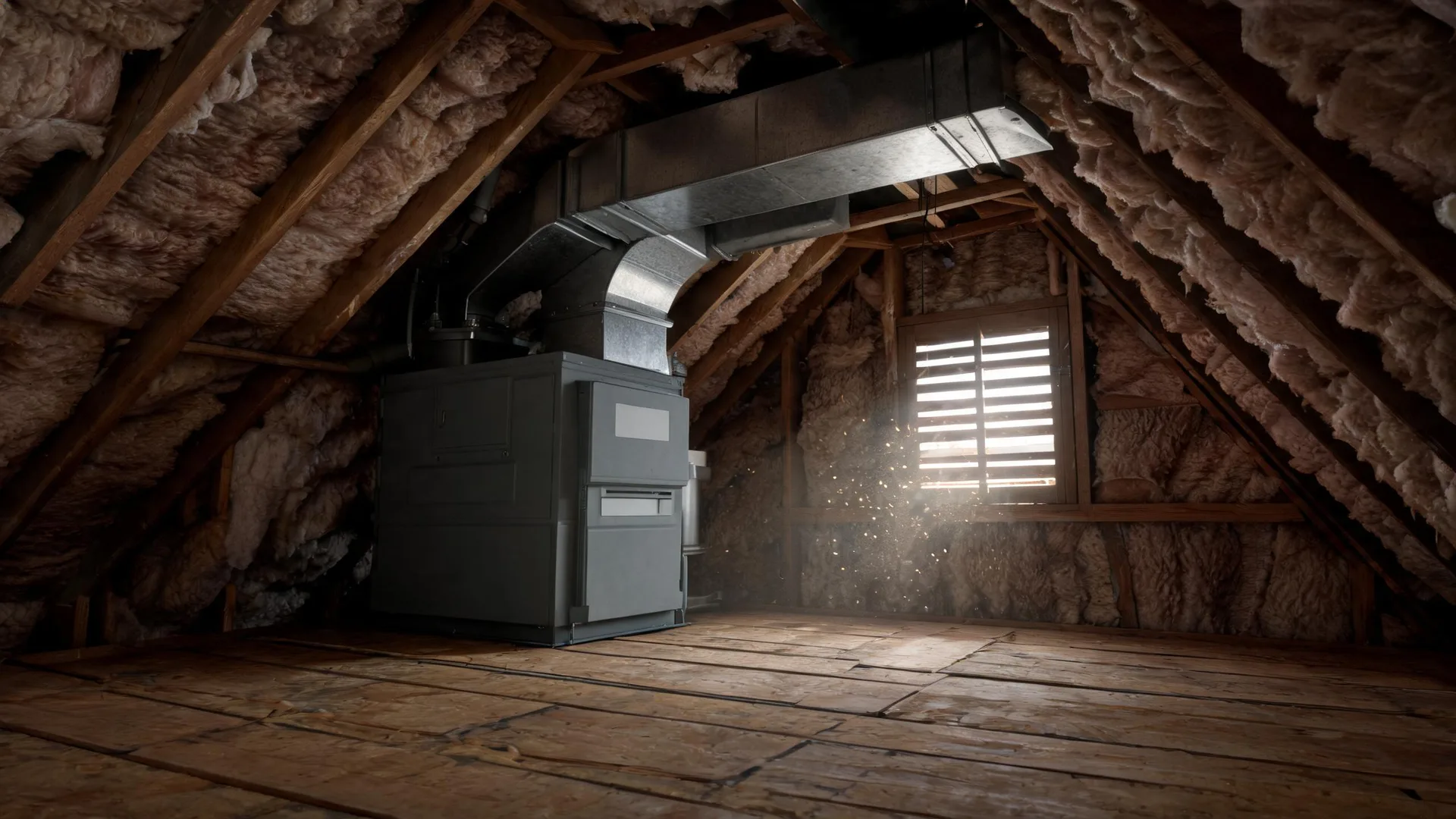
Ask what happens to the ductwork, not just the unit outside

A new air conditioner moves a different amount of air than the one it replaces, and ducts sized for the old system can choke the new one or leave rooms uneven. A contractor who checks duct size and sealing before quoting the install is doing more than one who only prices the equipment.

Aerial view of a residential air conditioning condenser unit mounted on a concrete pad next to a house with vinyl siding and a sliding glass door.

A higher-efficiency unit would save about $30 a year to run in Houston County compared with a new unit at the federal minimum.

  • A higher-efficiency unit$420 a year
  • A new unit at the federal minimum, 14.3 SEER2$450 a year

Estimates for a typical Houston County home, from EIA household energy data, Georgia fuel prices and NOAA climate normals. Your home will differ.

The crew starts outside at the condenser pad, running new line set if the old one isn't being reused, then moves in to set the air handler or coil. The line set gets connected, pressure tested, then pulled into a vacuum to clear out moisture and air before any refrigerant goes in. Skip that step and moisture sits in the lines. It won't cause trouble that day, so you won't see it skipped, and you won't see it done right either unless you ask. Once the system is charged, the installer checks refrigerant levels against the manufacturer's spec for that line length, not just a gauge reading that looks close enough. Then comes airflow, checking static pressure and the temperature split across the coil, and making sure every room is actually getting the air the ducts are supposed to deliver. A thermostat gets set up last, and a good installer walks through it with you rather than leaving it blinking on the wall.