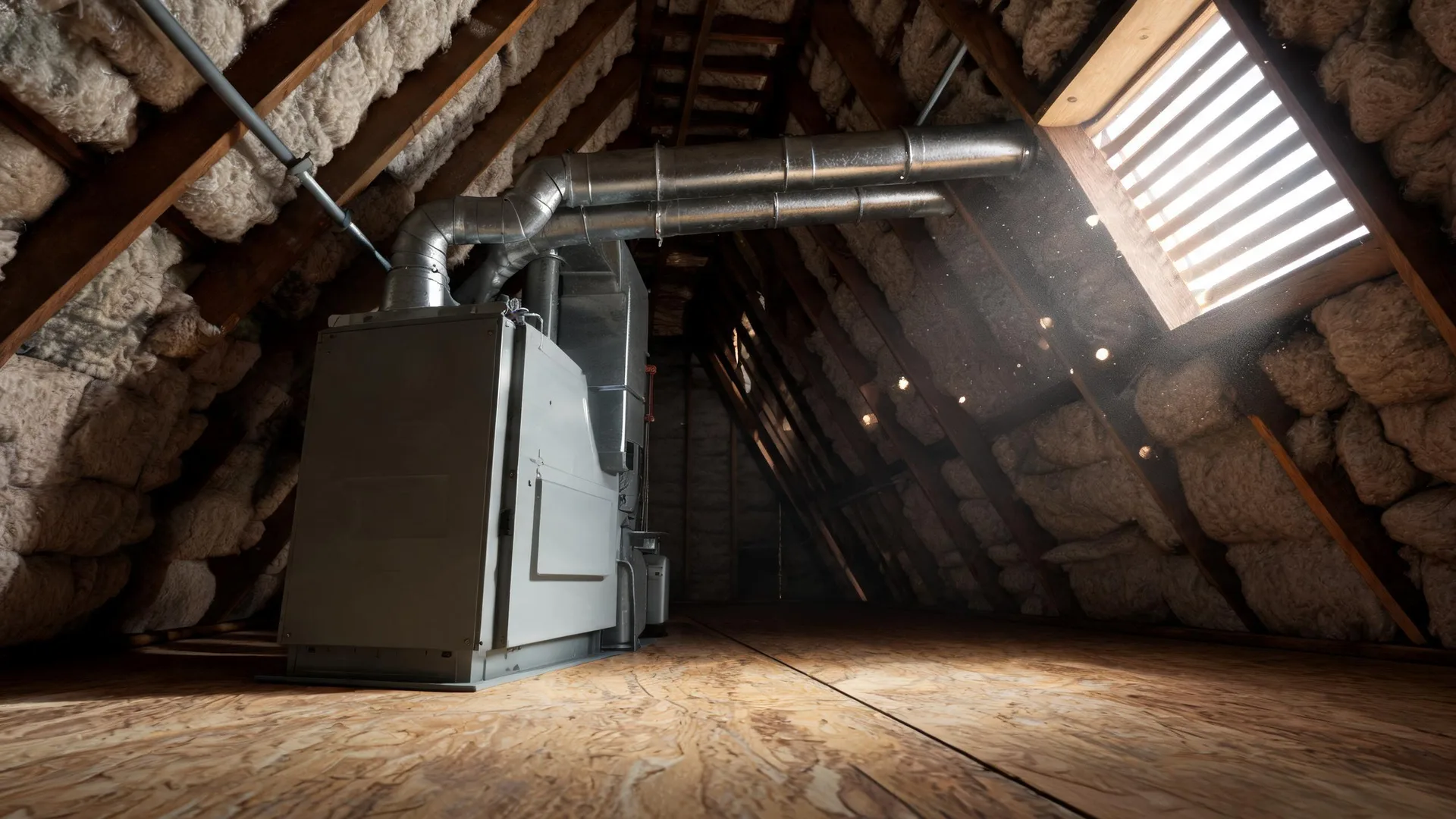
A red brick wall with a row of low shrubs and mulch bed on the left, a mown lawn in the center, and a single-story light-colored house with a gabled roof beyond, backed by pine trees under an overcast sky.

AC Installation in Winder, GA

Tell us about the job

Takes about a minute. No obligation.

New system or replacementCentral ACBarrow County, GA
Step 1 of 2

What ZIP code is the job in?

Most homes here run on electricity

Electricity heats 78.6% of occupied homes in Barrow County. Gas barely shows up, with utility gas under 20% and LP just 2%. If your current system runs on electricity, a new AC or heat pump matches what's already there.


That makes the install straightforward

An electric furnace or heat pump paired with central air is the common setup in this county, so a contractor sizing your new AC is working from a familiar layout. That leaves more of the conversation for sizing the unit correctly for your house, instead of working around an unusual fuel setup.

5 months
May through September, your air conditioner is on duty
88°F
the average summer afternoon it cools against
6 hail events
in ten years, and hail bends the fins on outdoor coils
13.4 SEER2
the federal minimum any new unit must meet
Isometric cutaway illustration of a house showing interior ductwork, an air handler, and an outdoor condenser unit connected by lines, with simple furniture in the rooms.
Your air conditioner works hardest from June through September.

NOAA nClimDiv, 1991–2020 normals

AC in Barrow County starts running in May.

April is the month to get a new system in, before it has to work.

Weather here calls for a system that comes back on by itself, not a bigger one

37 severe weather events from 2015 to 2024
31% of homes statewide lost power a day or more in 2024
24 damaging wind events from 2015 to 2024

Summer here runs about five months, May through September, with afternoon highs averaging 88°F through June, July and August. That's a solid stretch of work for a system, but it's not extreme. A properly sized unit, matched to your square footage and your ductwork, handles those afternoons without strain. There's no case here for oversizing to cover some unusual local spike in heat. A bigger unit than your house calls for cycles on and off more, which wears parts faster and leaves rooms feeling clammy instead of dry. Standard sizing, done correctly for your home, is what this climate actually asks for.

Any new system here has to meet 14.3 SEER2

Barrow County falls under the Southeast's efficiency rule, not just the national one. Split-system AC below 45,000 Btu/h has to hit at least 14.3 SEER2 if it's installed here, and a federal tax credit is available on qualifying equipment. That sets the floor before sizing even comes into it.

Find a contractor
A man in a gray T-shirt and tan work pants, carrying a canvas tool bag, climbs porch steps toward an orange front door beside a potted shrub.
An outdoor air conditioning condenser unit mounted on a concrete pad surrounded by gravel, photographed against a partly cloudy blue sky.

The old unit doesn't just get unplugged

The old system gets disconnected and hauled off once the new one is in place and running. Refrigerant gets recovered from the lines first. It's not legal to just vent it to the air, so a contractor pulls it out with a recovery machine before the old unit comes apart. If the old outdoor unit still has old refrigerant in it, that gets reused or disposed of properly, not released. The indoor coil usually comes out too, even if only the outdoor unit is being swapped, since a new condenser matched to an old coil often doesn't perform right. Whatever ductwork stays gets reconnected to the new unit, and that connection point is worth a look, since a leaky seam there undercuts everything the new equipment is supposed to do. The old thermostat usually gets replaced as well, especially if the new system is a heat pump instead of straight AC, since the controls aren't the same.

Square footage alone doesn't size a system

A contractor sizing your AC is running a load calculation, not measuring your house and picking a number off a chart. That calculation accounts for window area and orientation, insulation, ceiling height, and how the space gets used. Houses the same size can need different tonnage because one has a wall of west-facing windows and the other doesn't.

Oversized cools fast and dries poorly

A unit too big for the house drops the temperature quickly, hits the thermostat setting, and shuts off, often before it's pulled much moisture out of the air. That short cycling means the compressor is starting and stopping more, and starts are what wear a compressor down. The right-sized unit runs longer, steadier stretches, and that runtime is what actually dries the air out.

Overhead view of a gray residential air conditioning condenser unit mounted on a concrete pad beside a house with asphalt shingle roofing.

Going above the federal minimum saves little here, about $20 a year.

  • A higher-efficiency unit$310 a year
  • A new unit at the federal minimum, 14.3 SEER2$330 a year

Estimates for a typical Barrow County home, from EIA household energy data, Georgia fuel prices and NOAA climate normals. Your home will differ.

Install day starts with the old system coming out and the new equipment being set in place, outdoor unit on its pad, indoor coil in the plenum. From there the crew runs new line set if the old one isn't reused, pulls a vacuum on the lines to clear out moisture and air, then charges the system with refrigerant to the amount the manufacturer specifies for that line length. That vacuum step matters more than it looks like from the outside. Any moisture left in the lines turns to acid once the system runs, and that shortens the life of the compressor. Once it's charged, the system gets run through its paces, checking airflow at the registers, checking the temperature split between the air going in and the air coming out, and confirming the thermostat is talking to the equipment the way it should. A contractor doesn't call the job done until it's actually running and holding the numbers it's supposed to hold, not just powered on.