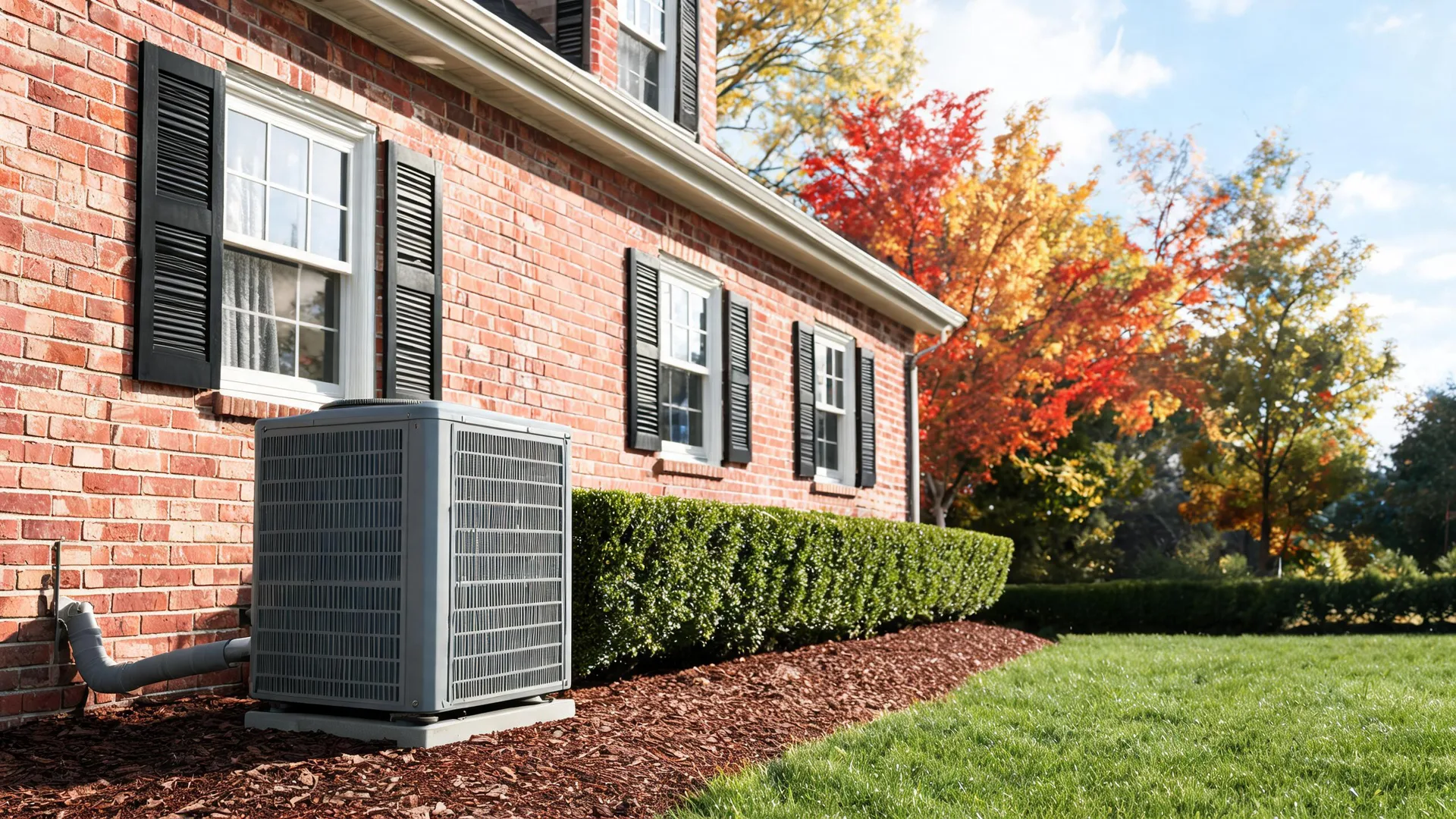
An outdoor heat pump unit mounted on a concrete pad in front of a two-story suburban house.

Heat Pump Repair in Peachtree Corners, GA

Tell us about the job

Takes about a minute. No obligation.

RepairHeat PumpGwinnett County, GA
Step 1 of 2

What ZIP code is the job in?

Gwinnett County sees real storm damage

Gwinnett County logged 185 severe weather events between 2015 and 2024, including 143 damaging wind events and 20 hail events. A tornado touched down once in that span, and tropical storms or hurricanes reached the county three times. The outdoor unit sits outside through all of it.

A unit can take a hit and keep running

Hail dents a cabinet and bends fins without stopping the fan right away. Wind-blown debris can nick a coil or jam a fan blade and the heat pump may still turn on. Almost a third of Georgia households lost power for a day or more in 2024, and a heat pump that sat through that kind of outage is worth a second look.

6 months
November through April, your system heats
5 months
May through September, it cools
34°F
the average winter night it heats against
87°F
the average summer afternoon it cools against
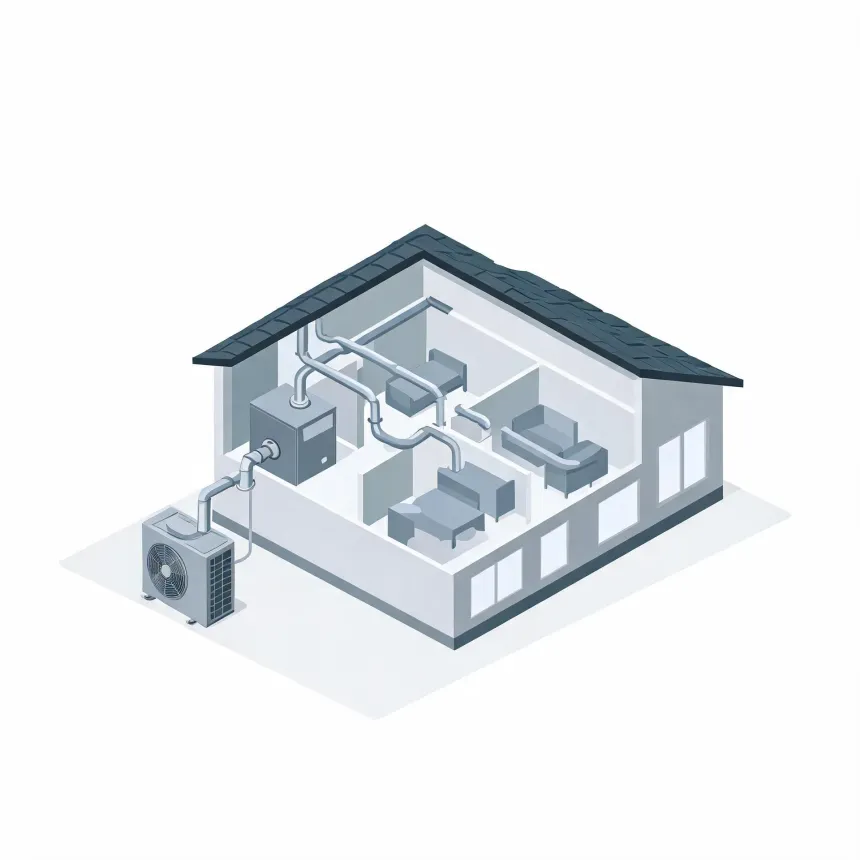
Isometric cutaway illustration of a single-story house showing an indoor air handler, branching ductwork through rooms with furniture, and an outdoor condenser unit connected by a line outside the wall.
Your system heats November through April and cools May through September.

NOAA nClimDiv, 1991–2020 normals

A failing capacitor won't always stop the unit on the spot, it just makes the compressor or fan motor work harder until it quits.

If a heat pump has been through strain, that's one of the first parts worth having checked before it fails outright.

Half the homes here were built by 1996, so your heat pump probably isn't the reason to walk away

Half the homes here were built by 1996
143 damaging wind events from 2015 to 2024
20 hail events from 2015 to 2024
Call Before November, Not AfterHeat runs here from November through April, and a weak part usually fails in the first cold snap.

So if a storm or an outage put strain on your system, the move is usually to get it checked, not replaced. A heat pump that came with a house built around 1996 or later still has working life in it, and most of the parts that take a hit from weather are repairable on their own. A dented cabinet or a nicked fan blade is a service call. Have the contractor check the capacitor and the fan motor first, since those are the parts that wear down quietly after strain instead of failing all at once. Replacement makes sense when a system is old or has a history of repeated breakdowns, not because it went through one bad storm.

If a storm came through recently, get the unit checked before the next one does

If your heat pump has been sitting outside through wind or hail, a service check now will tell you whether the cabinet, coil or fan took any real damage. The unit still running isn't proof it's fine.

Find a contractor
A gray outdoor HVAC unit mounted on a concrete pad beside a house with gray lap siding and a stone foundation.

The Signs Show Up Before the Breakdown Does

A heat pump that runs most of the year doesn't fail all at once. It gives signals first, and most of them show up as a change from how the system used to sound or feel, not a total shutdown. Short cycling is one of the clearest: the unit kicks on, runs for a couple minutes, shuts off, then starts again. That's hard on the compressor and usually means a sensor, a dirty coil, or a refrigerant charge that's off. Ice on the outdoor coil in the middle of a mild day, not overnight in a cold snap, points to a stuck reversing valve or a fan that isn't pulling air across the coil like it should. Warm air coming out of the vents when the thermostat is set to heat often means the reversing valve isn't switching, and the system is stuck in the wrong mode. A hissing or bubbling sound near the outdoor unit can mean a refrigerant leak, and that's worth calling in before the compressor has to work harder to make up for the loss. Weak airflow at the vents, even with the fan running, usually traces back to a blower wheel caked with dust or a filter that's overdue. None of these stop the system outright. They just make it work harder for longer, which is exactly what shortens the life of a compressor.

What's safe to check yourself

Start at the thermostat. Make sure it's set to heat and the temperature is actually above room temperature, since a setting bumped by accident looks just like a broken system. Check the outdoor unit for anything blocking it, leaves, a fallen branch, ice buildup, or snow piled against the cabinet. Look at the air filter and swap it if it's gray or caked, since restricted airflow can make a heat pump struggle without anything being broken. Check any indoor vents aren't closed or blocked by furniture. Last, check the breaker panel for a tripped switch tied to the heat pump or air handler, since a reset is sometimes all it takes.

What to leave alone

Don't open the outdoor unit's cabinet or touch the coil and fan inside it. Don't try to clear ice by chipping at it or pouring hot water on the coil, since that can bend fins or crack a line. Don't reset the breaker more than once if it trips again right away, since a breaker that won't hold power is telling you something is actually wrong downstream. And if you smell anything burning or hear grinding from the outdoor unit, shut it off at the thermostat and leave it off until someone looks at it.

A heat pump that's struggling doesn't know to protect itself. It just keeps trying to hit the setpoint, and whatever's wrong gets worse under that load. A refrigerant leak is a good example. Run it low on charge long enough and the compressor starts pulling liquid refrigerant back in, which washes the oil off its internal parts. That's how a leak that would have been a simple recharge turns into a seized compressor. A weak run capacitor works the same way. It can't quite get the motor up to speed, so the motor draws more current trying to start, and the windings heat up a little more each cycle until they fail. Dirty coils and bad airflow do it too, just slower. The compressor ends up working harder to move the same amount of heat, and heat is exactly what kills a compressor over time. None of this shows up as a sudden stop. It shows up as a system that still runs, right up until the one part that was already failing finally gives out.

A diagnostic visit starts before the panels come off. The tech asks what the system is doing, when it started, and what the thermostat shows, because that narrows down where to look first. Then it's gauges on the refrigerant lines to check the charge, a clamp meter on the compressor and fan motor to see what they're actually drawing, and a look at the capacitor to see if it's holding its rating. Outside, that means pulling the cabinet to check the coil, the fan blade, and the wiring for anything a storm or just time might have loosened. Inside, it's the air handler, the filter, and the blower wheel, since restricted airflow on either side throws off every reading taken elsewhere. The point of all that isn't to replace parts until something works. It's to find the one part that's actually failing before it takes something bigger down with it.