How often to clean a mini split in Georgia

Tune-up, service, or cleaningMini-splitGeorgia
Step 1 of 2

What ZIP code is the job in?

How often should I clean my mini split in Georgia?

You're planning ahead for your mini split and want to know how often it actually needs cleaning here, not a generic number from a manual written for a different climate. You run it hard, both for cooling and probably for heat too, and you want a schedule you can put on the calendar now rather than figure out later when something starts smelling off or blowing weak air.

Clean the filters monthly and have the full unit serviced once a year

The filters catch dust and whatever's in the air before it reaches the coil, and in Georgia they load up fast because the system runs nearly year round between summer cooling and winter heat. Rinse or vacuum them once a month. Beyond the filters, the indoor coil, the blower wheel, and the outdoor unit need attention a filter cleaning doesn't cover, and that's a once-a-year job for a contractor. Skip it and the coil picks up mold and grime in all that humidity, the drain line clogs, and the system has to work harder to do the same job. Most homes here heat with electricity, so a mini split running inefficiently shows up on both sides of the year, not just the summer bill.

A man in a blue sweatshirt reclines with his eyes closed in an armchair in a living room, with a folded newspaper and ceramic mug on a side table and bookshelves and a couch behind him.
A bearded man in a navy sweater leans back in a brown leather armchair with his eyes closed and a slight smile, beside a window and a side table holding newspapers and a lamp.
A man in a dark gray sweater reclines with closed eyes and a slight smile in a brown leather armchair in a living room with bookshelves, a sofa, a lamp, large windows, and a folded newspaper on a round wooden table.
A man in a gray fleece pullover sits in a leather armchair with his eyes closed and a slight smile, beside a table with newspapers and a lamp, with a window, potted plant and bookshelves behind him.

Why does my mini split smell musty or stop cooling like it used to?

A dirty mini split tells on itself. Air comes out weaker than it used to, even with the thermostat set the same as always. A musty smell shows up when the unit kicks on, especially after it's been off for a while. You might notice the indoor coil icing over, or water dripping where it shouldn't. Dust builds up visibly on the intake grille if you look closely. None of this happens overnight. A clogged filter or dirty coil makes the system work harder to do the same job, and that shows up on your power bill before it shows up as a breakdown. Left alone long enough, a buildup of mold or grime on the coil can push musty air into the rooms you're trying to cool.

A white wall-mounted mini-split air conditioner unit high on a light gray interior wall, with a beige curtain and window at the left and wood-look flooring below.

A clean coil, a quiet room

Air moves out cold and steady, no smell when it kicks on. The filter is doing its job and the coil behind it is clear enough to give up all the cold it's built to. This is what a mini split looks like a season after it was last cleaned.

A dusty white wall-mounted mini-split air conditioner indoor unit with open louvers, installed near the ceiling on a plain light-colored wall.

What's building up behind the vents

That dark grime along the outlet is mold and dust the filter stopped catching a while back. It cuts the airflow and feeds the musty smell. Left alone, it keeps building, and the unit works harder to cool the same room.

A closed laptop and a ceramic mug on a wooden table in front of a kitchen with green cabinets, marble counter, black pot, cutting board, wooden bowl, and a white vase with greenery.

Inside the blower wheel, where nobody looks

The filter catches what you can see. Behind it, the coil and the blower wheel catch what you can't, and that's where a mini split actually loses its cooling power. Dust and pollen work past the filter over months and build up on the coil fins, thin enough that air still passes but thick enough to block the heat exchange that makes cold air cold. The blower wheel collects its own film, and a wheel that's out of balance from buildup runs louder and moves less air for the same electric draw.

A contractor cleaning a mini split opens the housing, washes the coil, and wipes down the wheel, then checks the drain line for the algae that grows in a warm, wet line that sits unused half the year. None of that is a filter swap you do yourself on a Saturday. Finding someone who does this work right usually means asking around, calling a few numbers, and explaining the same symptoms more than once before you get a straight answer on scheduling. Send the form once and that part is off your plate.

Living room interior with a light sofa holding a dark green cushion and a brown knit throw, a tall leafy plant by a black-framed window, a wooden coffee table with a round tray, and wooden shelves holding vases and books.
A white wall-mounted mini-split air conditioner installed near the ceiling on a plain beige interior wall.

Cleaned on schedule

The panel stays closed because there's nothing to chase. Air comes out of the grille cold, the room holds its temperature, and the unit cycles quietly. This is what a mini split looks like when the coil behind that panel is still clear.

A dusty, discolored wall-mounted mini-split air conditioner unit near the ceiling of a plain beige interior wall.

Left too long

The casing tells you before the air does. Dust builds up on the plastic itself, not just inside, and by the time it looks like this the coil behind it is likely worse. Cooling drops off and the unit works harder to do less.

An older man with gray hair and a navy knit sweater sits in an armchair with his eyes closed, near a bright window with potted green plants.
A woman in a cream knit sweater sits with closed eyes in an armchair beside a window showing orange autumn foliage, with a framed picture, plants, and a white mug on a wooden table nearby.

Let someone else find the pro

Skip calling around to set up a mini split tune-up.

You only hire the pro if you want to.

A single-story red brick house with a hipped shingle roof, white-framed windows and a pale blue front door, fronted by a wide asphalt driveway and flanked by green trees and shrubs under a bright hazy sky.

A summer dew point averaging 68°F, from NOAA climate records, means the air going into your mini split is already carrying a lot of moisture before it ever reaches the coil. That coil has to pull more water out of the air just to get the room comfortable, and the wetter the coil stays, the more it collects dust and pollen that would otherwise blow past dry. You'll notice it as a weaker stream of cold air by late summer, or a musty smell when the unit first kicks on after sitting a few hours.

NASA POWER T2MDEW county cells weighted by homes

Filter Rinse or Full Cleaning

Washing the filters yourself

  • You can pull the filters and rinse them every few weeks without waiting on anyone, which matters when the unit runs most of the year here.
  • It takes the dust and pet hair off the mesh, but it does nothing for the coil or the blower wheel sitting behind it.
  • Weak airflow and a musty smell when the unit kicks on usually mean the coil's dirty, and a filter rinse won't touch that.
  • Georgia's humidity keeps the coil wet between cycles, so grime builds there even if you never miss a filter wash.
  • There's no tool for checking refrigerant charge or clearing the condensate drain, so a clogged drain pan can still back up and leak.
  • This buys time between real cleanings, not a replacement for one.

A full cleaning from a contractor

  • A contractor opens the unit and cleans the coil and blower wheel, the parts a filter rinse never reaches.
  • The condensate drain line gets checked and cleared, which matters in a climate where the coil is pulling water out of the air most of the year.
  • Refrigerant charge gets checked too, since low charge shows up as weak cooling the same way a dirty coil does.
  • Once the form is in, you're not the one calling around and explaining the musty smell three different times to three different companies.
  • A full cleaning before summer means the coil is doing its job before the heat and humidity arrive, not after you've already noticed the room isn't cooling.
  • This is the only way to know whether the problem is dirt, a drain clog, or something electrical, since they can all look the same from the thermostat.
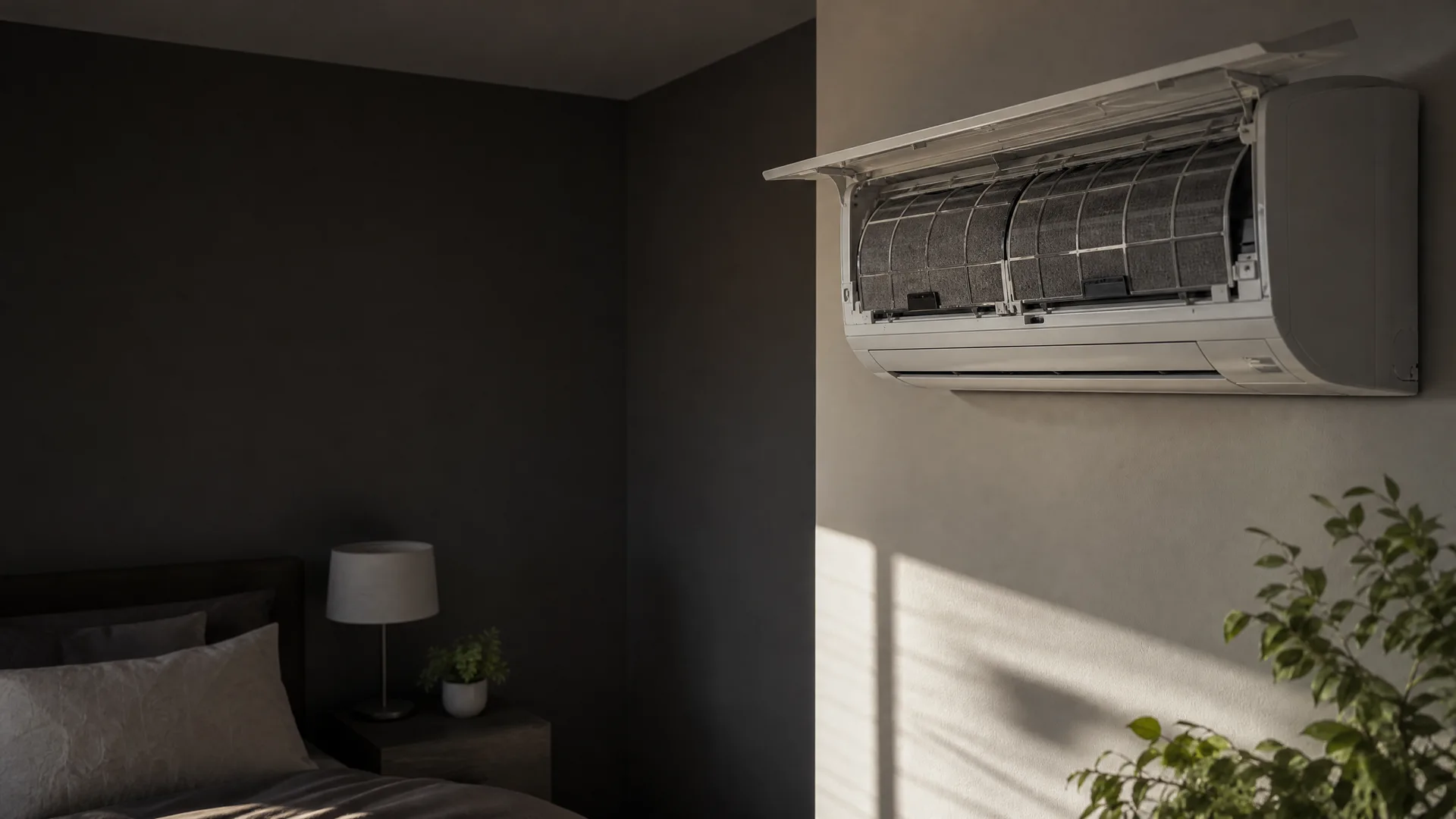
A wall-mounted mini-split air conditioner with its front cover open exposing the filters, in a dim bedroom with a bed, nightstand lamp and a potted plant.

It's a Saturday morning in April, light coming through the blinds still low enough to catch the dust in the air. You've got the cover of the bedroom unit popped open, looking for why the room never quite got cold last night even with the thing running half the evening. The filter screen slides out grey, matted enough that you can't see through the mesh anymore. You wipe a finger along the plastic housing behind it and it comes back coated. Pollen's been thick this spring, same as every spring here, and it looks like most of it ended up inside the unit instead of outside on the car. You set the filter in the sink, already knowing a rinse isn't going to touch whatever's built up further back.


Power costs 14.74 cents per kilowatt-hour statewide

At 14.74 cents a kilowatt-hour, a coil working harder than it should shows up fast on your power bill. A mini split that's clean doesn't have to run as long to pull the same heat and moisture out of the room, so keeping it on schedule keeps that rate from costing you more than it has to.

EIA-861 2025 statewide residential average

Once a year, before summer

  • A mini split in Georgia does best with a professional cleaning once a year, timed before the muggy stretch sets in.
  • Filters you can rinse yourself every few weeks, but the coil and blower wheel behind them need a technician's tools to clear.
  • A unit running most of the year here builds up buildup faster than one that cycles on and off a few months a season.
  • Skipping the yearly cleaning shows up as weaker airflow, a musty smell, and a power bill that climbs before anything breaks outright.
  • Once the coil is clean, the system pulls moisture out of that humid air without working harder than it has to.
  • Georgia's typical power rate means a strained coil costs you more every month it runs uncleaned, not just when it finally fails.

A mini split in Georgia needs a professional cleaning once a year, done before the muggy months start pulling moisture out of the air nonstop. Rinsing the filters yourself keeps dust off the mesh, but the coil and blower wheel sit behind that filter, and clearing those takes a technician's tools, not a garden hose. A unit that runs most of the year here builds up grime faster than one that only cycles on and off for a few months, so the gap between cleanings matters more in Georgia than it would somewhere milder. Skip that yearly visit and the signs show up in order: airflow gets weaker, a musty smell shows up when the unit kicks on, and the power bill climbs before anything actually fails. A clean coil pulls moisture out of humid air without straining, which matters at a power rate like Georgia's, where a strained coil costs more every month it runs dirty.

Finding someone to do that cleaning is its own chore, normally. Searching for a contractor, calling around to see who's available, explaining the same symptoms to each one, then comparing quotes that are never quite apples to apples. Send the form on this page and that work is gone. You're not the one tracking down a technician anymore. You answer, someone qualified gets matched to the job, and the yearly cleaning you already know you need stops being something you have to chase down yourself.

The dark metal gable roof and stone chimney of a house seen from above, with forested hills, cloud-covered mountains, and moss-draped tree branches framing the upper left.

One request and it's handed off

Send my request

Asking costs nothing, and the choice to hire stays yours.

You've already read what a dirty coil costs you in cold air and power. Sending this request means you're done calling around town for someone who services mini splits, explaining the musty smell twice, and comparing quotes on your own. One form, and that search is off your plate.