Running clean
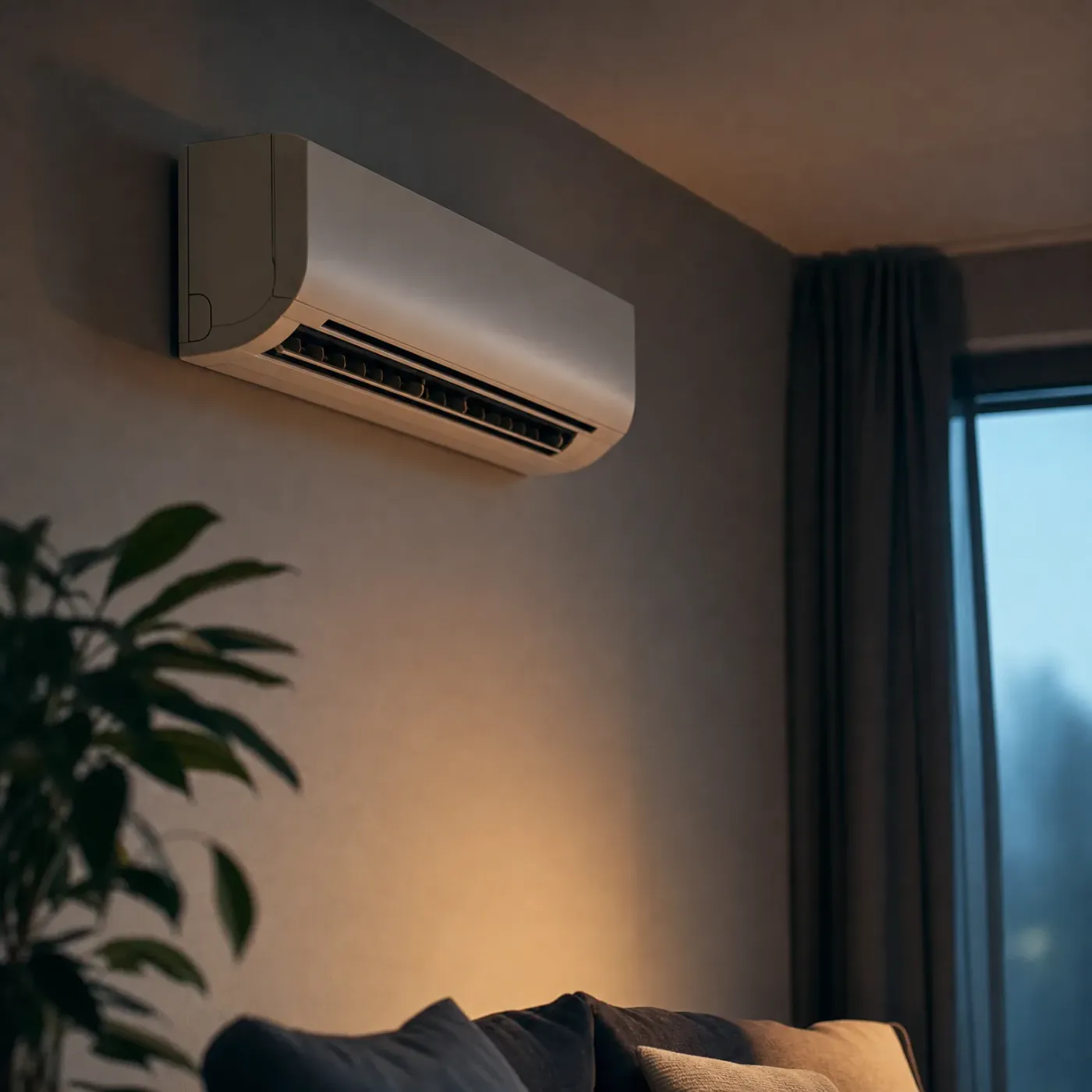
A mini split that smells like nothing is doing its job the way it should. Air moves over a dry coil, the drain pan empties on its own, and nothing is growing where the air passes through on its way into the room.
No calling every shop in Coweta County
A musty smell from your mini split usually points to the coil or the drain pan, where moisture sits and mildew starts, especially with how long and sticky Coweta County summers run. This page gets into what causes it and what cleans it out, so you don't have to spend your afternoon calling around Newnan and repeating the same description to three different companies.
Skip calling aroundThat musty smell means mold or mildew is growing somewhere air passes over on its way into the room. Usually it's the evaporator coil inside the indoor unit, or the drain pan underneath it. Both stay damp from condensation every time the system runs, and with Coweta County summers staying muggy for months, that moisture never really gets a break to dry out. Dust and skin cells settle into that dampness and mildew takes hold, and every time the blower kicks on, it pushes that smell out into the room with the air. A clogged drain line can make it worse, since standing water sitting in the pan or the line gives mold even more to work with. The smell itself won't hurt the unit, but it's a sign the coil needs a real cleaning, not just a wipe-down, and the drain line needs to be checked so water isn't backing up where it shouldn't be.





A mini split that smells like nothing is doing its job the way it should. Air moves over a dry coil, the drain pan empties on its own, and nothing is growing where the air passes through on its way into the room.

Once you can see buildup along the vents and casing like this, it has been sitting long enough to take hold. A contractor who services this equipment all summer in Coweta County can open the unit, clean the coil and pan, and tell you if the mold has spread past what a filter rinse can fix.
You probably notice it most when the unit first kicks on, a damp, closed-in smell that fades after a few minutes and comes back the next time it runs. Maybe you've seen a thin film on the vents when you pull the cover off, or the air just feels heavier than it should for a room that size. Some households notice it worse in a bedroom or a room that stays shut most of the day. Left alone, the mold keeps growing on the coil and in the pan, and what you're smelling is what you're breathing every time that unit turns on. In a house with anyone who has allergies or asthma, that matters more than it might seem from the smell alone.




A licensed pro who works in Coweta County gets your request.
You're not committing to anything by asking.
The coil has to stay wet to cool the air. Every pass of humid air across it leaves water behind, and that water doesn't fully drain between cycles, especially when the unit runs most of the day through a Coweta County summer.
A coil that never fully dries is a coil mold can keep growing on. That's why the smell fades a few minutes after startup but never really goes away on its own.
Cooling runs May through September
Cooling runs May through September, and that's five months of the coil staying wet and the drain pan doing real work.
Heat runs November through March
Heat runs November through March, so the system switches modes and sits unused the other way for stretches in between.
Power here costs 14.12 cents per kilowatt-hour
Power here runs 14.12 cents per kilowatt-hour, so a unit working harder than it should shows up on the bill.
NOAA nClimDiv 1991-2020 · EIA-861 2025
The smell has a cause, and the cause is water that isn't going where it should. Either the coil stays wetter than it needs to after the unit cycles off, or the drain pan and line aren't carrying that water away the way they're supposed to. Both are things a technician can look at and clean, and both are things that tend to come back if the unit never gets that attention, especially once summer settles in and the coil barely gets a chance to dry between runs.
You don't have to figure out which one it is before you call. That's the part a contractor who works on these units all summer in Coweta County already knows how to check. Someone who services mini splits here season after season has seen which part usually fails first on a unit like yours, and where to look before they even pull the cover off.
Finding that person is usually the slow part. You end up searching, calling a few places, describing the same smell three times, then weighing quotes that don't quite match up. Going through one licensed local contractor skips all of that. You explain it once, to someone who already knows the equipment, and that's the end of the sorting and comparing. What's left is getting the moisture problem actually fixed, so the smell stops showing up every time the unit kicks on.

The pro who gets in touch is licensed in Georgia and works in Coweta County.