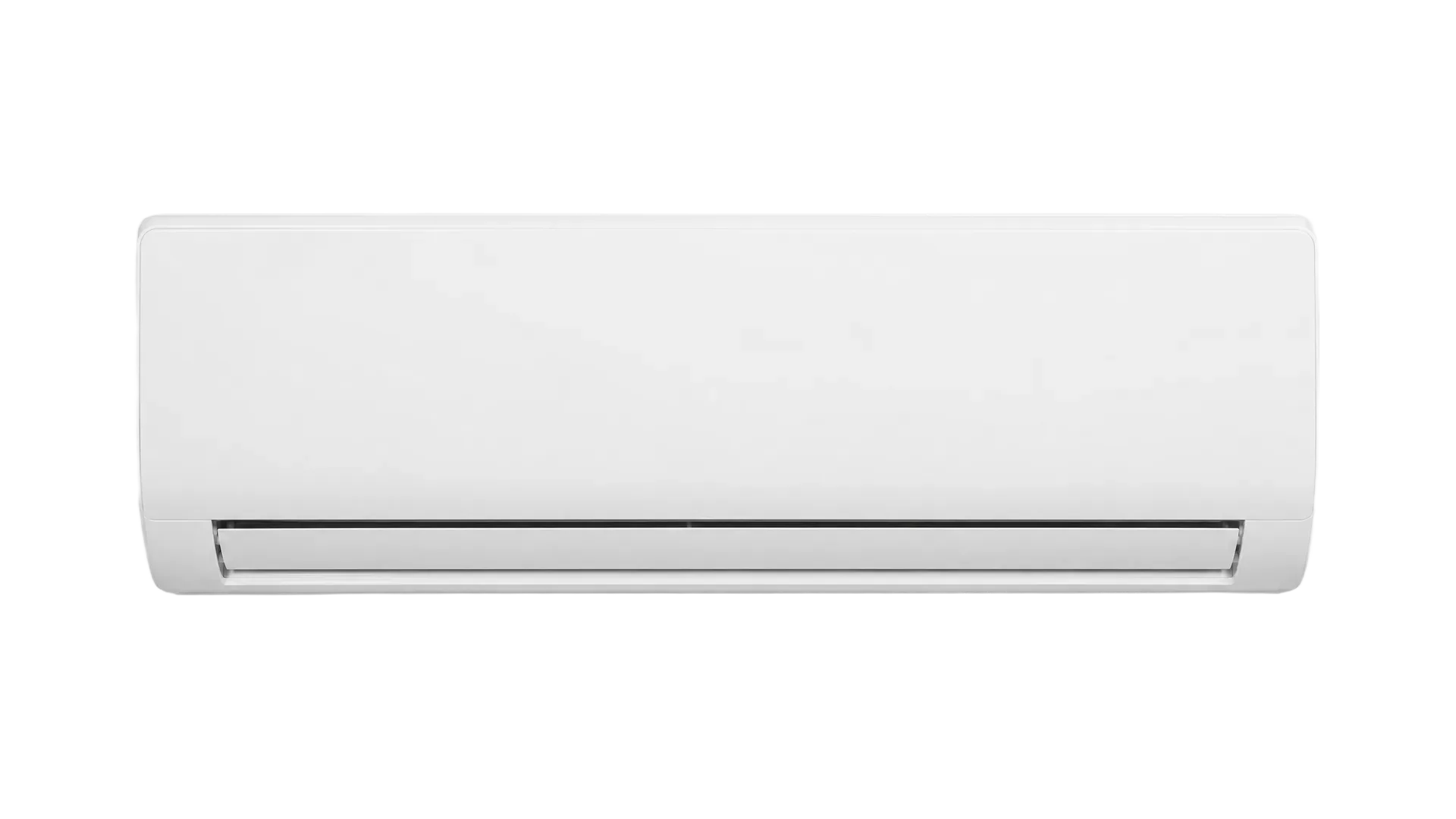
Running clean
This is what a mini split looks like when air moves through it the way it should. The vents stay clear, the coil stays dry, and the unit keeps pace with a Warner Robins summer without falling behind.
Ice on the indoor coil or lines usually means airflow is blocked or the system is low on refrigerant. A dirty filter or a coil caked with dust cuts the air moving across it, the coil gets too cold, and moisture in the air freezes right on it. A low refrigerant charge does the same thing from the other side, dropping the coil temperature below what it should be. Warner Robins summers run long and muggy, and that humidity gives the coil plenty of moisture to freeze once something goes wrong. Running the unit while it's frozen won't clear it and can push the compressor to work against ice that shouldn't be there. Turn the system off and let it thaw fully before anyone opens it up or tries to diagnose the actual cause. The freeze itself is a symptom. What's behind it, a clogged filter, a failing blower, a refrigerant leak, needs a licensed contractor to find and fix.
Cooling runs May through September
Your mini split runs almost every day from May through September, so a dirty filter or low charge has months to turn into ice, not just a bad afternoon.
Heat runs November through March
Heat runs November through March on the same unit, so a coil problem can show up twice a year instead of staying a one-season issue.
Power here costs 14.96 cents per kilowatt-hour
At 14.96 cents per kilowatt-hour, a frozen coil forcing the system to run longer to cool the room shows up on your bill before the ice even melts.
NOAA nClimDiv 1991-2020 · EIA-861 2025

This is what a mini split looks like when air moves through it the way it should. The vents stay clear, the coil stays dry, and the unit keeps pace with a Warner Robins summer without falling behind.

Dust like this across the vents and top panel blocks the air the coil needs. Once airflow drops that low, the coil runs too cold for too long, and ice starts forming where none should be.




Running the unit with ice still on the coil pushes liquid refrigerant back toward the compressor instead of vapor, and a compressor isn't built to handle liquid.
That's why the fix is to shut it off and let the ice melt first. A contractor can find out what caused the freeze once the coil's clear.


A mini split cools by pulling warm air from the room across a cold coil. That coil needs to stay above freezing for the heat exchange to work. Once ice starts forming, it works like a blanket over the coil, so less heat gets pulled from the air passing by. The coil drops colder still, and the ice thickens from there. Meanwhile the blower keeps running, pushing air at a coil that has less and less open space to move through, so the airflow problem feeds itself too. A low refrigerant charge gets you to the same place from a different direction. Less refrigerant means lower pressure in the coil, and lower pressure means a colder coil even if the airflow is fine. The outdoor unit has no way to know any of this is happening. It keeps compressing refrigerant and trying to release heat outside, heat it can only get rid of if the indoor coil is actually pulling it from your house in the first place.


Warm room air pulls across the indoor coil and loses its heat.
Dust or a clogged filter slows that airflow down.
The coil's surface temperature drops below freezing.
Moisture in the air lands on the coil and turns to ice.

You're at your desk on a July afternoon, the mini split humming above the window, when you notice the wall under it has gone dark and wet. A streak runs down from the indoor unit toward the baseboard, and the carpet beneath has started to soak through. You grab a towel and press it against the wall, then step back and look at the unit itself. No ice showing on the outside, just that steady drip finding its way down the drywall while you try to keep working with the fan still running somewhere behind you.
A mini split that's iced up doesn't fix itself by waiting it out, and running it while the coil is frozen only pushes the problem toward the compressor, which is the expensive part to replace. Shutting it off buys you time, not an answer. You still need to know whether the filter's clogged, the coil's dirty, or the system's actually low on refrigerant, and that's not something you can tell by looking at a wet wall or a block of ice. Through a Warner Robins summer, a mini split that can't shed heat means a house that doesn't cool down, and every day it sits frozen is a day closer to the compressor taking damage it won't recover from. Handing this off to a contractor who can check the charge, clear the airflow, and find what actually caused the ice means you stop guessing and start knowing, and the unit gets back to doing the one job it has before the next hot afternoon arrives.

Pull it out and hold it to a window. Light passes through evenly, the mesh looks almost new, and you can see your hand through it without strain. Air moves through the indoor unit the way it was designed to, across the whole coil, not just a corner of it. If ice still shows up on a system like this, the filter isn't the question anymore. Something else is going on, likely the refrigerant charge, and that's a job for a gauge, not a garden hose.
It's gray, matted, and you can't see through it at all. Air that should pass evenly across the coil is forced through whatever gaps are left, so part of the coil runs starved for airflow while the rest does all the work. That uneven cooling is exactly where ice gets its start. A filter this clogged, left in through a Warner Robins summer, is reason enough on its own for a mini split to freeze without any refrigerant problem at all.
Five months of steady running gives dust and a weak charge all summer to turn into ice instead of just one bad week. A mini split here earns its keep May through September, so whatever is blocking airflow or thinning the refrigerant gets found out fast.
NOAA nClimDiv 1991-2020

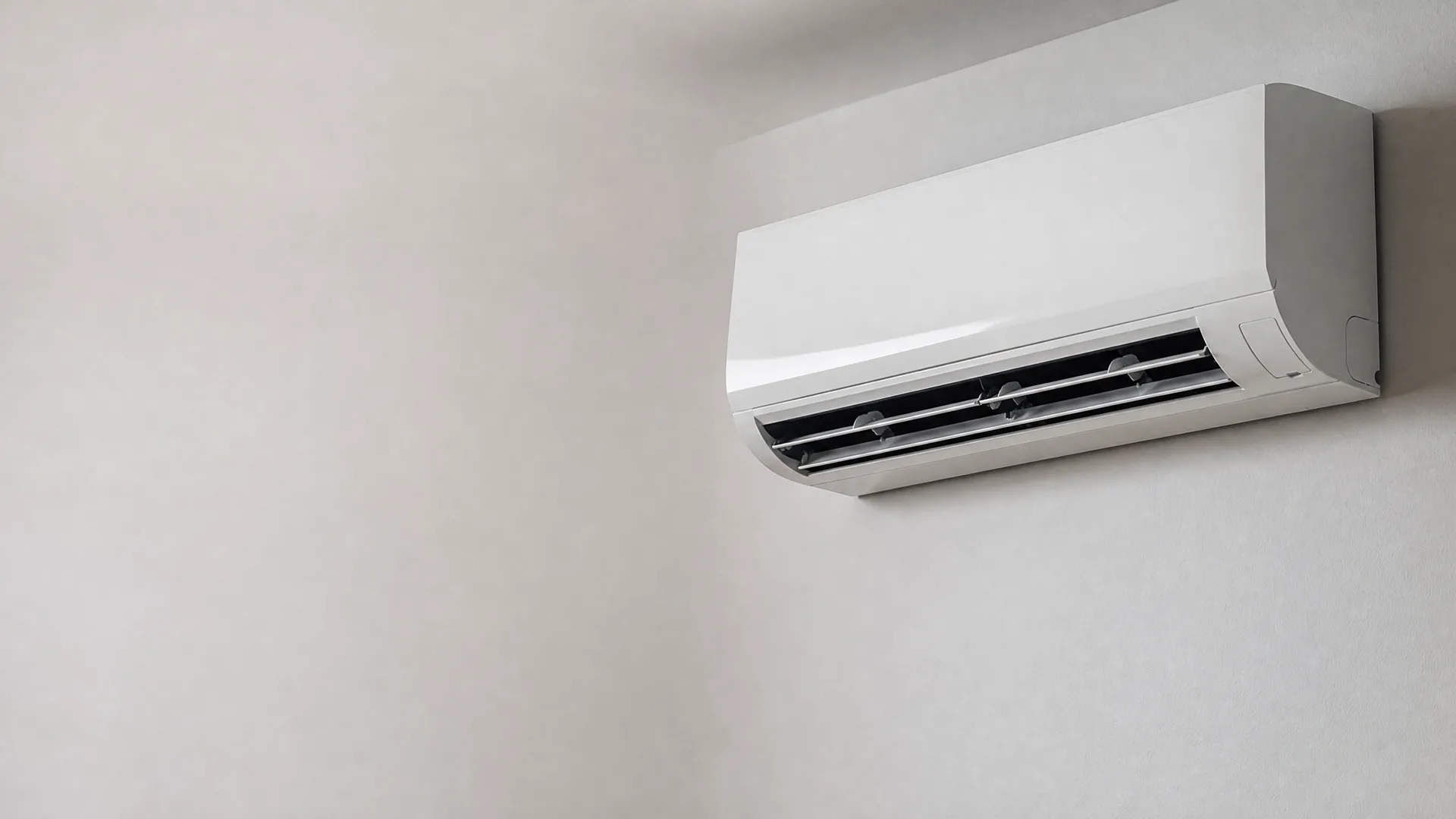
Air moves out across the room without a sound worth noticing. The coil stays dry, the vents stay clear, and the wall underneath stays clean. This is a mini split keeping up with a Warner Robins summer the way it's supposed to.

Dust sits across the casing and the vents look dull instead of clean. Somewhere behind that grime, airflow has been choked down long enough for the coil to drop below freezing and start icing over instead of cooling the room.

A frozen coil isn't the problem by itself. It's what a dirty filter, a blocked vent, or a low charge does to a mini split over months of steady running. Shutting it off and letting the ice melt is the right first move. Finding out what caused the ice is the next one, and that part takes a contractor who can check the airflow and the charge properly.
Once you send the form, you're done hunting for who to call. A contractor who covers Warner Robins and Houston County gets your information and reaches out to you about your unit. You don't need to know yet whether it's the filter, a blocked vent, or the refrigerant. That's the part someone else sorts out once they're looking at your system.


Find a mini split repair pro in Houston County