

Running the way it should
Warm air moves out of the indoor unit steady and even, no clicking or short cycling. The outdoor unit isn't caked in ice. You set a temperature and the room gets there and holds.
A mini split that blows cold air or won't heat at all in Columbus winters usually comes down to one of a few things. The reversing valve, which switches the system between cooling and heating, can get stuck in the cooling position. The outdoor unit can ice over if it's not defrosting properly, which cuts off the heat exchange. Low refrigerant from a slow leak will also keep the system from pulling in enough warmth, even when the fan is running fine. Since winters here are mild, a mini split that struggles to heat often isn't fighting extreme cold, which usually points to a mechanical or electrical fault rather than the system being undersized for the weather. Left alone, a stuck valve or low charge won't fix itself, and running the unit in that state can strain the compressor. A technician can check the valve, the refrigerant charge, and the defrost cycle to find which one is behind it.

Warm air moves out of the indoor unit steady and even, no clicking or short cycling. The outdoor unit isn't caked in ice. You set a temperature and the room gets there and holds.

Dust and grime built up on the indoor unit like this can mean the filter hasn't been cleaned in a while, which chokes off airflow and makes the system work harder to heat the room, if it heats it at all.

Winters in Columbus don't stay cold long, but the mornings that are cold are the ones you notice a mini split that isn't working. You wake up, the house is colder than you set it, and the indoor unit is either blowing air that doesn't feel warm or not running at all. With most homes here heating on electricity, that unit is likely doing most or all of the work, so there's no second system quietly picking up the slack.
Left alone, a stuck reversing valve or an iced-up outdoor unit doesn't fix itself with time or a different thermostat setting. You could spend an evening searching for who even works on mini splits in this area, calling a few numbers, explaining the same thing about the air not warming up to each one, then stacking up quotes to compare. Send the form instead and that part is off your plate. Someone qualified gets in touch, and you go back to your evening.

Cooling runs May through September
Cooling runs May through September, so a mini split working hard for five months has five months to run up costs if something's off.
Heat runs November through March
Heat runs November through March, and a unit stuck cooling or icing up leaves you without it right in that stretch.
Power here costs 15.82 cents per kilowatt-hour
Power here costs 15.82 cents per kilowatt-hour, so a mini split running wrong, iced up or short cycling, adds up fast.
NOAA nClimDiv 1991-2020 · EIA-861 2025






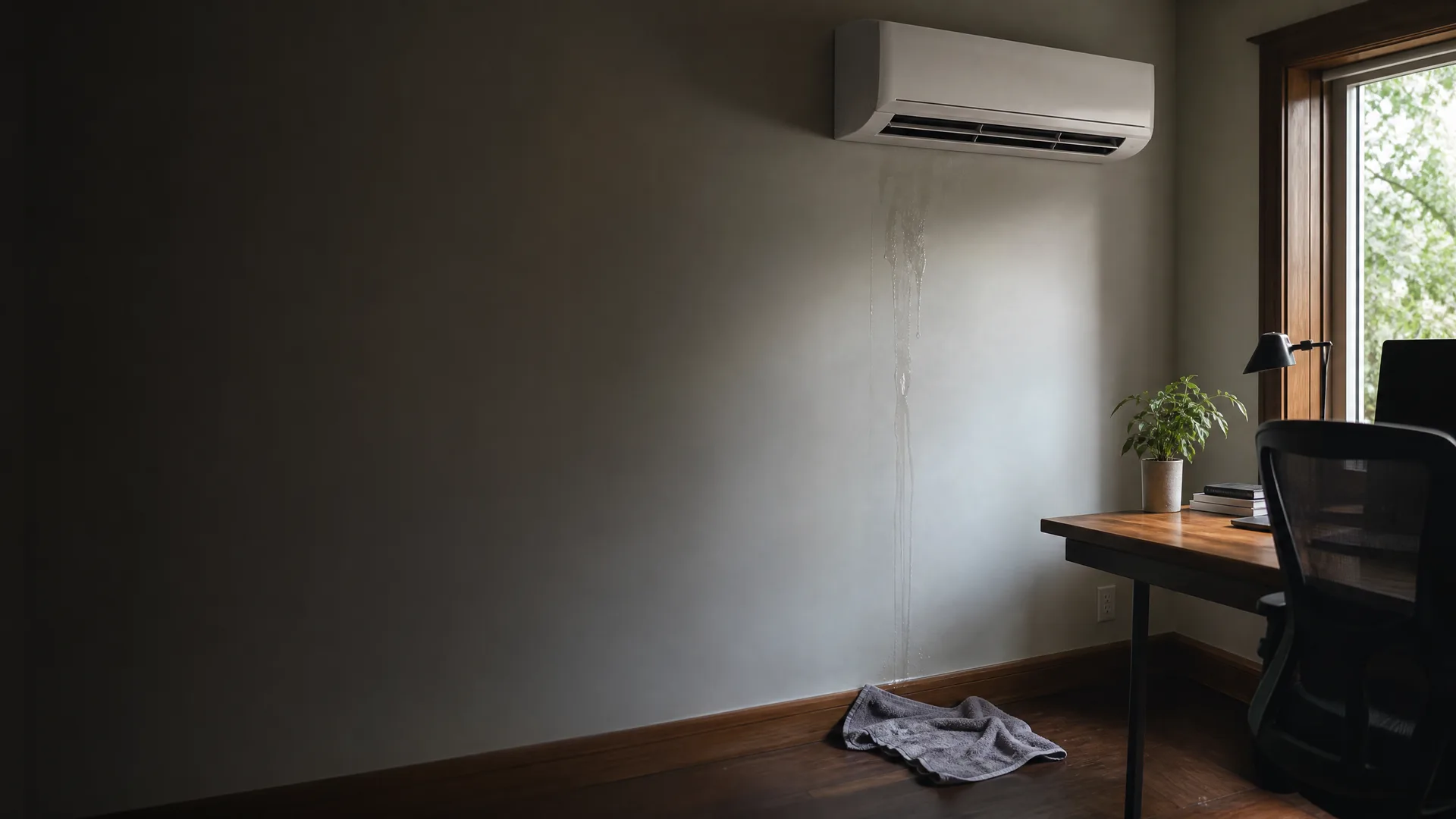
You're at the desk mid-afternoon, trying to get through email before the heat outside really sets in, and you notice the carpet under the window is damp. You look up and there's a wet streak running down the wall from the mini split indoor unit, dark against the paint. You grab a towel from the hall bathroom and press it against the baseboard, then stand there looking at the unit, trying to remember if it's been making any odd noise lately. Outside it's another muggy Columbus afternoon, the kind that makes you need the thing working right, not dripping into the wall behind your desk.
A mini split that won't heat doesn't fix itself by waiting for a warmer day, and in Muscogee County the cold mornings keep showing up even when the season overall stays mild. You've already got a sense of what's going wrong, whether it's a reversing valve stuck in cooling, a frozen outdoor unit, or something else. What you don't have is the time to call around Columbus for someone who works on these systems, explain the problem to one shop after another, then sit with a stack of quotes trying to tell which one actually knows mini splits. Send the request once and that part stops being yours to manage. You still wake up cold until the unit's fixed, but you're not also spending your evenings chasing down a contractor to ask your questions and quote the job. One request goes out, and finding someone who can get your heat working again is off your plate.
A mini split that won't heat has a short list of causes, and most of them show themselves if you know where to look. The reversing valve is what switches the system from cooling to heating, and when it sticks, cold air comes out no matter what the thermostat says. Ice on the outdoor unit means the coil can't pull in the heat it needs to move indoors. A filter caked with dust chokes the airflow before the warm air ever reaches the room. A refrigerant leak takes away the one thing the system needs to move heat at all, and no amount of running longer will make up for it. Clicking or short cycling during a heating run is the system telling you something is already off, not something to wait out. None of these fix themselves, and in Muscogee County, where winter doesn't stay cold for long but the cold mornings still come, a mini split that blows cold air or won't turn on at all means those mornings get a lot harder. You already know your unit, and if what's been happening matches one of these, you have a good idea what's wrong. What's left is getting someone qualified to confirm it and put it right.


A mini split that won't heat means cold mornings until it's fixed, and that's not a problem you need to figure out alone. Instead of searching review sites, calling shops around Columbus to see who answers, and repeating the same explanation each time, you send one form. A licensed contractor who works on these systems takes it from there, whether it's a stuck reversing valve, ice on the outdoor unit, or a filter choking off airflow. Finding someone stops being your job.
Explain the mini split problem once instead of to every shop in Muscogee County.
You're not committing to anything by asking.