
78 degrees, home and awake
A common setting for Georgia summers when you're there to feel it. Keeps the compressor from running nonstop while still pulling enough moisture out of the air to feel comfortable.
You keep coming home to a thermostat argument, or you're just tired of guessing. With the kind of heat and humidity Georgia summers bring, the number on the wall matters more than it does most places, both for how the house feels and for what shows up on the power bill.
78 works because it's close enough to the outdoor air that your AC isn't fighting a losing battle against the humidity all day. Push it much lower and the unit runs longer to chase a gap it can't hold, especially on the muggiest afternoons. Since most homes here heat with electricity too, the same equipment is doing double duty for most of the year, so how it's set in July affects more than just one season's bill. Setting it a few degrees higher while you're out, then letting it come back down before you're home, costs less than holding one number around the clock and still keeps the house comfortable when it counts.
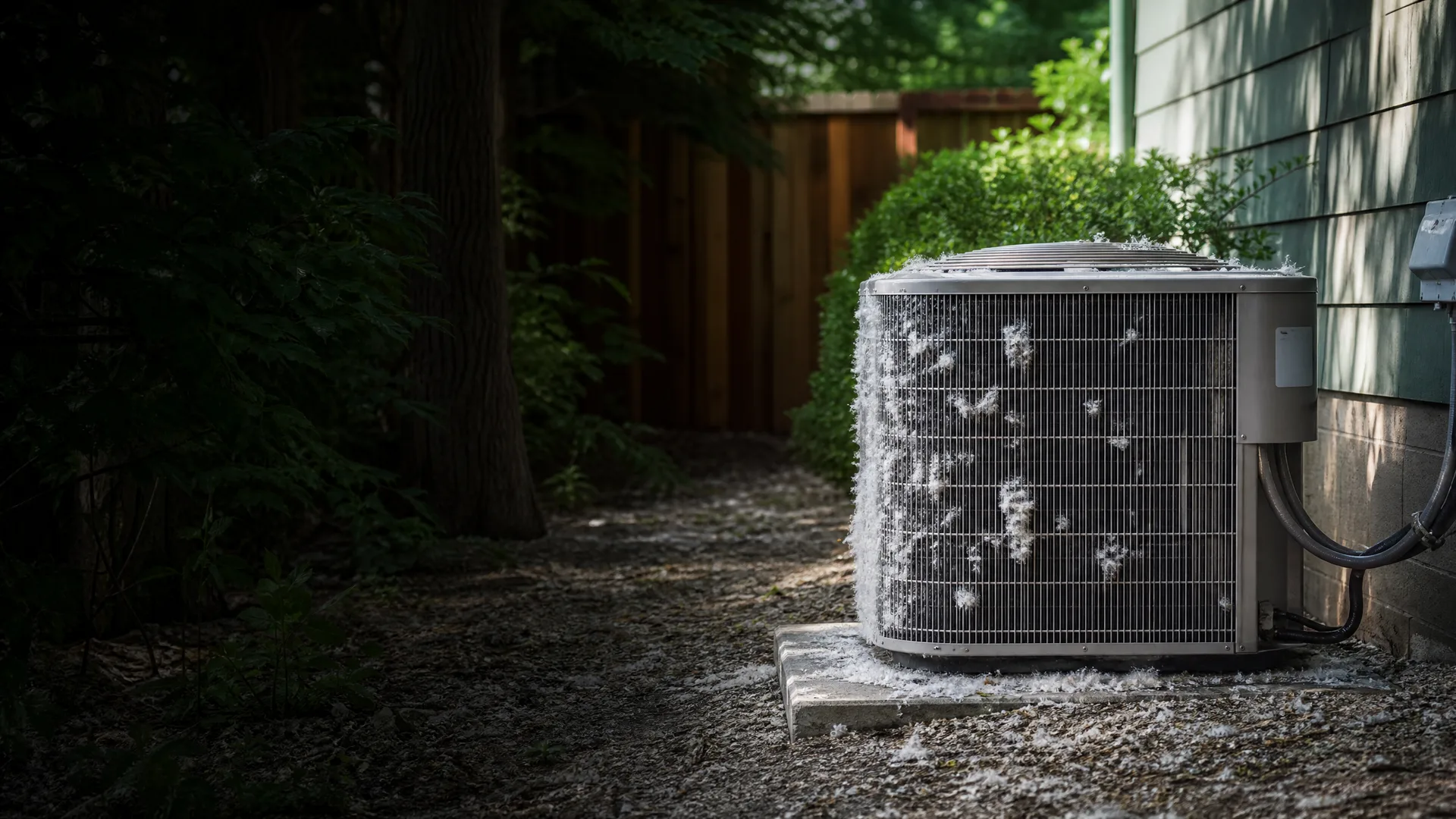
Late May, and the cottonwood trees along the side yard have let go. You notice it when you walk past the condenser on your way to get the hose: the fins are caked white, like the unit grew a layer of fur overnight. You didn't see it happen. It just builds up, day after day, while the thing keeps running because it has to, at whatever temperature you've got the thermostat set to. You crouch down and the fluff pulls away in handfuls, but it's packed into the grille too, the part you can't just brush off. Behind you the compressor hums along, pulling air through less of itself than it was built to use.




A licensed local pro takes the request for your air conditioner tune-up.
You're not committing to anything by asking.
A thermostat set at 75 still leaves you sticky if the air coming out of the vents isn't cold enough or the humidity in the house hasn't dropped. Your AC pulls moisture out of the air as it cools, and that's what makes 75 feel bearable in Georgia when it wouldn't in a drier place. A unit that's low on refrigerant or has a dirty coil cools the air but doesn't pull the moisture out the way it should. You end up turning the thermostat down to compensate, and the house still feels damp. The number on the wall only does its job when the equipment behind it is working the way it's supposed to.
A condenser caked with pollen, grass clippings or cottonwood fluff can't shed heat the way a clean one does, and that shows up as weaker cooling at the same thermostat setting. Coils that are coated in dust inside the house do the same thing from the other end. Either one means the system works harder to get the house to 75 and may never quite reach it on the hottest days. A contractor who services this equipment every summer knows what a coil looks like when it's starting to restrict airflow, before it costs you a degree or two you'll notice in August.


A common setting for Georgia summers when you're there to feel it. Keeps the compressor from running nonstop while still pulling enough moisture out of the air to feel comfortable.
Lets the system ease up during the hours the house sits empty. Less strain on the compressor over a Georgia summer, and less to cool back down when you walk in.

The thermostat doesn't control cold air directly. It watches the temperature of the air coming back to it and switches the compressor on when that air is above your setting, off when it's below. Every degree you set lower means more cycles where the compressor runs and the condenser outside works to dump that heat. In a Georgia summer, with the outdoor unit sitting in its own heat most of the day, those cycles take longer to finish than they would somewhere cooler and drier.
A technician who services units in your area year after year knows which brands and model years tend to lose refrigerant first, which condensers clog fastest from pollen and cottonwood, and what a unit sounds like right before the compressor strains. That's the kind of thing you learn from doing it on the same streets every season, not from a manual. Finding that person yourself means calling around, describing the same symptoms twice or three times, and weighing quotes you have no way to compare. One local contractor who already knows this equipment skips all of that.


This is a system holding whatever number you set without a fight. The condenser outside cycles on, runs long enough to pull the moisture down, then shuts off. Clean coils, clear airflow, a thermostat setting that actually means something inside the house.

Same unit, same spot against the siding, but the number on the thermostat stops telling the truth. It's set at 78 and the house sits at 82. The compressor runs and runs because something inside, the coil, the charge, the airflow, isn't letting it finish the job.
At 14.74 cents a kilowatt-hour, every degree you push that thermostat down costs you through July and August, when the compressor is already running long hours against Georgia humidity. Keeping it a few degrees higher when you're not home, or keeping the coils clean so the system isn't working harder than it should, is what keeps that rate from turning into a number you dread opening.
EIA-861 2025 statewide residential average
78 degrees when you're home, higher when you're not, and a system that can actually hold that number without running flat out. That's the whole answer. Whether your house gets there comfortably or struggles to depends on the condenser, the coils, the airflow, all the things a thermostat can't fix by itself. If yours has been running long and not keeping up, that's worth having someone look at before the worst of July gets here. A local contractor who services AC systems all summer in this kind of humidity has seen what usually goes wrong in a Georgia June, from caked coils to a system that's just tired. You'd be talking to one contractor, not fielding calls from five, and they're licensed to do the work, not just quote it. That's one less thing to sort through on an evening you'd rather spend doing anything else.





The pro who reaches out is licensed in Georgia.
No charge to send it. You decide if you hire them.