
Best heat pump setting for a Georgia winter

A local pro who services heat pumps gets in touch about the tune-up.

Tune-up, service, or cleaningHeat PumpGeorgia
Step 1 of 2

What ZIP code is the job in?

What temperature should I set my heat pump to in winter?

Winters in Georgia don't stay cold for long, but they swing, and most homes here heat with electricity, so the thermostat setting actually shows up on the bill. You want a number that keeps the house comfortable without making the heat pump work against itself.

Set it to 68 and leave it there

A heat pump works best left alone at one setting, around 68 degrees, instead of bumped up and down through the day. Turning it up several degrees to warm the house fast can trigger the backup heat strips, which use far more electricity than the heat pump itself. Georgia winters don't usually demand that backup heat for long stretches, so avoiding it keeps your bill where it should be. If the house still feels cold at 68, that's worth a maintenance visit before you reach for the thermostat, since a system that's low on refrigerant or overdue for a filter change will struggle to hold any setting.

A gray outdoor condenser unit sits on a concrete pad against a house wall with horizontal siding above a stone veneer base, with an electrical disconnect box and conduit on the wall and a leafy shrub in mulch to the left.

Set and left alone

A heat pump running a steady setting holds that temperature without much strain. The outdoor unit cycles on, runs, and shuts off the way it's supposed to, and the disconnect box and lines alongside it see nothing unusual. This is what a heat pump looks like when the setting matches what the system can do.


An outdoor air conditioner condenser unit on a concrete pad beside a house with horizontal siding above a concrete block foundation, with insulated refrigerant lines and a vertical white pipe on the wall.

Pushed past what it can do

Bumping the thermostat up several degrees at once asks the outdoor unit for more heat than a heat pump delivers efficiently, so backup heat kicks in and the bill climbs. Older units already running weathered and worn take that extra demand hardest, and it shows in how long they last.

An older man with gray hair and a beard, wearing a dark jacket dusted with snow, stands smiling in a dimly lit hallway with lamps and a living room visible behind him.
A gray-haired, bearded man in a dark snow-dusted coat stands smiling in a dimly lit entry hall with a staircase, a lit table lamp, a framed picture, and a living room visible through a doorway.
An older man with white hair and a beard, wearing a dark snow-dusted coat and scarf, stands in a warmly lit interior hallway with a framed landscape picture, a table lamp and a potted plant behind him, and a snowy view through a window at left.
A gray-haired, bearded man in a dark coat dusted with snow stands smiling in a dimly lit room with a lamp, mirror, framed art, and a sofa in the background.

Why the backup heat kicks in

A heat pump moves heat from the outside air, and that gets harder the colder it is outside. When the thermostat is pushed up several degrees at once, the system can't close that gap fast enough on its own, so the electric backup heat strips turn on to make up the difference. Those strips pull a lot more power than the compressor does. That's the part of the bill that jumps, not the heat pump running steady at a set number. Bumping the thermostat up and down through the day is what triggers it most.

What a steady setting avoids

A heat pump held at one temperature rarely needs the backup strips at all, even on a cold Georgia morning. The compressor and outdoor unit do the work on their own, cycling as needed to hold that number. Skip the backup heat most of the time and there's less strain on the parts that cost the most to replace. It also means fewer defrost cycles triggered by a sudden demand for heat, since the outdoor coil isn't being asked to catch up all at once after sitting idle.

An outdoor air conditioning condenser unit with dusty coils sits on a concrete pad against light horizontal siding, with an electrical disconnect box and refrigerant lines on the wall and a shrub and mulch at left.
Before you get your heat pump maintenance
A gray outdoor condenser unit sits on a concrete pad beside a house with horizontal lap siding, with a wall-mounted disconnect box and refrigerant lines, mulched beds and a shrub nearby, and a concrete walkway in the foreground.
After you get your heat pump maintenance

A heat pump pro near you

A thermostat setting only holds if the system behind it is ready for a Georgia winter's swings, the forty degree mornings and the sixty degree afternoons in the same week. A heat pump that's low on charge or carrying a weak contactor still runs when you set it and leave it, but it leans on backup heat more than it should, and that shows up on the electric bill before it shows up as a breakdown. Maintenance is what catches a dirty outdoor coil or a stuck reversing valve before a cold snap forces the system to work around it. Georgia's winters are short, but they're exactly when a heat pump earns its keep, and the few weeks it has to work hard are a bad time to find out something was already wearing down. Getting it looked at now means one less thing to track while the temperature keeps swinging.

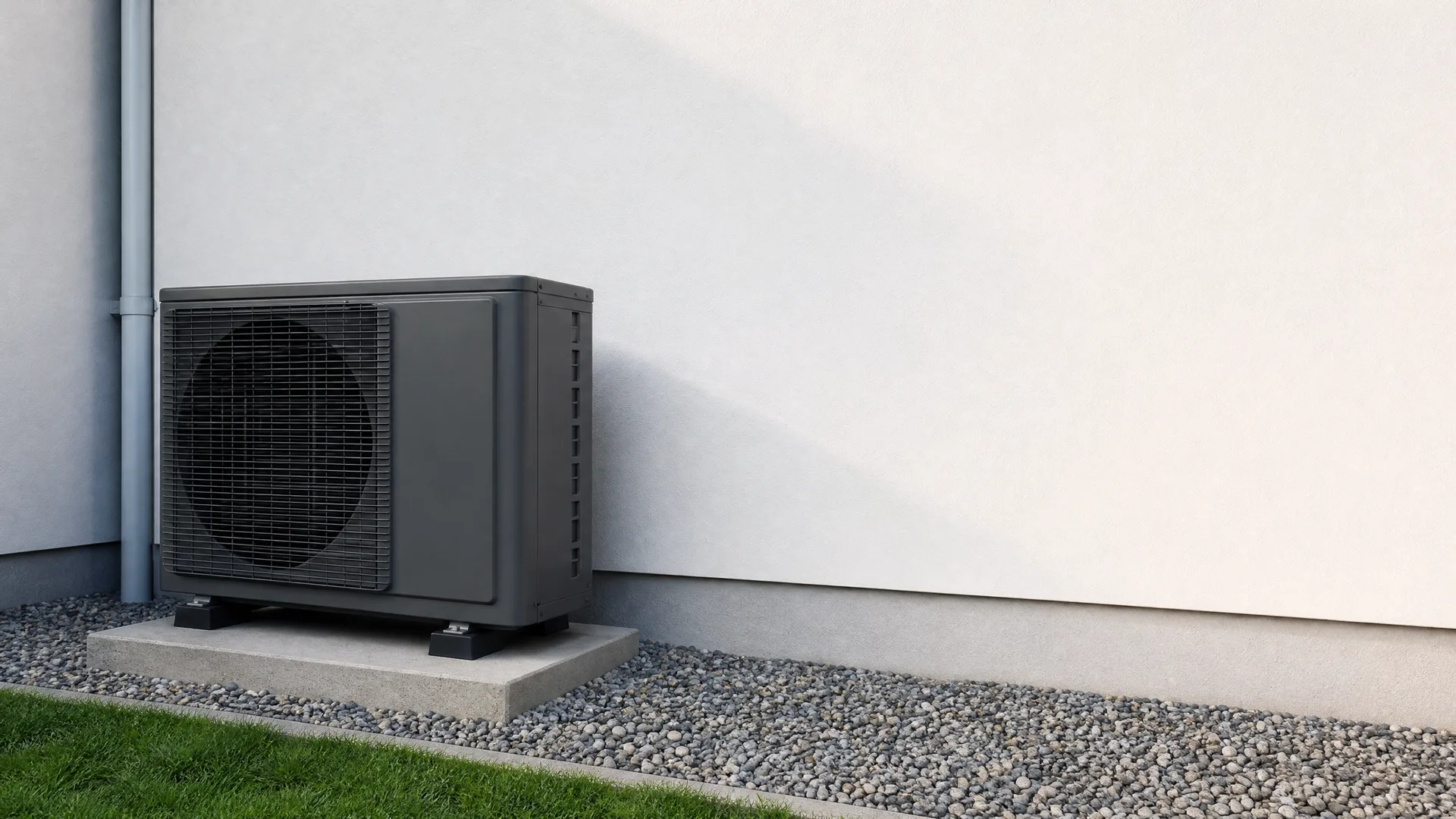
A dark grey air-source heat pump unit on a concrete pad beside a light-coloured rendered wall, surrounded by gravel with a strip of grass in the foreground and a downpipe at the left.

What a steady setting looks like at home

Leave the thermostat where it sits and you won't think about the system much. The air coming out of the vents will feel cool to the hand, close to body temperature, because that's how a heat pump heats. The house holds steady. The outdoor unit runs in short, even stretches instead of grinding through long ones, and the electric backup heat stays off unless a cold morning calls for it.

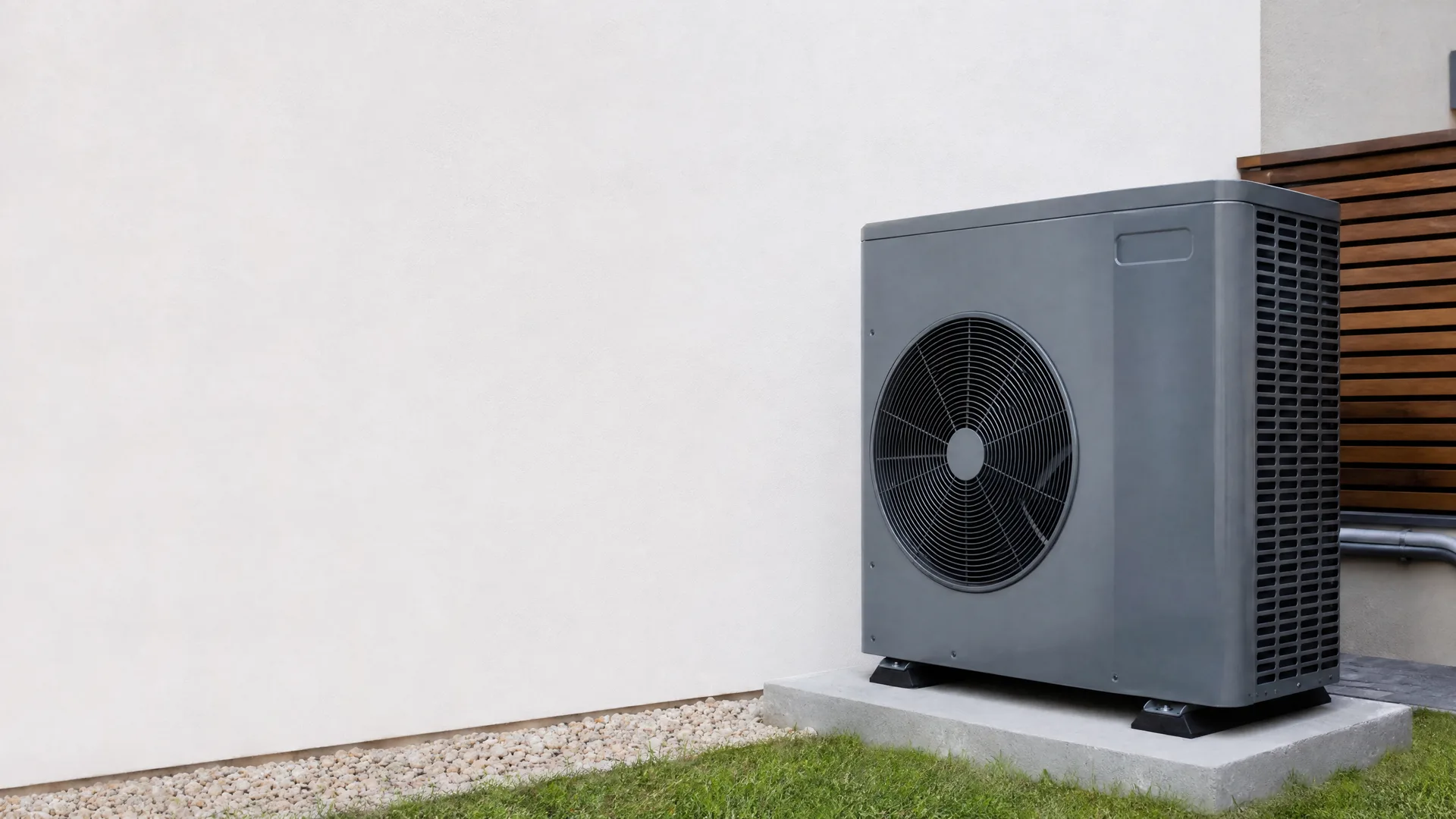
A gray outdoor heat pump unit on a concrete pad beside a white stuccoed wall, with gravel and grass in front and a wooden slat screen behind.

What happens when you push it up

Bump the thermostat up five or six degrees because the house feels chilly and the backup heat takes over to close that gap fast. That heat costs more to run than the heat pump alone, and if it's kicking on every time someone nudges the dial, it shows up on the power bill at the end of the month. Do that often enough and the outdoor unit is cycling harder than it needs to, which is wear it wouldn't otherwise see.

Mild Spell vs. Hard Freeze

Mild spell

  • A run of fifty and sixty degree days in January asks almost nothing of the heat pump, so there isn't much decision to make.
  • The outdoor unit cycles briefly and shuts off, and the house holds its temperature without the backup heat ever stepping in.
  • This is the stretch where a steady thermostat setting and a nudged one look about the same on the power bill.
  • A contractor doing maintenance during a mild spell can check the refrigerant charge and the contactor without the system fighting them for runtime.
  • If the outdoor coil is going to show a weak spot, a mild week is the easiest time to catch it before a hard freeze does.

Hard freeze

  • When the morning drops into the twenties or teens, the heat pump is pulling heat from air that has little to give.
  • The system runs longer to hold the same indoor temperature, and the backup heat is far more likely to step in to close the gap.
  • A thermostat pushed up several degrees during a freeze asks for a jump the heat pump can't make alone, so the electric strips carry more of the load.
  • This is when a low charge, a frozen outdoor coil, or a weak contactor turns into a system that runs constantly and still falls behind.
  • Maintenance done before the freeze, not during it, is what keeps the heat pump carrying its share instead of handing the whole job to the backup heat.
A woman wrapped in a thick textured blanket sits on a sofa with an open book on her lap, beside a lit lamp and bookshelf, with a frost-patterned window behind her.
A bearded man in a red and dark plaid flannel shirt looks out a frost-edged window at a snow-covered yard, with a gray mug on the sill in the foreground.

Power costs 14.74 cents per kilowatt-hour statewide

At 14.74 cents per kilowatt-hour, every degree you push the heat pump past its steady setting costs you through the backup heat, not the outdoor unit. Holding one number through the swings keeps that meter moving at the slower, normal rate instead.

EIA-861 2025 statewide residential average

The answer doesn't change with the weather: pick a setting and hold it through the swings, and let the backup heat stay off unless the morning is truly cold. That's what keeps a Georgia winter from turning into a string of surprise charges on the power bill. But a thermostat is only half the picture. A heat pump that's never been serviced can struggle to hold that number no matter how sensible it is, and you may not know it's struggling until the bill shows up or a forty degree morning finds it short. Maintenance is what keeps the system able to do what the setting asks of it. If you haven't had yours looked at before this winter, you don't have to track down who does that work. Send the form and the search is no longer yours to carry. A contractor who covers your part of Georgia will reach out, and from there it's a conversation, not a project you have to manage alone.

A wooden front door with six small glass panes and a narrow sidelight, set in a shingled house entry with white trim, reached by stone steps flanked by a planted urn with purple flowers and leafy branches in the foreground.
Exterior corner of a house with beige horizontal lap siding and a black-framed window, with white hydrangeas, ornamental grasses and low plantings along a flagstone patio.
Corner of a house with tan lap siding and a window, a brick step edge, flowering white hydrangeas and green shrubs beside a flagstone walkway leading to a white picket fence and a tree in backlit sunlight.
House exterior with cream horizontal lap siding, a dark-framed window, a black wall lantern beside a wood door, potted shrubs on stone steps, and white and pink hydrangeas in the foreground garden.
Corner of a cream lap-sided house with a white-framed window and dark shingled roof, beside a white-flowering hydrangea shrub, a clipped hedge, mulched bed and lawn.

A local pro for your heat pump maintenance

One request and finding someone for the tune-up is handled.

Get a local pro

Asking costs nothing, and the choice to hire stays yours.