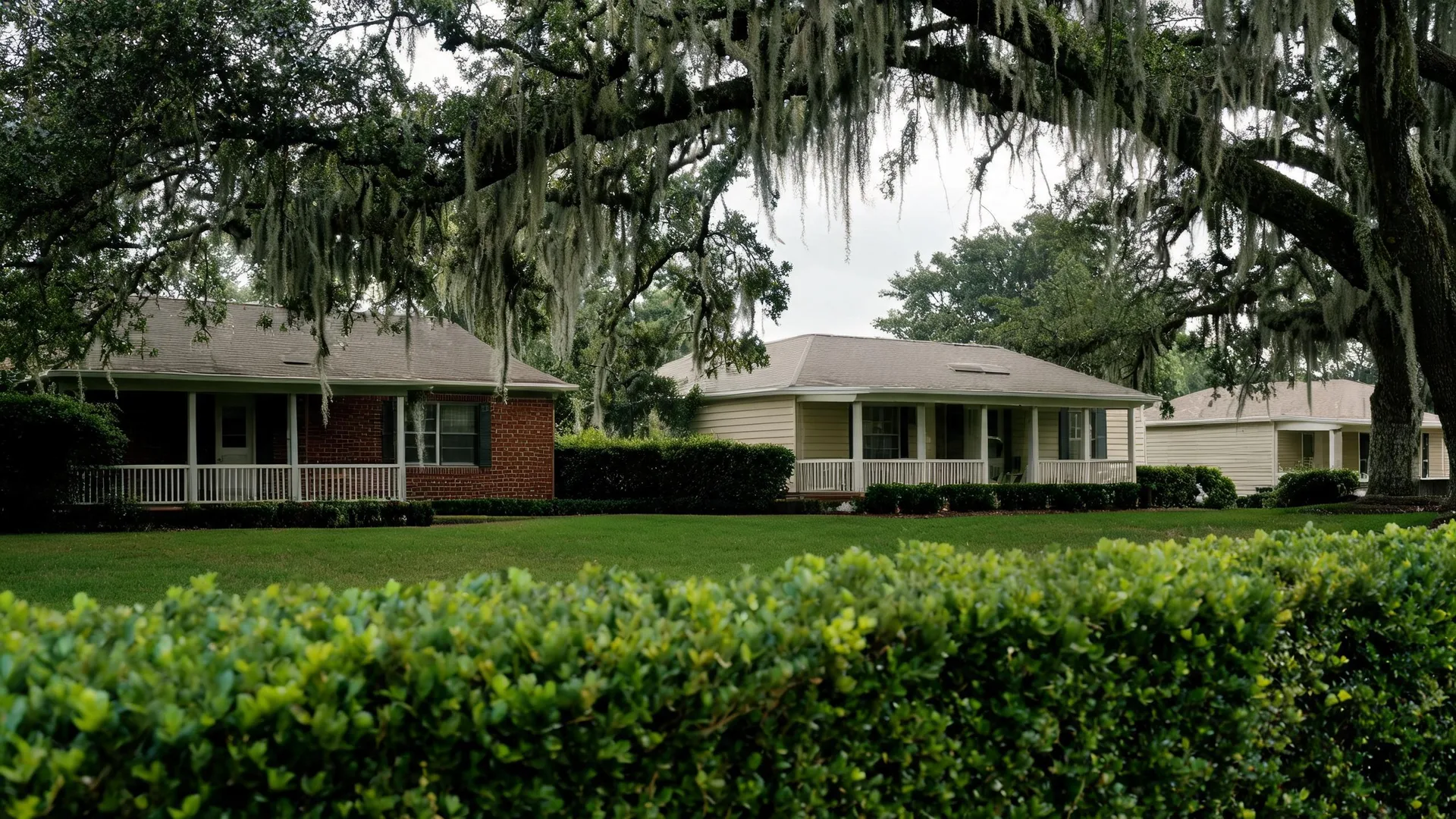







Single-story houses, one brick and one with light siding, both with covered porches, behind a mowed lawn and trimmed hedge, under large moss-draped oak branches.

AC Installation in Peachtree Corners, GA

Tell us about the job

Takes about a minute. No obligation.

New system or replacementCentral ACGwinnett County, GA
Step 1 of 2

What ZIP code is the job in?

Gwinnett County saw 185 severe weather events between 2015 and 2024. Most of that was wind, 143 damaging wind events, plus 20 hail events and a tornado. An outdoor condenser sits through all of it, exposed to whatever comes through the yard. Hail dents the fins and can bend the cabinet. Wind throws branches and debris at the coil. Statewide, 31% of Georgia households lost power for 24 hours or more in 2024, and a new system should be chosen with that in mind.

5 months
May through September, your air conditioner is on duty
87°F
the average summer afternoon it cools against
20 hail events
in ten years, and hail bends the fins on outdoor coils
13.4 SEER2
the federal minimum any new unit must meet
Isometric grayscale illustration of a cutaway house with the roof lifted, showing interior rooms, ductwork, an indoor air handler, and an outdoor condenser unit beside the building.
Your air conditioner works hardest from June through September.

NOAA nClimDiv, 1991–2020 normals

Cooling runs May through September here.

Install before April ends and the job happens on your schedule, not during the first hot week.

Five months of heat and wind are standard here, not a bad year

Cooling runs May through September
Summer afternoons average 87°F
143 damaging wind events from 2015 to 2024
Most homes here run on gas heatGas heats 61.2% of homes here, electricity heats most of the rest

Any system installed here has to meet 14.3 SEER2, the regional minimum for equipment under 45,000 Btu/h, which covers most homes. That's higher than the national manufacturing minimum of 13.4. The reason comes down to the climate. Gwinnett County sits in zone 3A, a warm, humid zone with a long cooling season and a short mild winter, so the standard reflects what the system actually has to do here, not what it would need in a milder state. A unit built to just clear the national minimum wasn't built for that. There's also a federal tax credit for equipment that qualifies at a higher efficiency, worth asking about before you settle on a model.

Pick the spot and the protection before you pick the install date

Talk to the installer about where the new unit goes and what stands between it and the yard. A pad clear of low branches, a cabinet rated to take a hit, a surge protector on the circuit. If the power goes out, gas heat keeps running without it, but cooling and hot water won't unless you've planned for that too. Worth settling before the crew shows up, not after a storm.

Find a contractor
A man in a dark shirt and tan work pants, seen from behind, carries a canvas tool bag up concrete steps toward an orange front door flanked by gray siding and a potted shrub.
An outdoor residential air conditioning condenser unit mounted on a concrete pad, surrounded by gravel with a blue sky in the background.

Five months of full use, every year

Five months of running time a year adds up fast when the afternoon high sits at 87°F for most of the summer. That's the condenser working its hardest stretch, day after day, with no real break until fall. Size the new system for that load, not for a mild June. A unit that's too small will run constantly trying to keep up, and one that's oversized will cycle on and off more than it should. Either way wears the parts down sooner. Ask the installer to run a load calculation for your house rather than matching the old system's size.

The old unit gets disconnected and hauled off

Before anything comes out, the power to the condenser gets shut off at the disconnect box and the refrigerant gets recovered into a tank rather than vented. The old lines, the pad, and the condenser itself usually come out the same day the new one goes in. A tech who just cuts the lines and lets refrigerant escape is cutting corners on something the law doesn't allow.

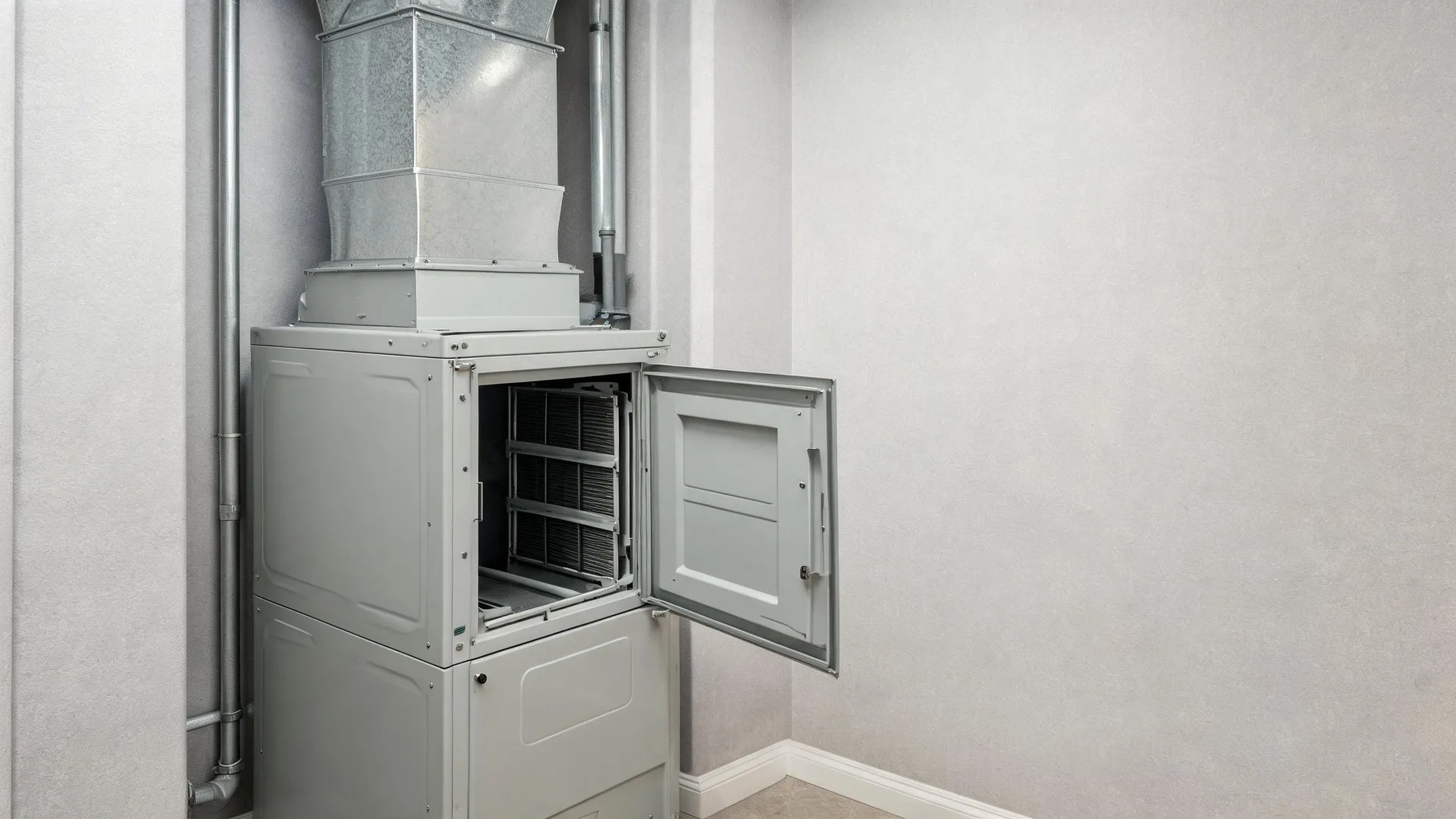
The refrigerant type matters for what happens next

Older systems often run on a refrigerant that's being phased out, and a working system doesn't need to be replaced just because of that. But if the old unit is already low on charge or has a leak, finding a match gets harder every year. That's often the real reason a system gets replaced rather than repaired, not because the condenser quit.

Overhead view of an outdoor AC condenser unit on a concrete pad next to a house with a dark shingle roof.

Going above the federal minimum saves little here, about $20 a year.

  • A higher-efficiency unit$300 a year
  • A new unit at the federal minimum, 14.3 SEER2$320 a year

Estimates for a typical Gwinnett County home, from EIA household energy data, Georgia fuel prices and NOAA climate normals. Your home will differ.

A full install usually runs one day from start to finish. The crew sets the new pad or checks the old one, runs new line set if the old lines don't match the new system, and mounts the indoor coil to the furnace or air handler. The condenser goes on the pad, gets connected, and the lines get flushed and pressure tested before any refrigerant goes in. Once the system's charged to spec, the tech checks the airflow at the vents and the temperature split between the return air and the supply air. That split tells them the system's actually cooling the way it should, not just running. Expect the power to be off for stretches during the swap, and expect the tech to walk the whole system with you before they leave, showing you the thermostat settings and what the filter needs going forward.