




AC unit frozen up in Peachtree Corners, GA

RepairCentral ACGwinnett County, GA
Step 1 of 2

What ZIP code is the job in?

A frozen AC unit means warm air isn't moving across the indoor coil the way it should, so instead of pulling heat out of your house, ice builds up on the coil itself. The usual cause is airflow: a clogged filter, closed vents, or a blower that isn't pushing enough air. It can also happen when the refrigerant charge is low, which drops the coil's temperature below freezing even with air moving across it fine. With Peachtree Corners summers running hot and humid for months at a stretch, a system already working hard has less room for one of these problems before ice starts forming. Turn the unit off and let it thaw fully before anyone opens it up or tries to run it again. Running it while frozen can push liquid refrigerant back to the compressor and damage it. Once it's thawed, the cause still needs to be found and fixed, or it will freeze again.

A gray-haired bearded man in a dark green sweater sits on a light sofa indoors, looking to the side, with a houseplant, framed picture, table lamp and sunlit window behind him.
A middle-aged man in a dark denim shirt sits on a light beige sofa in a living room with wooden shelving and a potted plant, looking off to the side.
A gray-haired man in a dark navy sweater sits on a light sofa in a living room, looking toward a sunlit window with a houseplant and wooden cabinet behind him.
A man with greying hair in a dark green sweater sits on a light sofa in a sunlit living room, looking off to the side, with a large window, table lamp, framed art and white built-in shelves behind him.

Why is ice building up on my AC unit?

You might notice warm air coming from the vents even though the unit is running, or a block of ice on the copper line outside. Sometimes water starts pooling around the indoor unit or dripping through the ceiling below it, once the ice melts. The outside unit may be running constantly without the house cooling down. If you keep running it this way, the compressor is working against the ice instead of cooling your home, and that strain can wear it out well before it should. In a house in Peachtree Corners, running a frozen system through a stretch of hot days can turn a simple airflow fix into a compressor replacement.

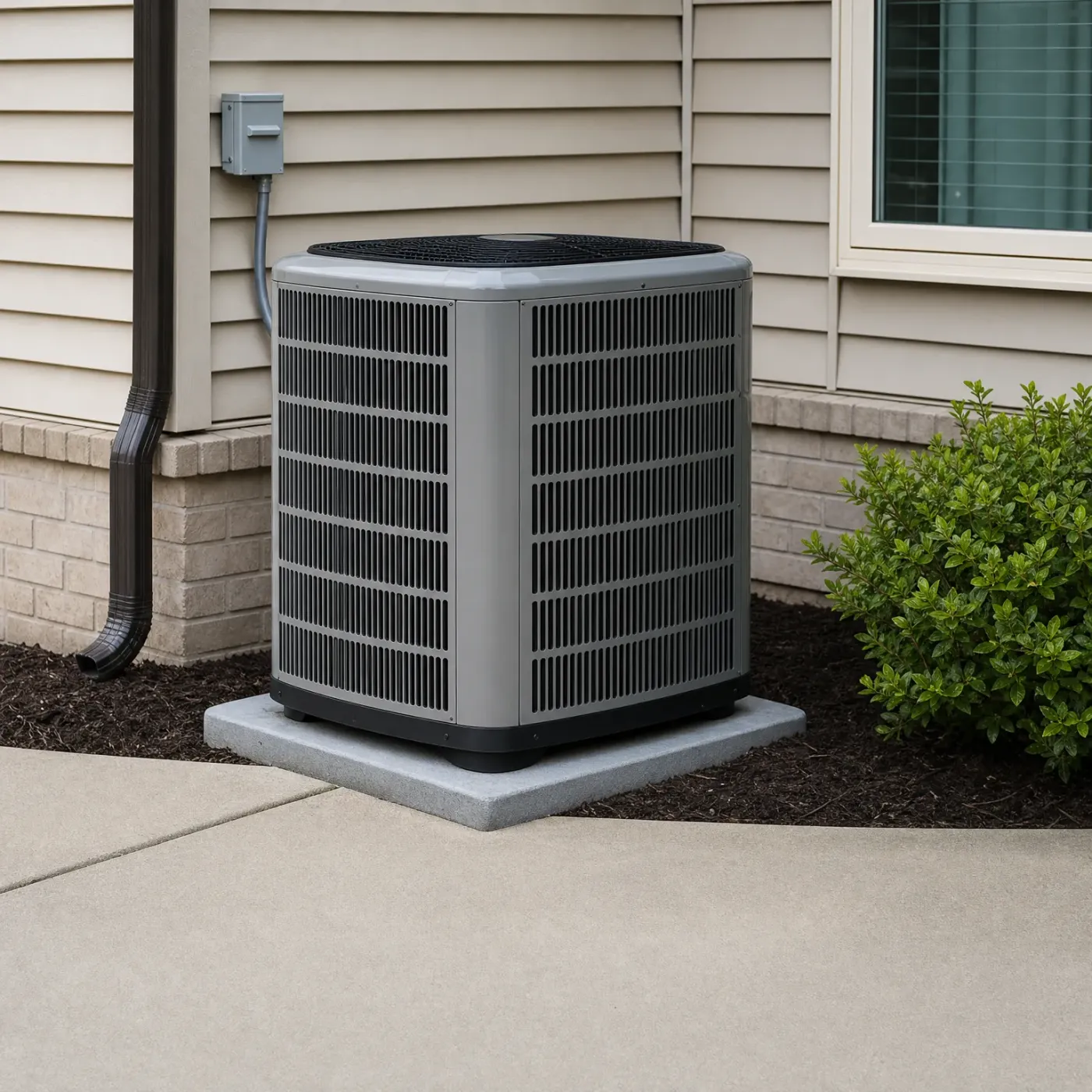
A gray outdoor air conditioning condenser unit sits on a concrete pad beside a house with horizontal siding, connected by insulated lines to a wall-mounted disconnect box, with a shrub and gravel bed to the right.

Running clean

A healthy condenser sits on its pad with clear coil fins and steady airflow through them. Refrigerant lines stay cold but never iced, and the unit cycles on and off without strain. Air coming through your vents stays cool and steady, the way it should all summer.

An outdoor air conditioning condenser unit sits on a concrete pad beside a house with horizontal vinyl siding, with a gray electrical disconnect box and insulated refrigerant line on the wall above, surrounded by bare mulched ground.

Dirty and struggling

Grime caked on the coil fins blocks the airflow a condenser needs to release heat. The system has to work harder, refrigerant pressures go off, and ice can start forming back at the indoor coil. A unit in this shape is already partway to freezing up on you.

Wait It Out or Get It Looked At

Turn it off and wait

  • Shutting the thermostat to off and leaving the fan on helps the ice melt without adding more frost while the coil warms back up.
  • Melting a fully iced coil can take several hours, so this works better overnight or when you're not relying on the house staying cool.
  • Towels or a wet vac around the indoor unit catch the melted ice before it reaches the floor or drips through a ceiling below.
  • A dirty filter is worth checking and swapping while you wait, since restricted airflow is the most common reason coils ice over.
  • If the ice comes back once you turn the AC on again, the airflow problem or a refrigerant leak is still there and needs a contractor to find it.

Call a contractor now

  • A licensed contractor who works on AC units around Peachtree Corners every summer can tell a blower problem from a refrigerant leak without guesswork.
  • Low refrigerant from a leak is a common reason coils freeze, and finding the leak isn't something a filter change or a few hours of waiting fixes.
  • A technician can check the coil, the blower motor, and the refrigerant charge in one visit instead of you working through each one on your own.
  • Running a frozen unit or forcing it back on too soon can push water into places it shouldn't go and strain the compressor.
  • If the house has gone hours without real cooling, getting someone out sooner matters more than if it just started freezing up.
A gray outdoor air conditioning condenser unit on a concrete pad beside a house with horizontal vinyl siding, a brick foundation, downspout, electrical disconnect box, mulch bed and a green shrub.

Running clear

A condenser like this moves air freely through the fins. The coil inside stays cold while it's cooling, never frosted, and the unit shuts off and restarts on its own schedule without strain. Air from your vents stays steady and cool, no warm spells in between.

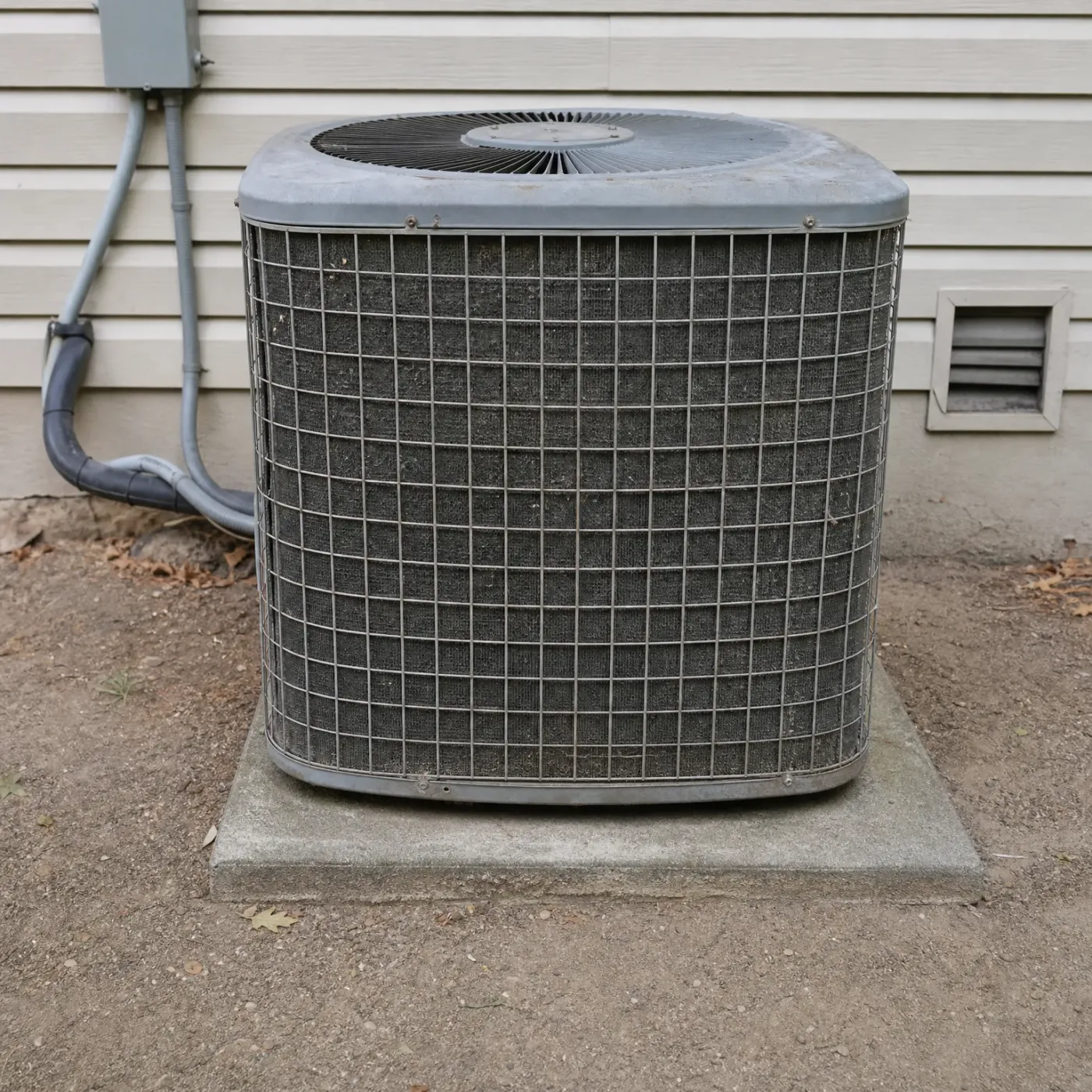
An outdoor air conditioning condenser unit with a dirty mesh coil guard sits on a concrete pad beside a house with horizontal lap siding, a wall vent, and conduit running to an electrical disconnect box.

Choked with buildup

When the grille and fins are packed with dirt like this, the unit can't pull air through them the way it needs to. That's the same kind of airflow problem that lets ice form on the coil inside, even if the outside unit looks like it's running fine.

Cooling runs May through September

Five months of cooling a year is a lot of hours for one coil to run clean. A dirty filter or a closed vent that would barely matter in a short mild summer gets more chances to choke airflow here, and a coil that keeps losing airflow is a coil that keeps icing over.

NOAA nClimDiv 1991-2020

An outdoor air conditioning condenser unit on a concrete pad beside a house with light blue horizontal siding, with a shrub to the left and a conduit and disconnect box on the wall to the right.
Before you get your air conditioner repair
An outdoor air conditioning condenser unit on a concrete pad beside a house with horizontal lap siding, with a gray electrical disconnect box and conduit on the wall, mulch bed and shrub to the right, and mown grass in the foreground.
After you get your air conditioner repair

Hand off the search today

A frozen coil doesn't clear itself just because the ice melts. Whatever cut off the airflow in the first place, a filter choked with dust, a vent shut in a back bedroom, a blower losing strength, is still there once the water's gone, and the ice comes back the next time the unit runs long enough. Peachtree Corners summers don't give a system much of a break to recover between cycles. A contractor who works on AC units all over Gwinnett County through a summer like this one has seen what's underneath most freeze-ups and knows where to check first. Sending the request means that diagnosis goes to one local contractor, not a handful of companies competing for your callback, and from there it's off your plate. You stop guessing at airflow problems and get back to a house that cools the way it's supposed to.

What a frozen AC comes down to

  • Ice on the coil means airflow dropped somewhere, not that the system has too much refrigerant.
  • Turning the unit off and running the fan lets the ice melt without a wet-vac or a hammer near the coil.
  • A dirty filter, a closed vent, or a weak blower are the usual reasons warm air stops moving across the coil.
  • Once the ice is gone, whatever blocked the airflow is still there until a technician finds and fixes it.
  • Georgia summers run long, so a coil that loses airflow here gets more chances to ice up again before fall.
  • A licensed technician can trace the airflow problem and get the system running clean instead of freezing again.

A frozen coil is a symptom, not the problem itself. Something cut off the airflow the coil needs, and ice is just what happens next. Shutting the system off and letting the fan run clears the ice safely, but that step alone doesn't tell you why it froze in the first place. The cause is almost always airflow: a filter clogged with dust, a vent closed off in a room nobody uses, or a blower that's lost some of its strength. None of those fix themselves once the water melts. The filter is still dirty, the vent is still closed, the blower is still weak, and the coil will start icing again the next time the system runs long enough.

That's worth knowing in Peachtree Corners, where summer stretches across five months. A short, mild cooling season might let a half-closed vent or a dusty filter slide without much trouble. Here, the system doesn't get that kind of break. Every day it runs is another chance for a small airflow problem to turn into a frozen coil, and another chance for a frozen coil to turn into a bigger repair if the real cause goes unaddressed.

A technician who works on this equipment through a full Georgia summer knows where to look first, whether that's the filter, the ductwork, or the blower motor, and can trace the airflow loss back to its source instead of just thawing the ice and waiting for it to come back.

A woman with shoulder-length brown hair, wearing a beige knit cardigan, white top and a small gold pendant necklace, sits in a light upholstered armchair and looks toward a window with green foliage outside; shelves with framed photos are behind her.
A woman and a child wrapped in a knitted blanket sit together on a couch in a dimly lit room with a glowing table lamp behind them.

Hand off the air conditioner problem

A frozen coil needs someone who can find what cut the airflow, not just thaw the ice. A local contractor who works on AC systems all summer in Gwinnett County has seen what usually fails here, from a choked filter to a blower on its way out. Send the request and one licensed local contractor gets it, not a handful of companies calling at once. From there, finding help is off your plate.

Get a licensed local pro

The pro who gets in touch is licensed in Georgia and works in Gwinnett County.

No charge to send it. You decide if you hire them.