Electricity here runs 14.42 cents a kilowatt-hour
That's what homes in Dougherty County paid on average in 2025. A mini-split that runs on electricity will feel that rate every time it cycles on.
Takes about a minute. No obligation.
That's what homes in Dougherty County paid on average in 2025. A mini-split that runs on electricity will feel that rate every time it cycles on.
With power priced where it is, a mini-split that uses less to do the same job matters more in Albany than it would somewhere cheaper to run. The unit you pick decides what every bill after installation looks like.
NOAA nClimDiv, 1991–2020 normals
A mini-split in Dougherty County runs cooling six months straight, May through October.
Six months of 91 degree afternoons and heavy, 70 degree dew points means the unit you install needs to hold up to real work, not just run.




April is the month to get a mini-split installed here, the one right before cooling starts. Put it in then and it's already running before the heat does. Wait and you're installing while the house is already warm and the schedule is tighter for it. Winter doesn't push back the same way. Overnight lows only average 40°F across December, January and February, mild enough that going in during those months isn't racing anything. April just means the work happens before the machine has to prove itself.
The rate you pay doesn't change based on which unit sits on the wall. What changes is how much of it you use to cool this house all summer long. Picking for efficiency now is how you control what this system costs you on every bill after.
Find a contractor
Six straight months of cooling runs the compressor through more cycles than it would see almost anywhere else in the country. Get the sizing wrong, either too big or too small for the space, and that six-month stretch is what exposes it. An oversized unit short-cycles and never settles into a steady rhythm. An undersized one runs flat out and still can't keep up on the hottest afternoons. Either way the strain shows up well before year six or seven, not after it. This is the argument for sizing the unit to the house and picking it on more than the sticker price, because whatever goes on the wall this spring is what runs every one of those months, every year after.
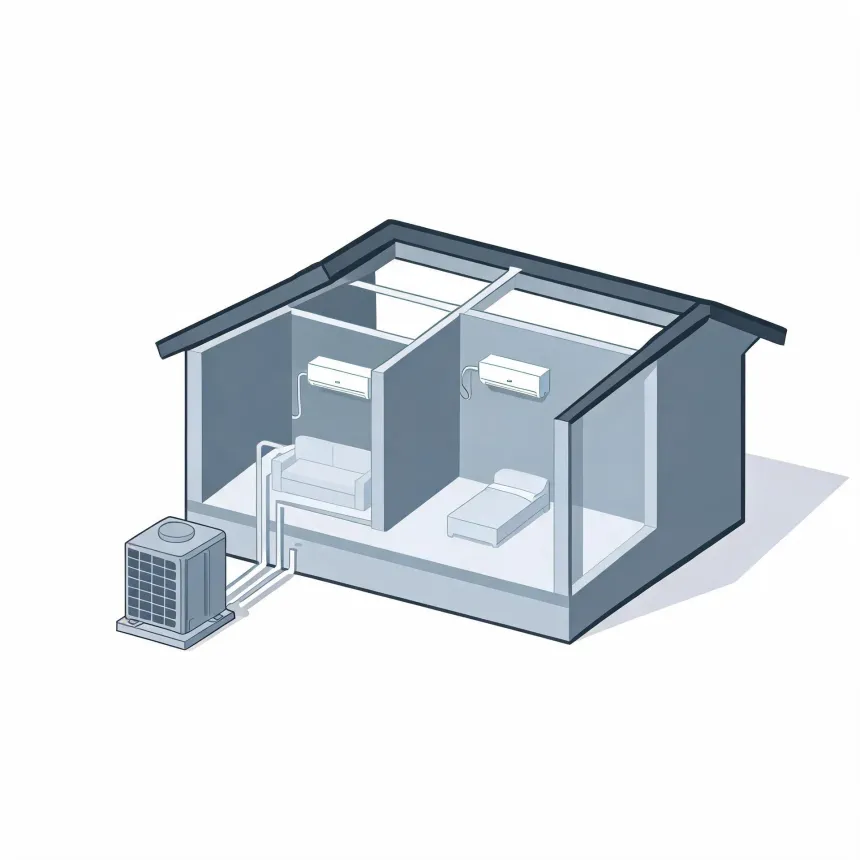
A mini-split is sized as a system. The compressor outside is matched to the indoor head or heads it runs, and that pairing is what the manufacturer rates for output and efficiency. Add a longer line set between them, or run the line up and over a roofline, and the installer has to account for that distance when charging the system. Get the charge wrong for the line length and the unit loses capacity it was rated for.
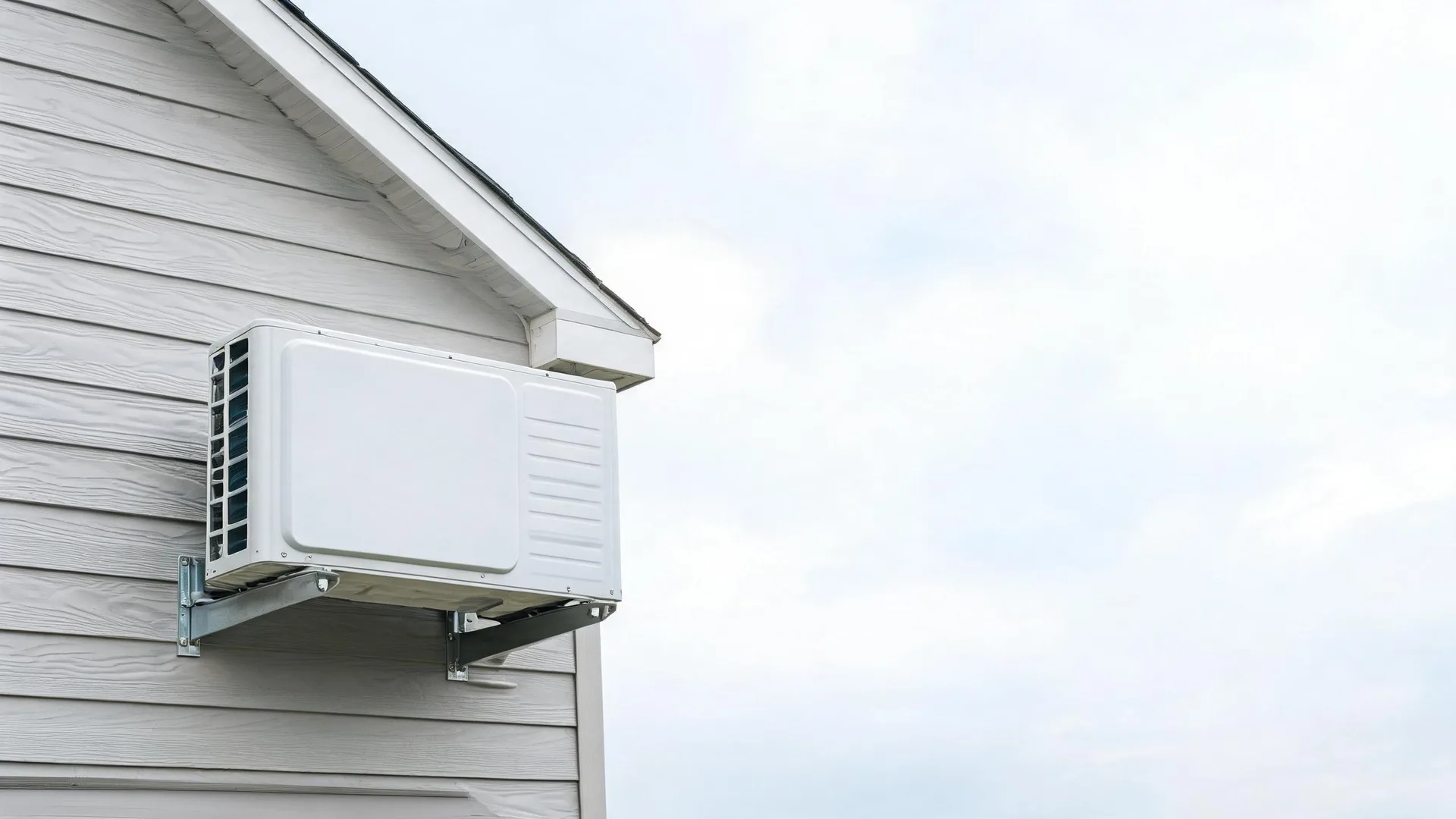
The refrigerant lines, the condensate drain and the electrical whip all have to get from the outdoor unit to each indoor head, usually through an exterior wall. A short, straight run through one wall is a different job than snaking lines through an attic or up multiple floors to feed several heads. More heads means more line sets, more wall penetrations, and more time spent on each one to get it sealed and insulated right.
If you're replacing a central system, the old equipment doesn't just get unplugged and left. A licensed contractor disconnects the refrigerant lines, recovers whatever refrigerant is still in them, and hauls off the indoor and outdoor units. Old ductwork is a separate question. If the mini-split is replacing ducted equipment entirely, those ducts either get sealed off or pulled out, depending on whether any part of the house still needs them. If you're adding a mini-split alongside an existing system rather than replacing it, the old equipment usually just stays put and keeps doing its job in the rooms it already serves. Either way, refrigerant can't legally be vented into the air, so recovery is part of the removal, not an extra step someone skips.
Dougherty County falls in climate zone 2A, a hot, humid zone where cooling carries most of the load. Under the federal standard, any mini-split installed here has to clear 14.3 Btu of cooling for every watt-hour it uses over the summer, and 7.5 Btu of heating for every watt-hour over the winter. That standard applies to the system as a whole, the outdoor compressor and the indoor head paired together, not to parts sold separately. It sets a floor. Units manufactured from 2023 on are built to clear it, and in a zone where the compressor runs as hard as it does here, what clears the floor and what's worth installing aren't always the same unit.