





A golden retriever sleeps on a neatly made bed in a minimalist bedroom equipped with a wall-mounted air conditioning unit.

Mini Split Installation in Athens, GA

Tell us about the job

Takes about a minute. No obligation.

New system or replacementMini-splitClarke County, GA
Step 1 of 2

What ZIP code is the job in?

Electricity heats 68.3 percent of homes in Clarke County, more than any other fuel. A mini split runs on electricity, so it fits right into that setup with no gas line to add or plan around. Gas heats 29.0 percent of homes here, and if that's your current system, a mini split can still work alongside it or take over room by room. Either way, the real questions are where the indoor units go and where the outdoor unit can sit, not what fuel your old system used.

5 months
November through March, your system heats
5 months
May through September, it cools
35°F
the average winter night it heats against
88°F
the average summer afternoon it cools against
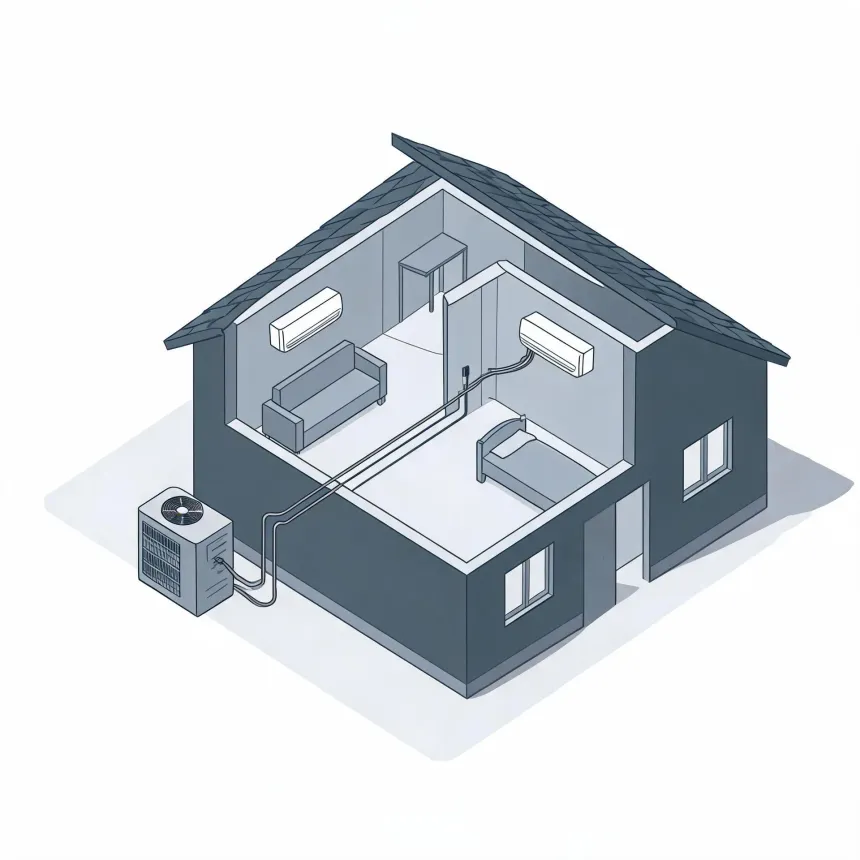
Isometric cutaway illustration of a small house showing two wall-mounted indoor air conditioning units connected by line sets to an outdoor condenser unit beside the exterior wall, with a sofa in one room and a bed in another.
Your system heats November through March and cools May through September.

NOAA nClimDiv, 1991–2020 normals

A standard mini split is sized in tons, not dollars.

Athens homes don't need an oversized unit, so picking one by rated capacity keeps the electric bill at 14.08 cents per kilowatt-hour in check.

Athens gets its share of rough weather, but that's a backup-power question, not a reason to size up your mini split

61 severe weather events from 2015 to 2024
31% of homes statewide lost power a day or more in 2024
48 damaging wind events from 2015 to 2024
Get It In Before MayCooling runs May through September here, so April is the month to get it done.

Clarke County is zone 3A, long summers and a short mild winter that doesn't push a heating system hard. Any mini split sold here still has to clear the federal minimum for a split-system heat pump, 14.3 SEER2 for cooling and 7.5 HSPF2 for heating, and that holds whether the unit is ducted or ductless. That's not a choice you're making, it's already built into what a manufacturer can sell you. The real decision is sizing the unit to the room it heats and cools, not chasing a number above that floor. There's also a federal tax credit on qualifying equipment, worth asking about when you're comparing models.

A standard mini split covers this climate

Five months of cooling, with afternoon highs around 88°F in June, July and August. That's a normal stretch for this machine, nothing that calls for a bigger or pricier unit than the rooms actually need. Get it sized right and let the contractor handle the rest.

Find a contractor
A beige split-system air conditioner outdoor condenser unit mounted on metal wall brackets atop a stucco wall.

Sized to the room, not the square footage

A mini split that's too big for the room cools fast and shuts off before it ever pulls the moisture out of the air. The room ends up cold and damp at the same time. One that's too small runs flat out and still can't hold the temperature on the hottest afternoons. Running flat out day after day wears on the compressor faster than cycling normally would. Sizing isn't a guess from a brochure. A contractor works it from the room itself, the square footage, how many windows it has and which way they face, how much insulation is behind the walls, what's on the other side of them. Rooms that look alike on paper can need different size units once you account for a wall of west facing glass against a small interior room with no outside exposure. The goal is a unit that runs long, steady cycles and shuts off only when the room is actually satisfied, not one that's always catching up or always ahead of itself.

The old equipment doesn't have to go all at once

A mini split can be installed alongside a furnace or central air system that stays in place, taking over some rooms while the old system keeps running the rest. If the plan is a full changeover, the old indoor and outdoor units get disconnected and hauled off as part of the install. Either way, the refrigerant in the old system has to be recovered by someone certified to handle it, not vented.
Old ductwork doesn't just transfer over

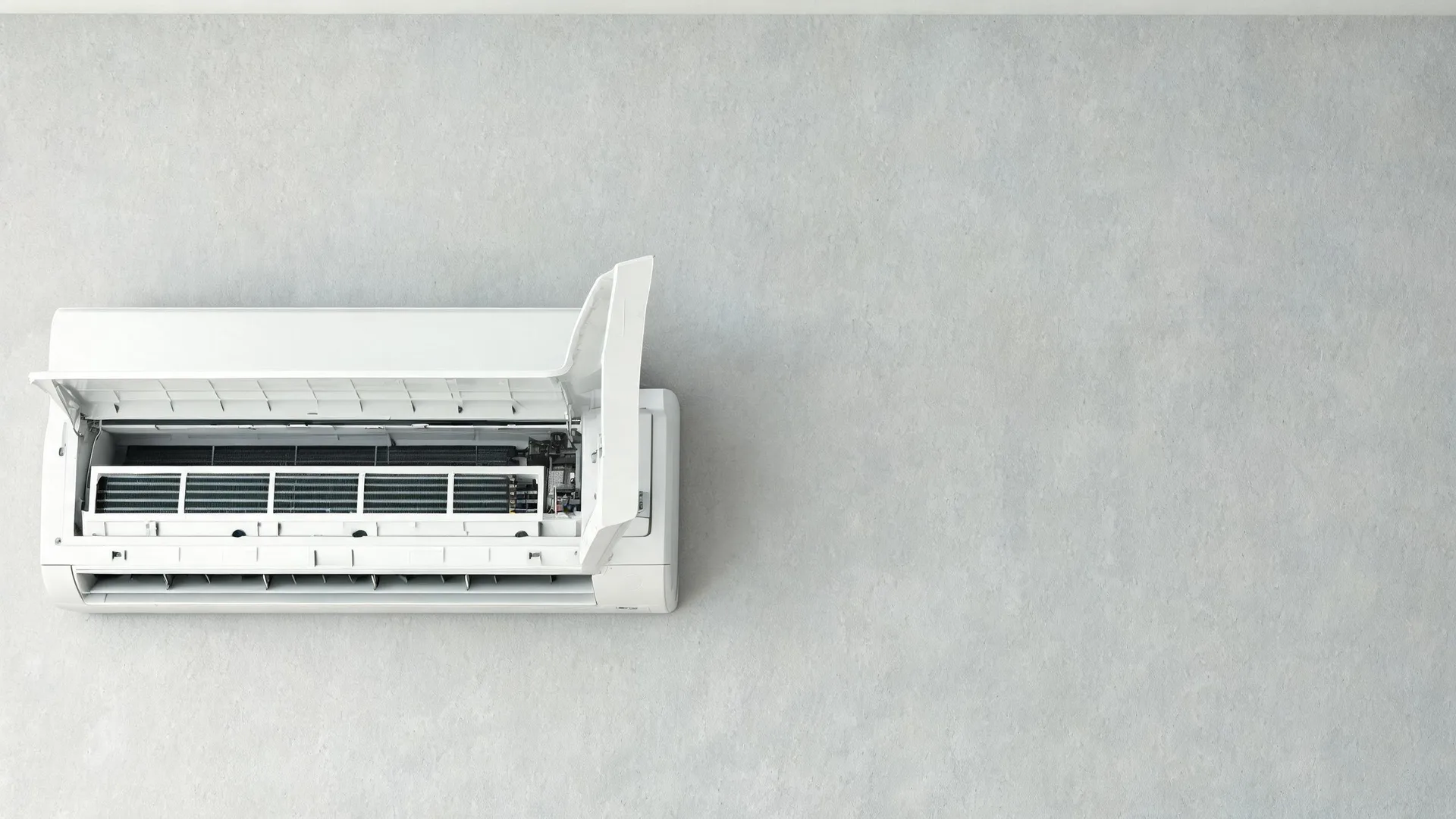
A mini split moves air straight from the indoor head into the room, not through ducts, so ductwork that served a furnace or central air system has no job left in any room a mini split now covers. Ducts still feeding rooms the mini split doesn't reach can stay in service as long as something is still pushing air through them. A duct run with nothing connected to it anymore is worth sealing off, since an open run can pull conditioned air into a space that doesn't need it.

What drives the price isn't the equipment on the truck. It's what it takes to get it mounted, wired and charged right. More indoor heads means more line sets, more wall penetrations and more labor hours, no matter what brand is on the box. The distance between the indoor head and the outdoor unit matters too, since a longer line set takes more refrigerant and more time to run and insulate. A mini split also needs its own dedicated circuit. If the panel doesn't have room for one, that work has to happen before the unit ever goes on the wall. Where the outdoor unit can physically sit, and how far that is from each indoor head, shapes the whole layout more than most homeowners expect going in.

Install day starts with the outdoor unit, not the indoor heads. The contractor sets the pad or wall bracket first, since that location was already picked for airflow clearance and how far the line set has to travel. Then comes the hole through the wall for the line set, the drain line and the electrical whip, usually one penetration per indoor head. The line set gets run, connected at both ends, then the whole system gets pulled down to a vacuum before any refrigerant moves. That vacuum step matters more than almost anything else that day, because any moisture or air left in the line set will shorten the compressor's life, and there's no way to see that mistake after the cover plate goes on. Once it holds vacuum, refrigerant gets released from the outdoor unit, the electrical connections get tested, and the system runs a cycle before anyone calls it done.