




Two single-story houses, one with red brick and one with light siding, behind a trimmed hedge and lawn under large oak trees draped with Spanish moss.

Mini Split Installation in Augusta, GA

Tell us about the job

Takes about a minute. No obligation.

New system or replacementMini-splitRichmond County, GA
Step 1 of 2

What ZIP code is the job in?

Richmond County falls in climate zone 3A, warm and humid with a long stretch of cooling and a winter that stays mild. Any ductless heat pump installed here now has to meet 14.3 SEER2 for cooling and 7.5 HSPF2 for heating, the same floor that applies to any split-system heat pump under the federal standard. There's no separate rule for ductless units, they're held to the same number. That minimum is already built into most mini-splits on the market, so it narrows what a contractor will offer you more than it rules anything out. Installing one here may also qualify for the federal energy efficiency tax credit, worth checking against the specific unit before you decide.

5 months
November through March, your system heats
5 months
May through September, it cools
37°F
the average winter night it heats against
91°F
the average summer afternoon it cools against
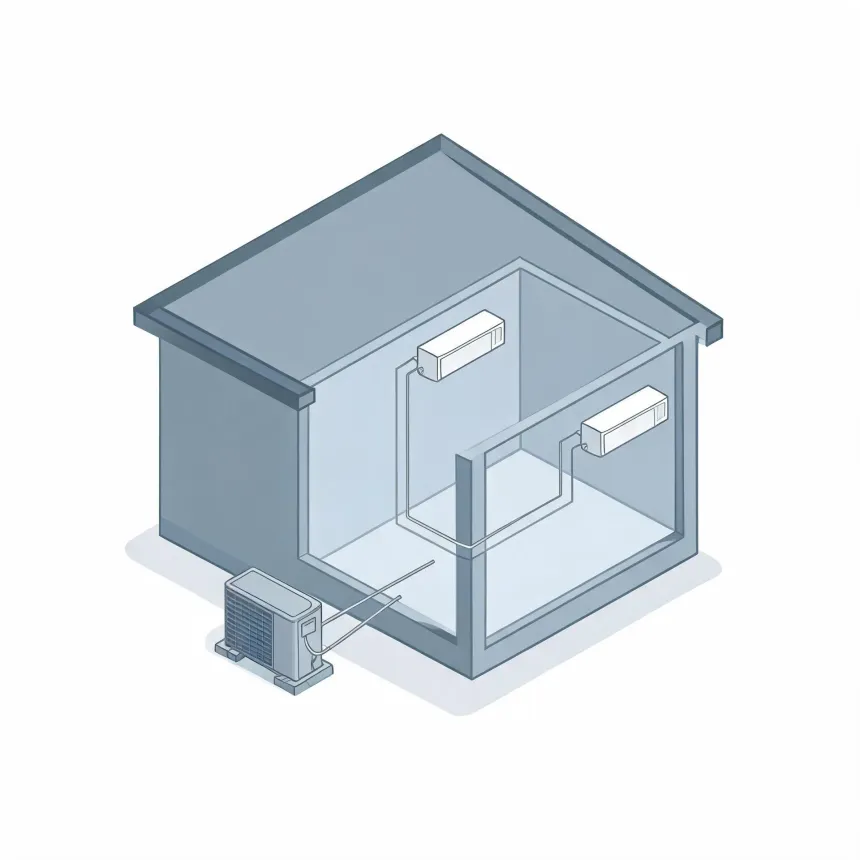
Isometric line illustration of a cutaway building interior with two wall-mounted indoor air conditioning units connected by piping to an outdoor condenser unit on the ground outside.
Your system heats November through March and cools May through September.

NOAA nClimDiv, 1991–2020 normals

Georgia electricity ran 14.08 cents per kilowatthour in 2024.

A mini split that holds a higher SEER2 rating earns back the difference on every bill it runs.

Most homes in Richmond County already run on electricity

57.8% of homes heat with electricity
Cooling runs May through September
Summer afternoons average 91°F

Cooling here runs May through September, five months straight. April is the month to get a mini split installed, before that stretch starts. Done ahead of the season, a contractor can take the time to size each indoor head to the room it serves and run the line set properly. Wait until homes around you are already running cooling and you're scheduling around whoever has an opening, with a system you need working right away.

Five months of 91 degree afternoons means sizing this right matters

Cooling runs five months here, and the afternoon high sits around 91°F for June, July and August. A mini split that's sized right for the room will hold up through that. One that's oversized or undersized will work harder than it should for all five months. Get the sizing right before it goes in.

Find a contractor
A white outdoor air conditioner condenser unit mounted on metal wall brackets against gray horizontal siding, with a blue sky and white clouds behind it.

Sized right, it runs five months without strain

Ask the contractor to run a load calculation for each room instead of going off square footage alone. A unit sized that way holds steady through the five months it runs here, from May into September. One that's too big cools the room fast and shuts off before it pulls the moisture out of the air. One that's too small runs the whole stretch without ever catching up.

A load calculation looks at more than floor space

A contractor doing this right measures the windows, wall exposure, insulation and ceiling height in each room, along with what else is already running nearby. Rooms that look the same size on paper can need different sized heads depending on which way they face and how much sun they take on.
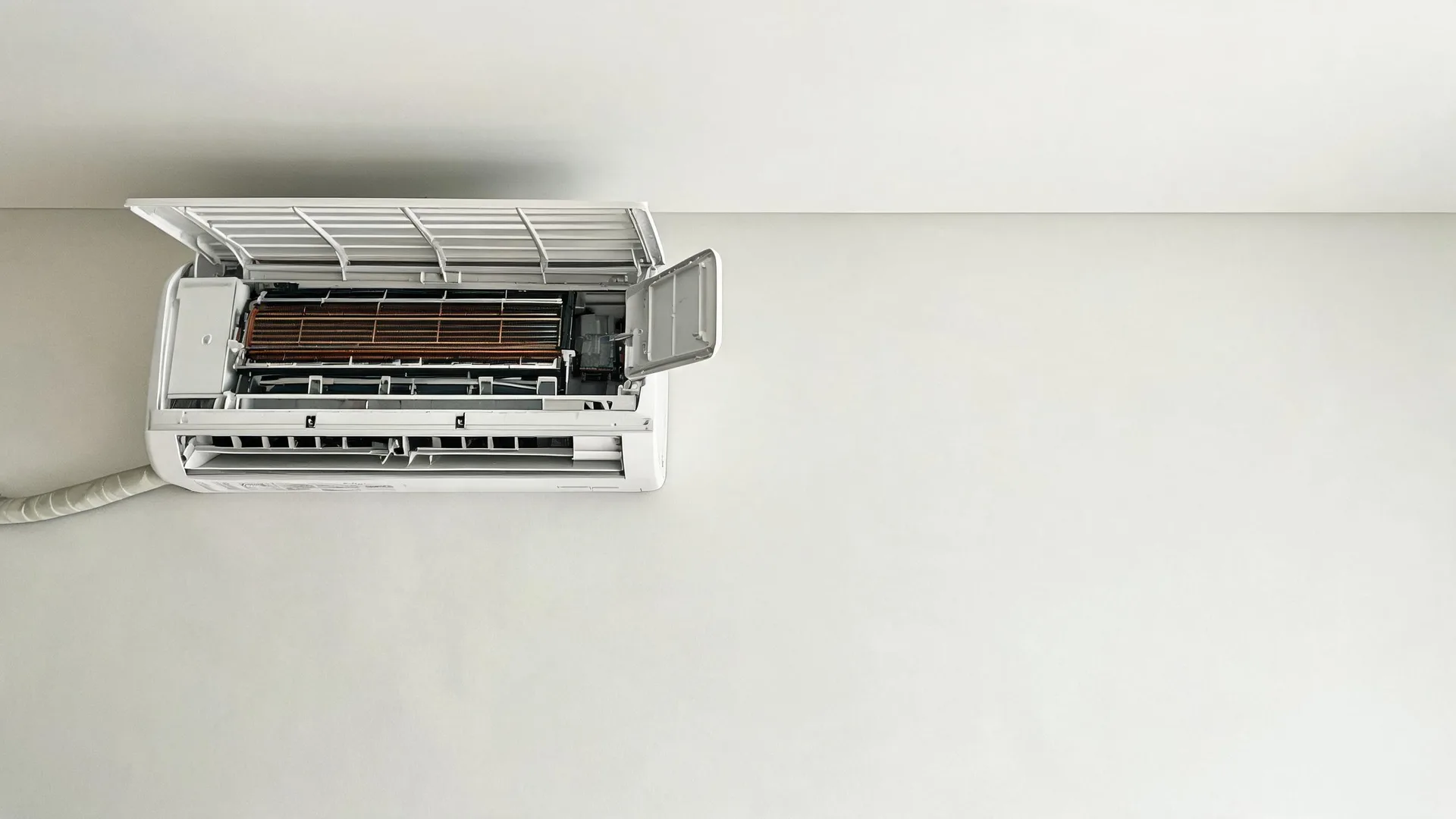
Every indoor head gets sized on its own

A mini split system lets each room run its own head, so the bedroom doesn't need to match the living room. Sizing them separately instead of splitting one total across the house is what keeps every room comfortable without any single head working harder than it should.

Whoever installs the new system still has to deal with what's on the wall now. If a central system is coming out, that means the outdoor condenser, the indoor coil, and all the ductwork tied to it, even if only part of it gets replaced. An old window unit or existing mini split just gets disconnected and hauled off. Refrigerant in the old system has to be recovered properly before any line gets cut, not vented, so that part of the job falls to whoever's licensed to handle it. If the old system ran on a dedicated circuit or disconnect box, a contractor will tell you whether the new one can reuse it or needs its own. None of that changes how the new mini split gets sized or installed, it just has to happen first.

Install day starts with the outdoor unit. It needs a spot with clear airflow on all sides and a solid, level pad to sit on, away from where water drains off the roof. From there, a contractor runs the line set to each indoor head, the copper tubing that carries refrigerant along with a condensate drain line and the electrical whip. This gets routed through a hole drilled through the wall, usually hidden behind the indoor unit itself. Once everything's connected, the line set gets pulled down to a vacuum to clear out any moisture or air before refrigerant ever flows through it. Skip that step and moisture left inside can damage the compressor down the road. After the vacuum holds, the system gets charged, powered on, and checked head by head to make sure each one is cooling and draining the way it should.