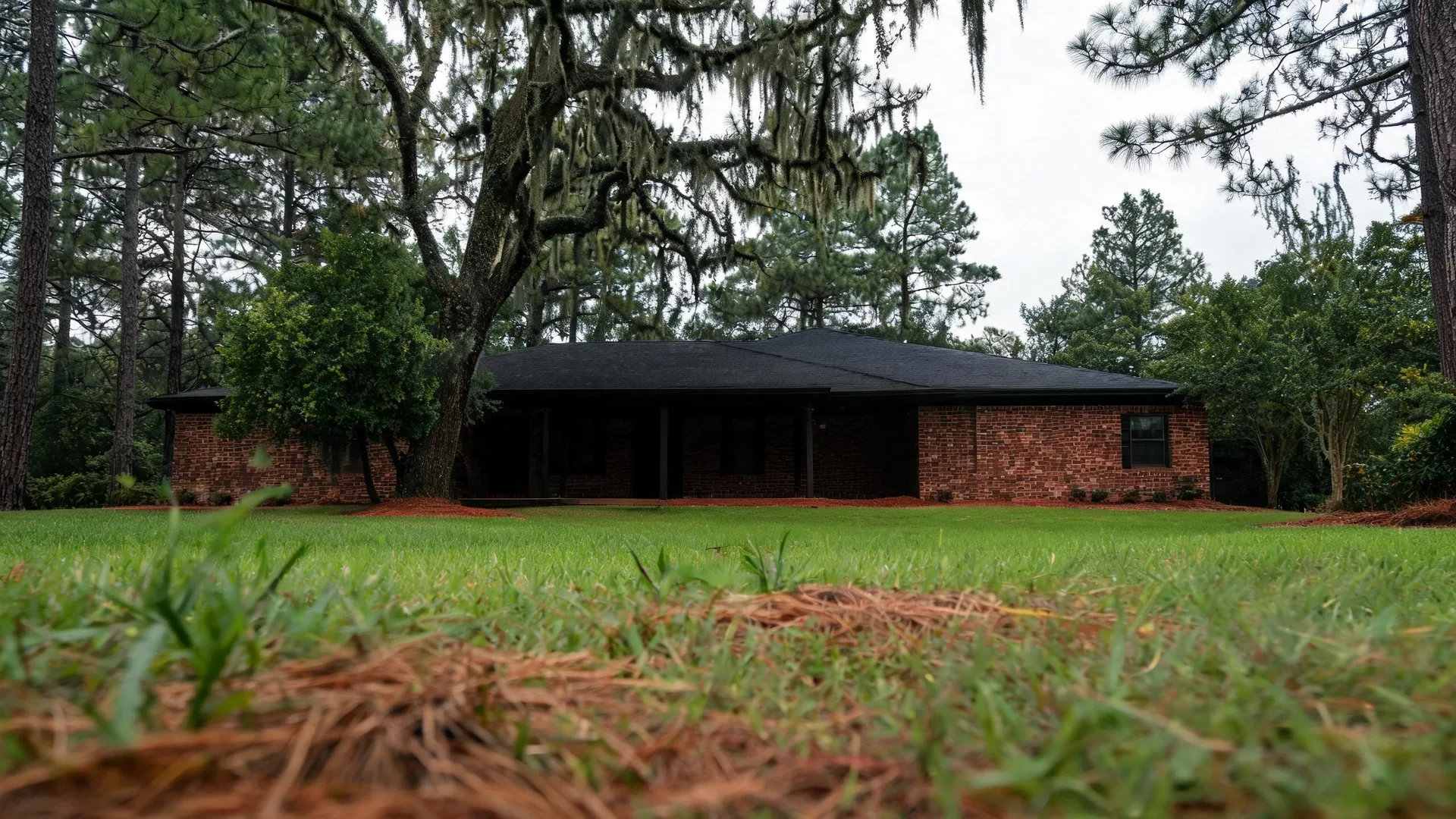





Single-story brick house with a dark shingled roof set behind a lawn and tall pine and moss-draped trees, photographed low to the ground with pine straw in the foreground.

Mini Split Installation in Canton, GA

Tell us about the job

Takes about a minute. No obligation.

New system or replacementMini-splitCherokee County, GA
Step 1 of 2

What ZIP code is the job in?

Cherokee County saw 186 severe weather events between 2015 and 2024, and 149 of those were damaging wind. Hail showed up 15 times, tornadoes touched down 3 times, and winter storms hit 6 times in that same stretch. Any of those can knock out power, and when it does, it tends to stay out. Close to a third of Georgia households went at least a full day without power in 2024. A mini split outdoor unit sits outside through all of this, exposed to wind and hail, and it stops running the moment the power does.

7 months
October through April, your system heats
5 months
May through September, it cools
33°F
the average winter night it heats against
87°F
the average summer afternoon it cools against
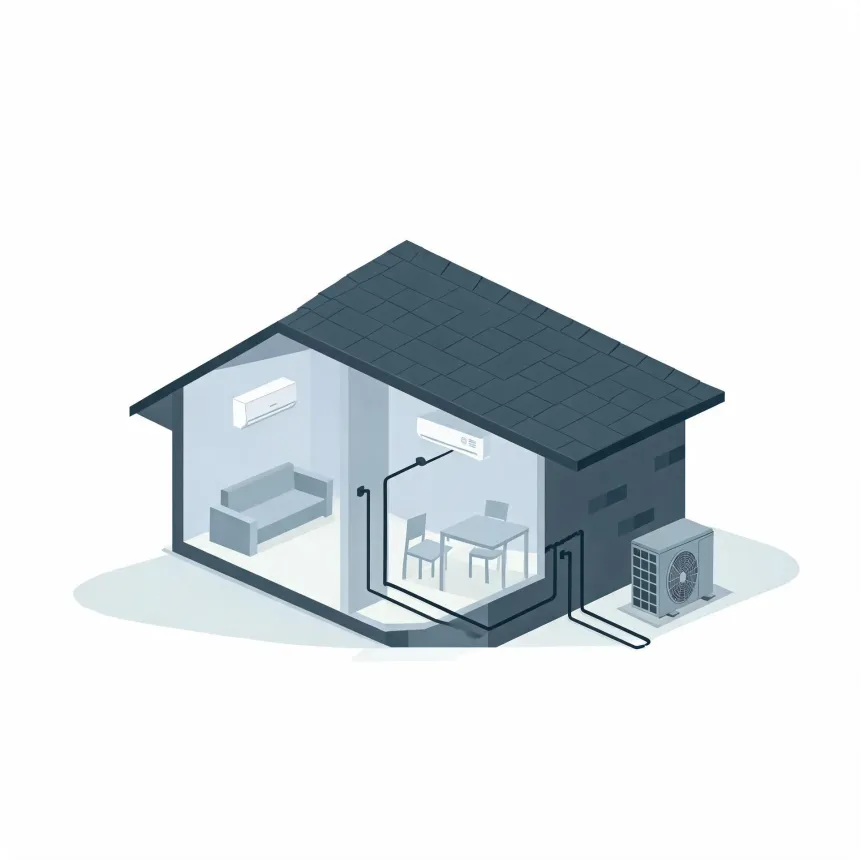
Isometric illustration of a cutaway single-story house showing two wall-mounted mini-split indoor units connected by line sets to an outdoor condenser beside the building, with a sofa, table and chairs inside.
Your system heats October through April and cools May through September.

NOAA nClimDiv, 1991–2020 normals

Cooling runs May through September in Cherokee County.

April is the month to get a mini split installed, before the first hot stretch hits and before the next storm knocks out power.

Five months of cooling, run hard, in a county where the power doesn't always hold

Cooling runs May through September
Summer afternoons average 87°F
149 damaging wind events from 2015 to 2024
Most homes here heat with gasGas heats 61.8 percent of homes in Cherokee County, with electricity a distant second at 32.9 percent

Cherokee County falls under zone 3A in the energy code, a warm, humid zone with a long cooling season. Any mini-split installed here has to meet the federal split-system heat pump minimums: at least 14.3 Btu of cooling for every watt-hour of electricity, and at least 7.5 Btu of heat the same way, on units built since January 2023. Those numbers are the floor, not a target to aim for exactly. A system that clears them by a wide margin costs less to run through a long cooling stretch than one that barely qualifies. A federal tax credit is available on qualifying equipment, worth weighing alongside the efficiency rating when comparing units.

Plan for the outage before you plan for the heat

Where the outdoor unit goes and how it's mounted is part of the install, not an afterthought. So is a plan for what runs the heat and the hot water when the power drops, since it tends to stay out here. Worth going over both before the crew shows up.

Find a contractor
A white mini-split air conditioner outdoor condenser unit mounted on metal brackets against a beige stucco exterior wall, with a blue sky and scattered clouds in the background.

Five months of hard running, every year

Five months running at an 87 degree average asks a lot of an outdoor unit. Get the sizing wrong, too big or too small, and it only gets worse, short-cycling in the heat or struggling to keep up on the hottest afternoons. A contractor who does a proper load calculation for your house, instead of guessing off square footage, is worth more than a few dollars off the sticker price. The cheapest bid often skips that step.

The load calculation looks at the whole house

A proper sizing calculation accounts for window area and orientation, insulation, ceiling height, and how many rooms are on the system, not just the square footage. Two houses the same size can need different sized equipment because of how they're built and which way they face the sun.
Oversized and undersized both cause problems

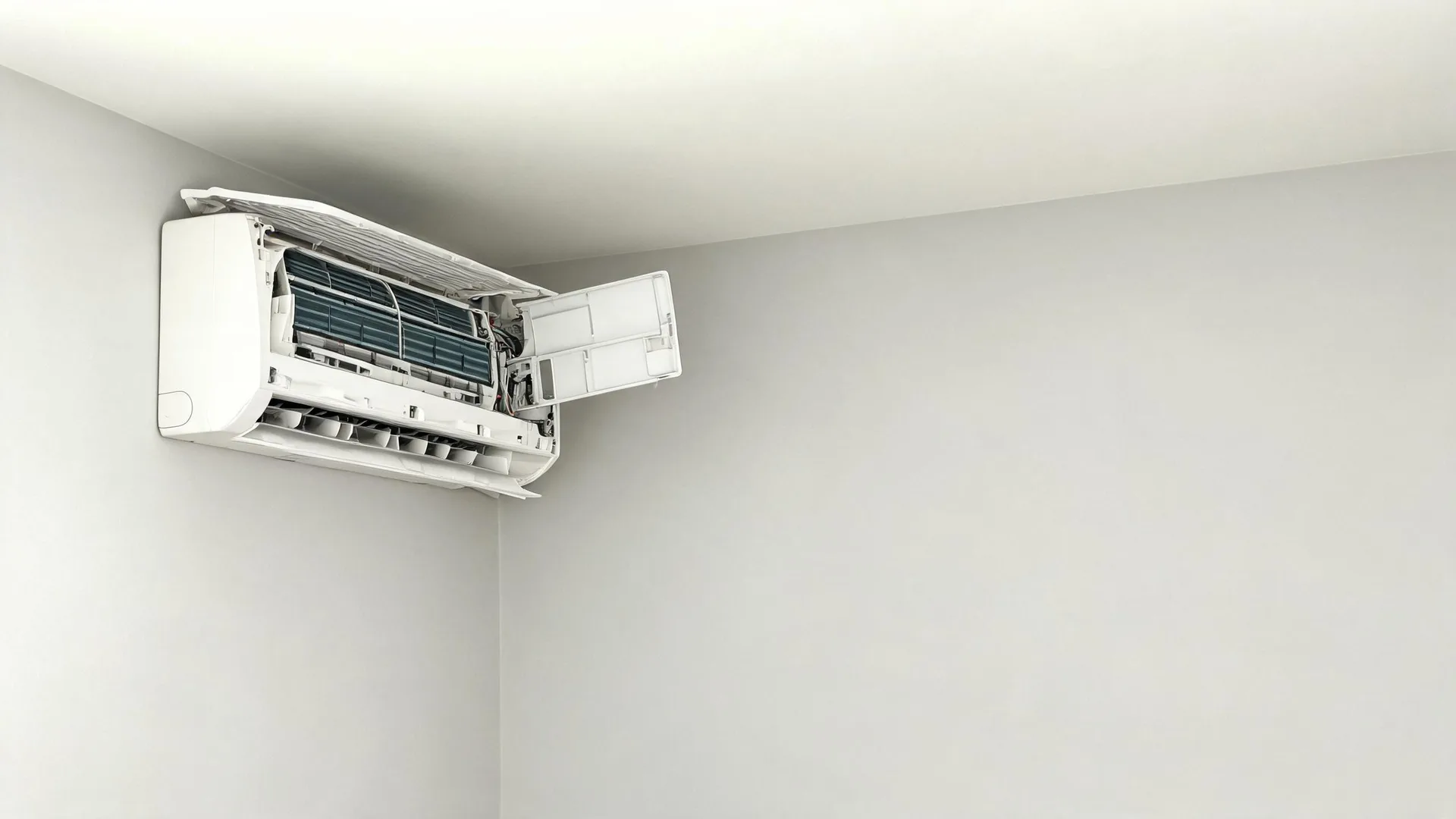
A unit that's too big cools the room fast and shuts off before it pulls the moisture out of the air, leaving the space cold and damp. One that's too small runs constantly and still can't keep up when the temperature climbs, putting more wear on the compressor than a correctly sized unit ever sees.

The efficiency rating on a mini split's label, the SEER2 number, tells you how much cooling you get out of each unit of electricity over a full season of varying conditions. It's not a measure of how strong the unit is or how fast it cools a room. Two systems can cool the same house equally well and still cost different amounts to run, because one squeezes more out of the same power draw. That difference shows up most on the days the system runs longest, not the mild days when it barely kicks on. A higher rated unit also tends to run its compressor at a lower, steadier speed instead of slamming on and off, which is part of how it gets the better number in the first place. The rating on the label is tested under set conditions, so it's a way to compare units against each other, not an exact promise of what you'll see on your own power bill.

Install day starts outside, not in. The crew mounts a bracket to an exterior wall and sets the outdoor unit on it, or on a pad if it sits at ground level, somewhere with clear airflow on all sides. Inside, each indoor head goes up on its own wall or ceiling mount, positioned to throw air across the room rather than straight at a couch or bed. A small hole gets drilled through the wall behind each indoor unit to run the line set, the pair of refrigerant lines that connect indoor to outdoor, along with a drain line and the electrical whip. Once everything is connected, the line set gets evacuated with a vacuum pump to pull out all air and moisture before the refrigerant is released into it. Skipping that step is one of the most common causes of an early failure, so a tech checking the vacuum gauge and holding it there for a while is a good sign, not a delay.