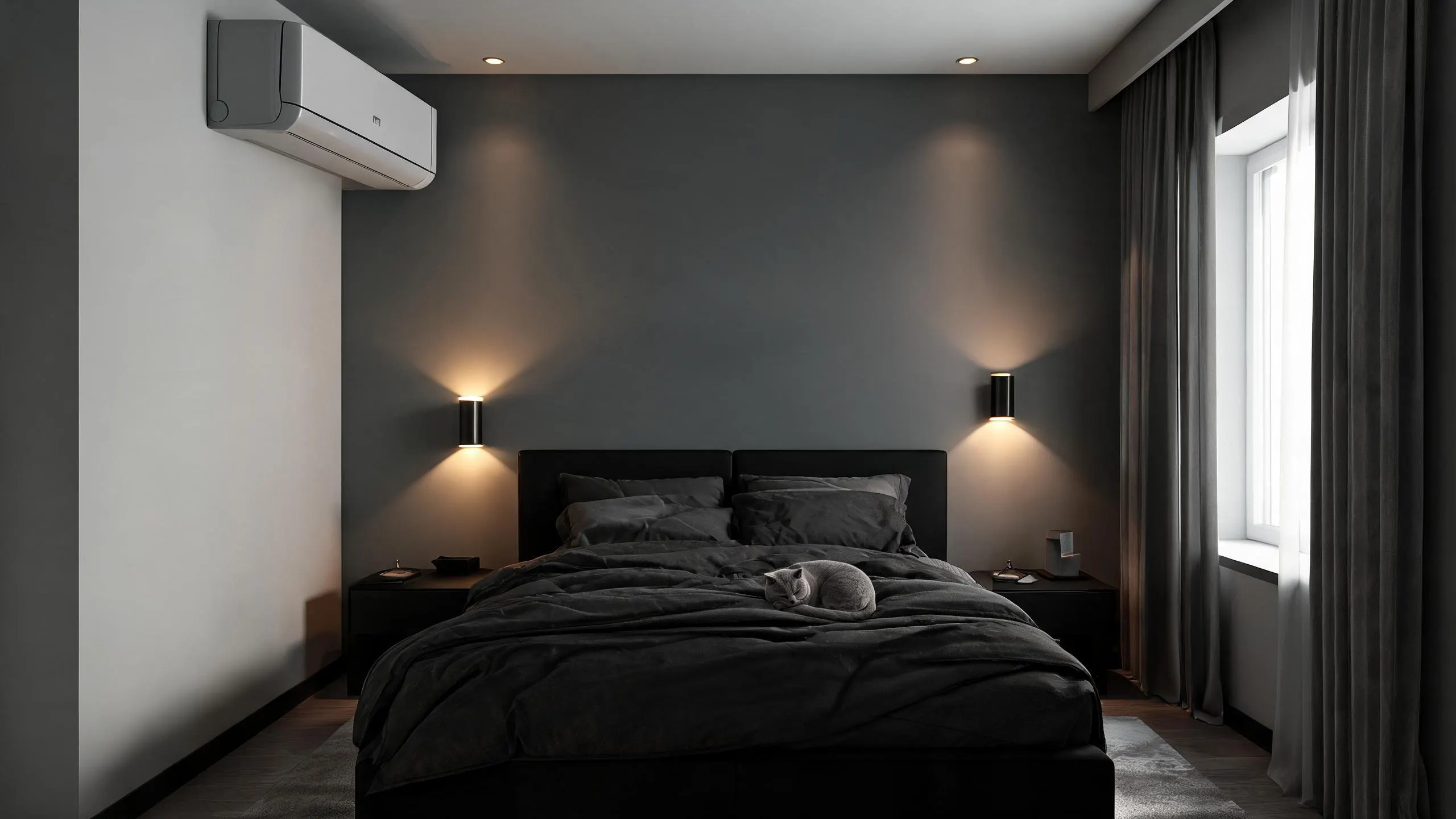






A minimalist bedroom with dark grey walls, a large bed with charcoal bedding, a sleeping cat, two warm-toned wall sconces, and a wall-mounted air conditioning unit.

Mini Split Installation in Carrollton, GA

Tell us about the job

Takes about a minute. No obligation.

New system or replacementMini-splitCarroll County, GA
Step 1 of 2

What ZIP code is the job in?

Carroll County saw 102 severe weather events between 2015 and 2024. Most of that was wind, 87 events, along with 7 hail events, 3 tornadoes and 3 tropical storms or hurricanes. An outdoor mini-split unit sits outside through all of it, exposed to wind-driven debris and hail. And storms here don't just pass through, they knock the power out. Across Georgia, 31% of households lost power for 24 hours or more in 2024. A mini-split, like any electric heat or cooling system, stops working the moment the power does.

7 months
October through April, your system heats
5 months
May through September, it cools
34°F
the average winter night it heats against
88°F
the average summer afternoon it cools against
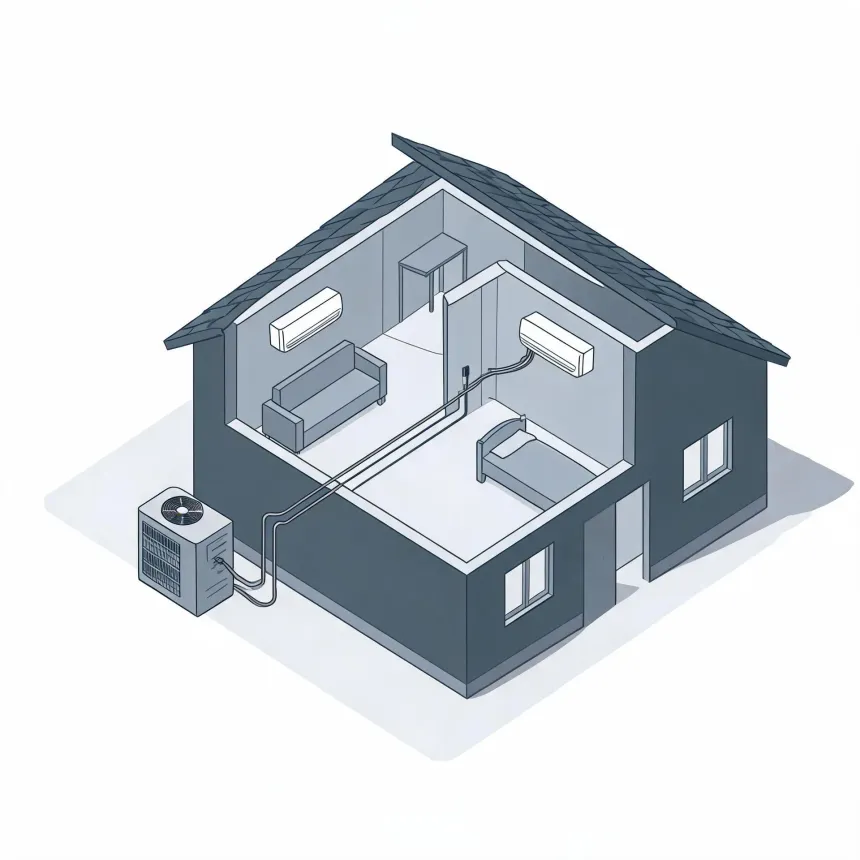
Isometric cutaway illustration of a small house showing two wall-mounted indoor air conditioning units connected by line sets to an outdoor condenser unit beside the exterior wall, with a sofa in one room and a bed in another.
Your system heats October through April and cools May through September.

NOAA nClimDiv, 1991–2020 normals

Cooling season starts in May here.

Install before April ends and the job happens on your schedule, not during the first heat wave.

Five months of hard cooling, every year

Cooling runs May through September
Summer afternoons average 88°F
87 damaging wind events from 2015 to 2024
Electric heat already runs this county58% of homes here heat with electricity, more than gas and propane combined

Electricity in Carroll County runs 14.78 cents per kilowatt-hour on average. A mini-split earns its keep against that rate in a way an older system can't. Every mini-split moves heat instead of burning fuel to make it, so it uses less power to heat or cool the same room. That matters more here than in a lot of places, because this system is going to run hard through long summers and cold winters both. The efficiency rating on the unit you choose is worth asking about for exactly this reason. A higher rated system costs less to run every month it's in use, and in this county it's in use most of the year.

Plan for the storm before the unit goes in

Where the outdoor unit goes and how it's mounted is worth deciding now, before it's installed and harder to change. A unit set where debris can't reach it, on a mount that holds through wind, is a decision made once at installation. And if the power here goes out for a day, as it did for close to a third of Georgia households last year, a mini-split with no backup plan is a house with no heat or cooling until the lines are back up. Worth asking what options exist for that before the install, not after.

Find a contractor
A man in a dark sweatshirt and tan work pants, seen from behind, climbs porch steps toward a red-orange door while carrying a worn canvas duffel bag.
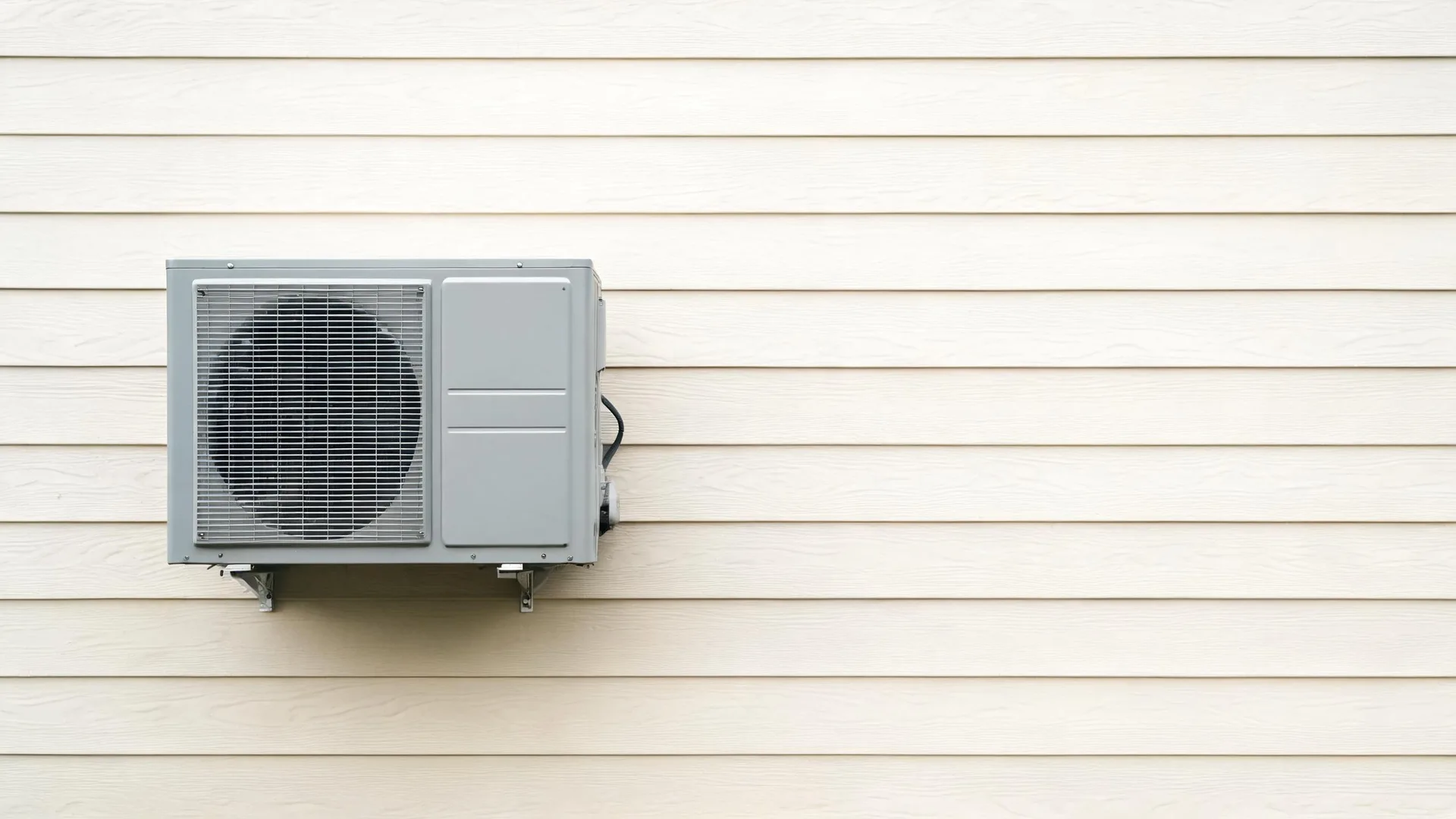
A white outdoor air conditioner condenser unit mounted on metal wall brackets against gray horizontal siding, with a blue sky and white clouds behind it.

Sized for the long run

Five months of summer here means this unit starts in May and doesn't let up until the afternoons cool off in September, with highs averaging 88°F through the worst of it. A mini-split sized right for that load will run long hours and keep up. One sized too small runs constantly and never quite gets there, which wears it out faster and still leaves the room warm. This is the question to settle at installation, with whoever's doing the sizing, not after the unit's already on the wall.

The rating measures the ratio, not the room

The efficiency rating on a mini-split compares the heat it moves to the power it draws. A higher number means it moves more heat per unit of power. It doesn't tell you whether the unit is strong enough for the space, and a unit that's rated high but sized wrong for the room still runs harder than it should to keep up.
The rating only holds if the install is right

A mini-split hits its rated efficiency when the line set is the right length, the refrigerant charge is correct, and the indoor and outdoor units are matched as a pair. Mismatch any of those and the system draws more power than the rating promised, no matter what number is on the label.

Taking out the old system is its own job, separate from putting in the new one. A window unit or an older split system has refrigerant in it, and that refrigerant has to be recovered properly, not vented, so the removal needs the same kind of license as the install. If the old system ran on a different kind of line set or a different electrical circuit, those get disconnected and capped, and whoever does the work will tell you whether any of that old wiring or tubing is reusable or needs to come out too. A wall-mounted or window unit leaves a hole or a bracket behind, and that gets patched or removed as part of the job, not left for later. Ductwork is a separate question. If the old system used ducts and the mini-split doesn't, those ducts don't have to come out. They just stop being part of the system that heats and cools the house.

Carroll County falls in climate zone 3A, warm with a long cooling season and mild winters. Any mini-split installed here, like any split-system heat pump, has to meet the federal minimum under that standard: at least 14.3 Btu of cooling for every watt-hour it draws over the summer, and at least 7.5 Btu of heat for every watt-hour over the winter, if it was built on or after January 1, 2023. That rule applies the same whether the unit is ductless or not. A system priced below that standard isn't an option here, whatever else it offers. There's also a federal tax credit available for qualifying heat pump installations, worth asking about when you're comparing units and costs.