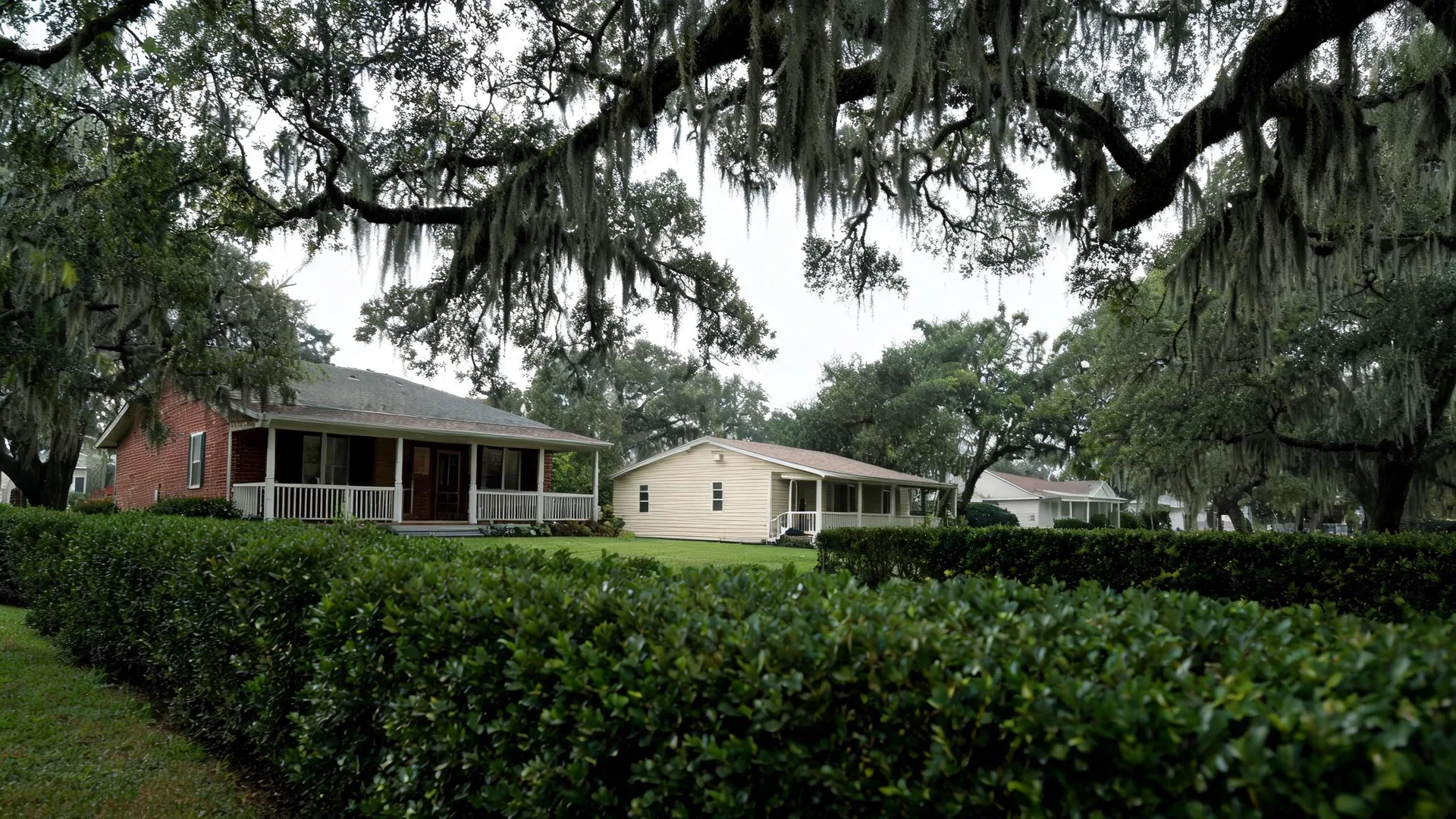





A brick house with a white porch and a light-colored single-story house behind a trimmed hedge, framed by large oak branches draped with Spanish moss.

Mini Split Installation in Cartersville, GA

Tell us about the job

Takes about a minute. No obligation.

New system or replacementMini-splitBartow County, GA
Step 1 of 2

What ZIP code is the job in?

Electricity in Bartow County ran 14.68 cents per kilowatt-hour in 2025. That number matters more here than in a lot of places, since most homes heat with it instead of gas. A mini split moves heat instead of burning fuel or running pure resistance heat, so it gets more warmth or cooling out of every kilowatt-hour you pay for. The efficiency rating on the unit you install sets how much of that 14.68 cents turns into comfort in your house and how much just turns into a bigger bill.

7 months
October through April, your system heats
5 months
May through September, it cools
33°F
the average winter night it heats against
88°F
the average summer afternoon it cools against
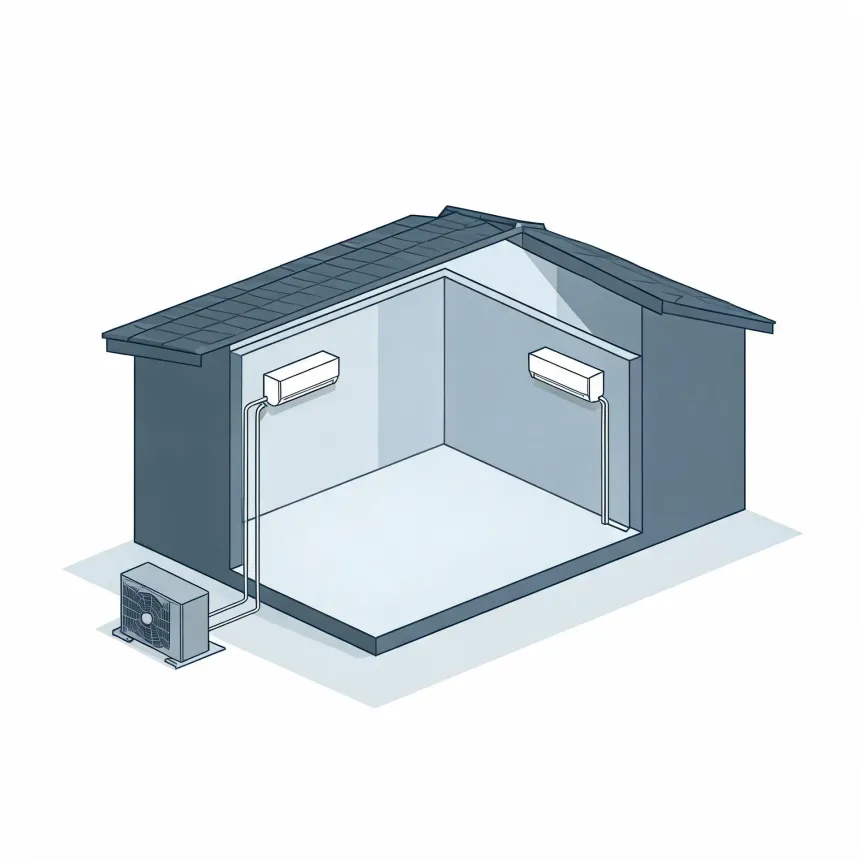
Cutaway isometric illustration of a small building interior showing two wall-mounted indoor air conditioning units connected by line sets running down to a single outdoor condenser unit on the ground outside.
Your system heats October through April and cools May through September.

NOAA nClimDiv, 1991–2020 normals

Cooling starts in May here.

A mini split installed in April is ready and already run in before the first hot week hits.

Most homes here already run on electricity, and a mini split fits right into that

63% of homes heat with electricity
Cooling runs May through September
Summer afternoons average 88°F
Five Months of Heavy AirAfternoon highs average 88°F through June, July and August, with a dew point of 67°F that sits above most of the country.

Bartow County saw 117 severe weather events between 2015 and 2024, most of it damaging wind, with 12 hail events and 5 tornadoes in the mix. The outdoor unit sits outside through all of it, so where it goes matters. A spot away from the roofline and anything that might fall on it beats a spot that's just convenient to the wall. Statewide, close to a third of Georgia households lost power for a day or more in 2024. A mini split won't run without power, and since most homes here heat with electricity, an outage can mean no heat or hot water along with no cooling. Worth asking about a surge protector for the outdoor unit, and worth having a plan for heat and hot water if the power goes out on a cold night.

Pick the efficiency rating before you pick the installer

The efficiency rating on the unit decides how much of your power bill turns into heat and cooling, and how much just gets spent. That's worth settling before anything goes on the wall.

Find a contractor
A beige split-system air conditioner outdoor condenser unit mounted on metal wall brackets atop a stucco wall.

Five Months a Year, Every Year

Five months of cooling a year means the compressor outside is putting in real time before it ever gets a break for winter. Get the size right before install day. A unit too big cycles on and off instead of running steady, and short cycling wears on parts faster than a long, even run. A unit too small just struggles the whole summer trying to keep up. Either way shows up sooner here than in a place where cooling only runs a couple months. Ask the contractor what they based the sizing on, not just the square footage of the room.

The line set and the wall decide the labor

Running refrigerant line between the outdoor unit and each indoor head takes drilling, mounting, and a vacuum pump to pull air and moisture out of the line before it ever gets charged. A straight run through one wall to a nearby outdoor pad is quick work. A run that climbs through an attic, turns a few corners, or reaches a condenser set far from the house takes longer and uses more line, and every added foot is something the installer has to buy and run by hand.
Every indoor head is its own install

A mini split system with several indoor heads means several mounting points, several line sets, and several spots where the wall gets opened up and later sealed back. One zone is a simpler job than a house split into four or five. More heads also means more choices up front, since each room needs its own head sized to that space, not just a share of the whole house.

If you're replacing a window unit or central system, something has to happen to what's coming out. A window unit just gets pulled and hauled off, no more to it. Central air is a bigger job, since the old outdoor unit, the indoor coil, and often the ductwork tied to it all have to come out before the new system goes in. Refrigerant in the old lines has to be recovered properly rather than vented, so a contractor pulling out an old system should be handling that as part of the teardown. If the old system ran on gas or oil for heat, ask what happens to that line or tank once the mini split takes over, since an abandoned line still needs to be capped off safely. None of this is hard, but it should be part of the quote, not a surprise after the new unit is already on the wall.

Bartow County sits in climate zone 3A under the 2021 energy code. Any mini split going in has to clear the federal minimum for a split-system heat pump: units built on or after January 1, 2023 have to remove at least 14.3 Btu of heat for every watt-hour of electricity they use over the summer, and deliver at least 7.5 Btu of heat for every watt-hour over the winter. That's the floor, not a target worth aiming for. A unit sitting right at that line will run and it will pass inspection, but it won't do much to hold down a bill that runs most of the year here. Ask what rating the unit you're quoted actually carries, not just whether it clears code.