




Two white Southern-style homes with wraparound porches lit by landscape lighting at night, flanked by live oak trees hung with Spanish moss.

Mini Split Installation in Covington, GA

Tell us about the job

Takes about a minute. No obligation.

New system or replacementMini-splitNewton County, GA
Step 1 of 2

What ZIP code is the job in?

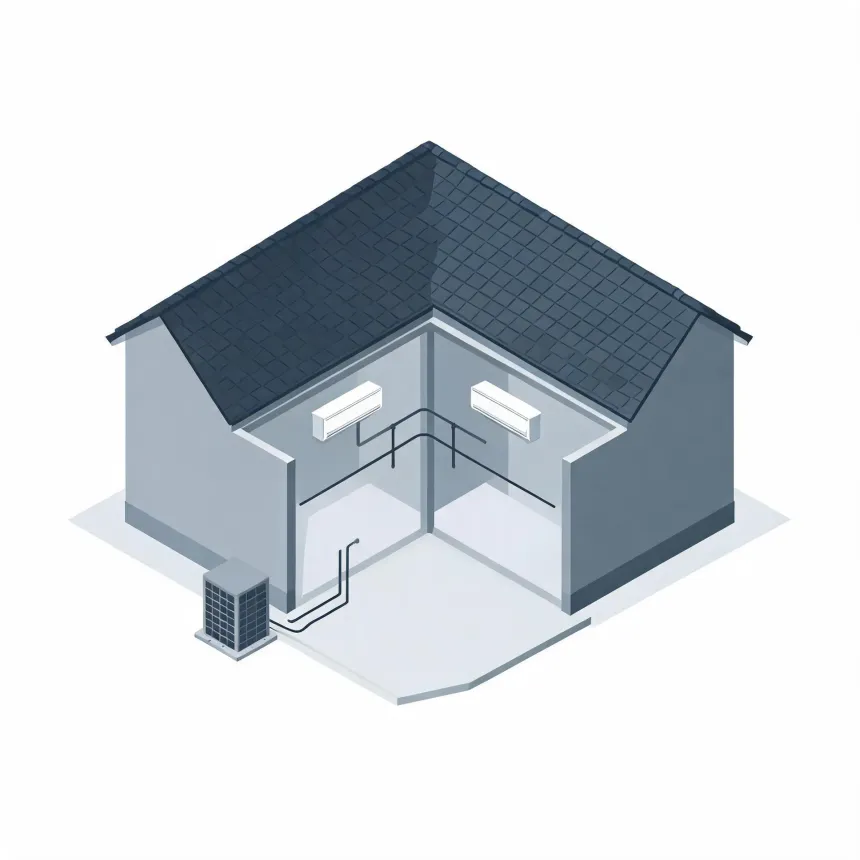
Electricity heats close to two in three homes in Newton County. Utility gas heats close to a third, and a small share run on bottled or LP gas. A mini split fits an electric home without any changes to fuel lines. For a home already on gas heat, it usually goes in alongside the furnace, covering a room or an addition the ductwork does not reach well. Either way the install is the same. A compressor sits outside, an air handler goes inside, and a line set connects them through the wall.

5 months
November through March, your system heats
5 months
May through September, it cools
35°F
the average winter night it heats against
89°F
the average summer afternoon it cools against
Isometric illustration of a cutaway gray house with a dark shingled roof, showing two wall-mounted indoor air conditioning units connected by piping to an outdoor condenser unit on the ground outside.
Your system heats November through March and cools May through September.

NOAA nClimDiv, 1991–2020 normals

Covington gets five months of real cooling, May through September.

A mini split sized for this place has to hold 89 degree afternoons all summer, not just take the edge off.

Weather here knocks out power, not the system you'd pick

54 severe weather events from 2015 to 2024
31% of homes statewide lost power a day or more in 2024
39 damaging wind events from 2015 to 2024

Five months of 89 degree afternoons is a real load, not a peak to shave off. That's the argument for getting the room by room numbers right before anything gets ordered, and for not picking the cheapest unit that clears the SEER2 floor. A mini split undersized for its room will run flat out all June, July and August and still lose ground on the hottest days. One sized right runs long, steady cycles through the same stretch and holds the temperature without straining. The unit and the sizing matter more here than in a place that only needs cooling a few weeks a year, because this one doesn't get an easy month to coast through.

Any mini split installed here has to clear the regional minimum

Newton County falls in climate zone 3A, and any mini split installed from 2023 forward has to meet 14.3 SEER2 for cooling and 7.5 HSPF2 for heating, the same floor as any other split-system heat pump. That rules out the lowest-end units some other markets can still get away with. A federal tax credit is available on top of that for units that qualify, which is worth asking an installer about directly.

Find a contractor
A white outdoor air conditioner condenser unit mounted on metal wall brackets against gray horizontal siding, with a blue sky and white clouds behind it.

Get it in before May, not during it

Cooling in Newton County runs May through September, five months. If the install is already on the calendar, April is the month to get it done. Wait and the first hot week does the deciding for you, whatever unit is on hand, whatever date the installer has open. Go in April and the sizing, the unit, and the date are still yours to pick.

Ask for the room by room load calculation, not a guess

A mini split sized off square footage alone can end up wrong for the room. A contractor should measure window area, insulation, ceiling height and what else is in that room before naming a unit size. If nobody asks about the room before quoting a number, that quote is a guess.
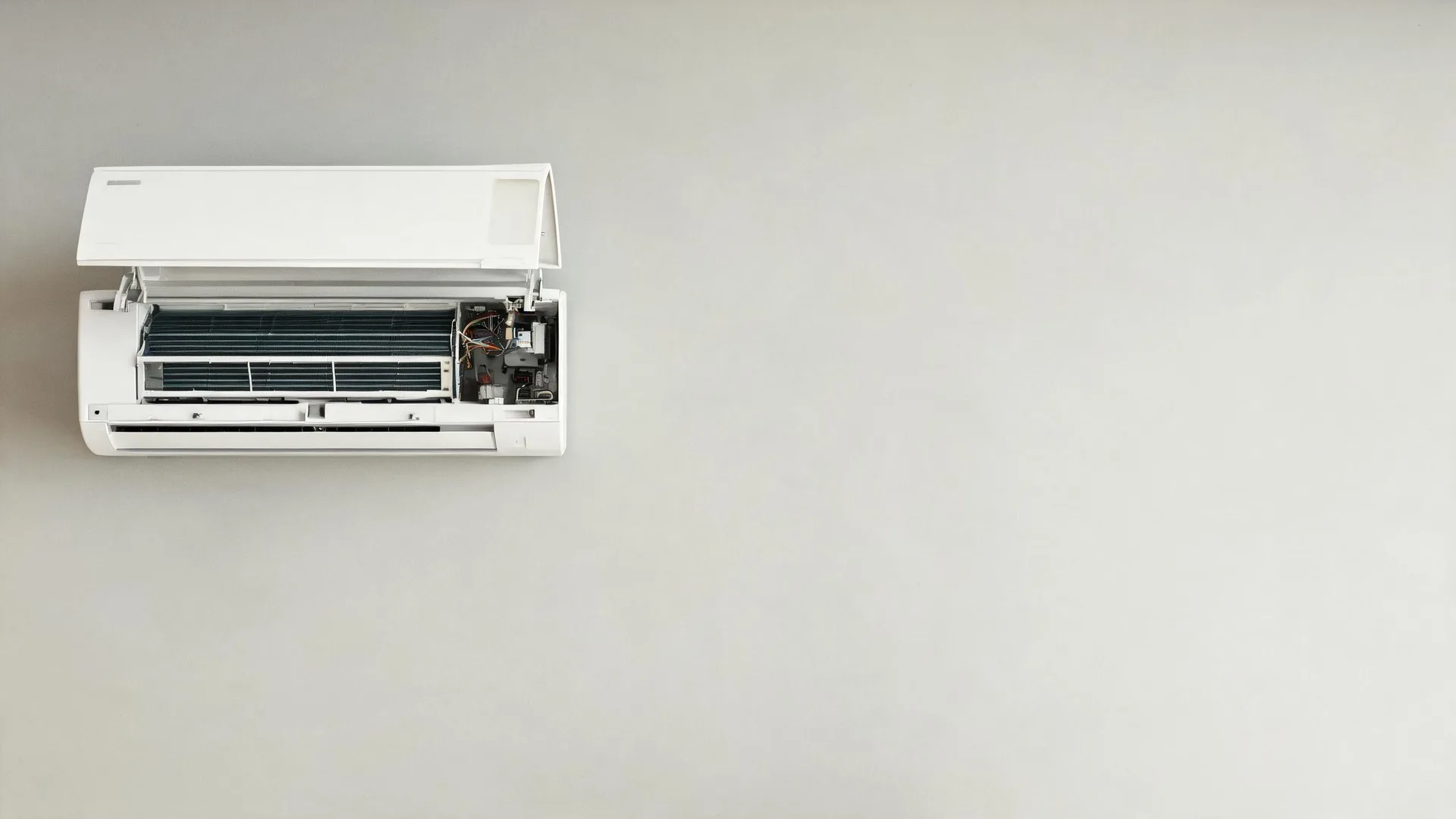
Ask whether it's one zone or several

A single indoor head covers one space well. A home needing coverage in more than one room is comparing a different system, one outdoor compressor feeding multiple indoor heads, or several separate systems entirely. The answer changes the equipment, the line sets run through the walls, and how the space is heated and cooled when only part of it is in use.

The efficiency rating on a mini split, the SEER2 and HSPF2 numbers on the yellow label, tells you how much cooling or heat you get out of the electricity it uses. A higher number means the compressor is doing more work per unit of power, not that it cools faster or heats a bigger space. A unit with a higher rating and one with a lower rating can carry the exact same load in the exact same room. The only difference shows up on the power bill, not in how cold the room gets or how fast. It's worth weighing the price difference between models against that, since the rating alone doesn't say whether paying more for a higher number actually pays for itself.

Sizing a mini split comes down to the load in that specific room, not a chart that matches tonnage to square footage. A contractor works out how much heat the room gains in summer and loses in winter, factoring the windows, the insulation, the ceiling height and what else is generating heat in there, then matches the compressor and air handler to that number. Go too big and the unit cools the air fast but shuts off before it pulls the moisture out, so the room feels cold and damp at the same time. Go too small and it runs flat out on the hottest and coldest days and still can't hold the temperature you set. Either mistake shortens the life of the compressor, since neither lets it run the long, steady cycles it's built for. The unit that's sized right is the one that runs longer and quieter, not the one with the biggest number on the box.