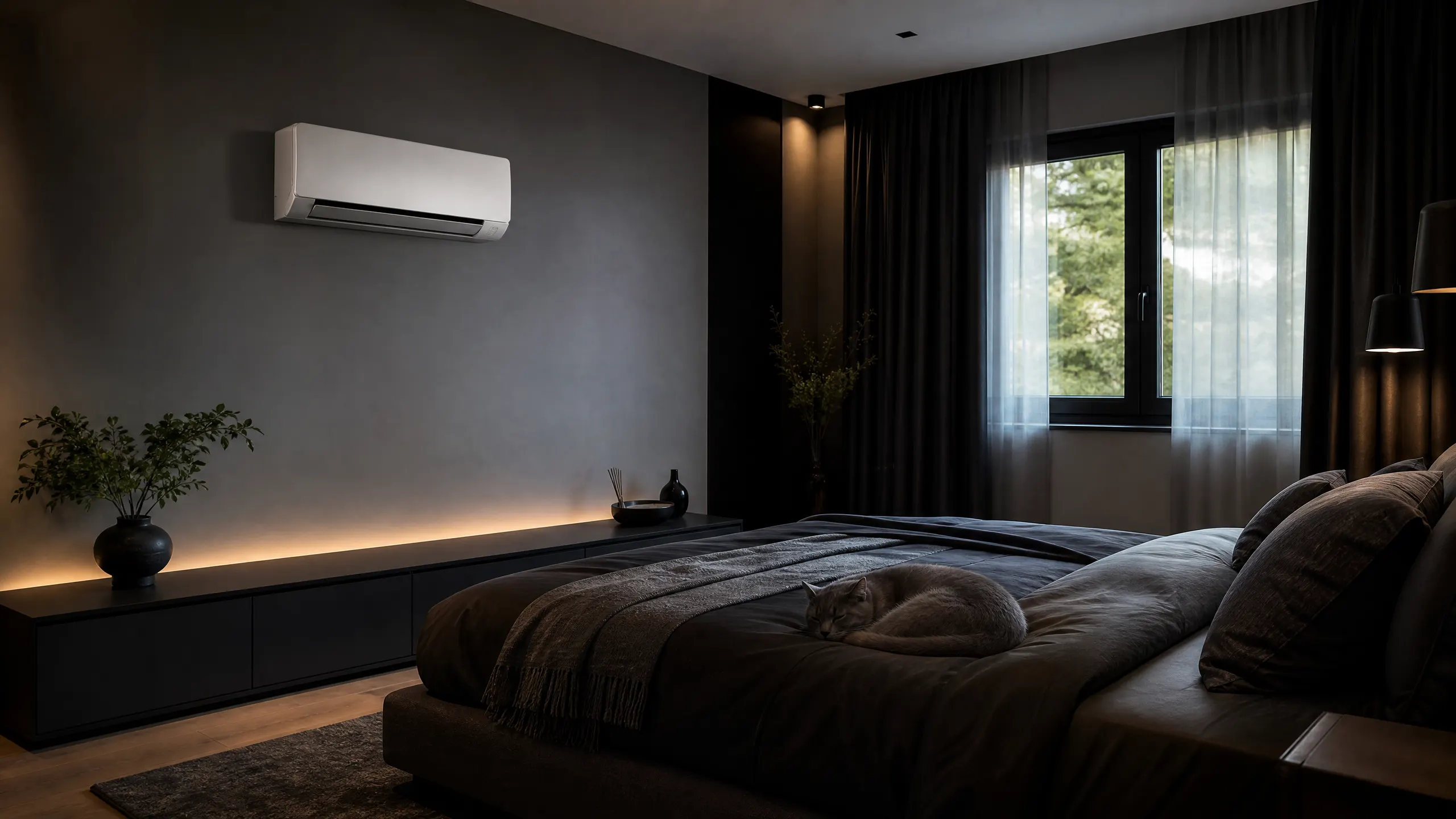




A modern bedroom with dark furnishings, a wall-mounted air conditioning unit, and a cat resting on a large bed.

Mini Split Installation in Dalton, GA

Tell us about the job

Takes about a minute. No obligation.

New system or replacementMini-splitWhitfield County, GA
Step 1 of 2

What ZIP code is the job in?

Whitfield County saw 100 damaging wind events between 2015 and 2024, plus 8 hail events and a tornado. Two tropical storms came through in that same stretch, and three winter storms brought ice and snow. An outdoor condenser sits outside through all of it, exposed to wind-driven debris and hail. Power outages follow the same weather, and in 2024, 31% of Georgia households lost power for a day or more. A mini-split, like any electric heat or cooling system, stops working the moment the power does.

7 months
October through April, your system heats
5 months
May through September, it cools
33°F
the average winter night it heats against
88°F
the average summer afternoon it cools against
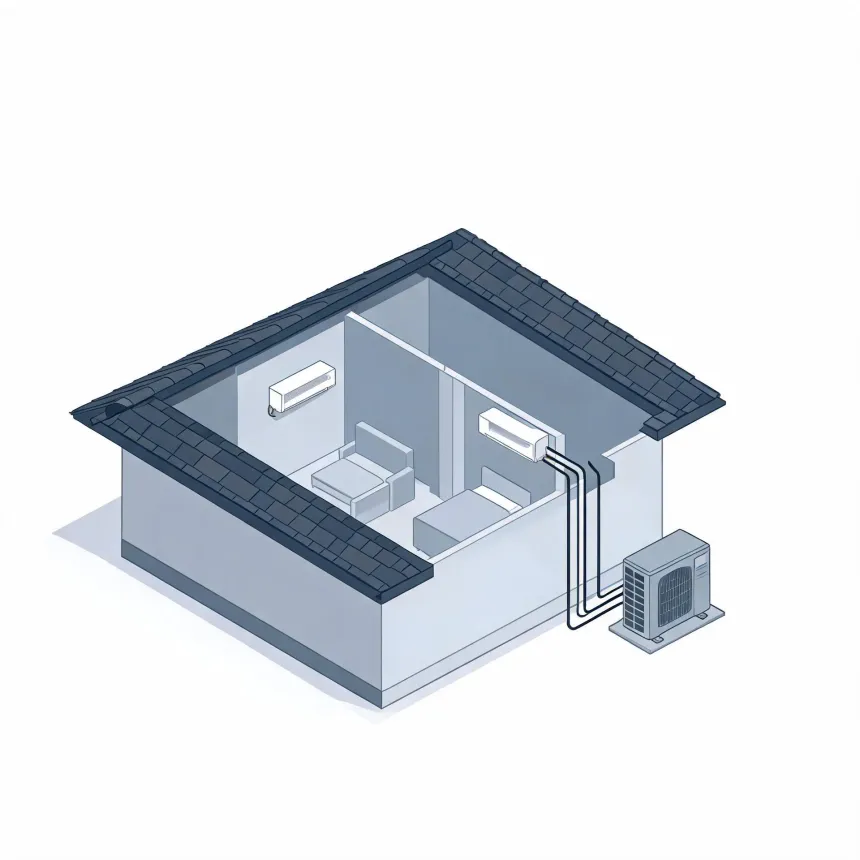
Isometric illustration of a cutaway house with tiled roof showing two wall-mounted indoor mini-split units connected by line sets to an outdoor condenser beside the building.
Your system heats October through April and cools May through September.

NOAA nClimDiv, 1991–2020 normals

Cooling in Whitfield County starts in May, so April is the month to get a mini-split in place.

Installing before the season starts means the job happens on your schedule, not during a breakdown once the heat sets in.

Five months of 88 degree afternoons means this system earns its keep every summer

Cooling runs May through September
Summer afternoons average 88°F
100 damaging wind events from 2015 to 2024

Electricity heats 86.7% of homes in Whitfield County, more than any other fuel. Utility gas accounts for 8.5%, and bottled or LP gas covers 3.5%. A mini-split runs on electricity for both heat and cooling, so in a home already wired for electric heat, there's no gas line to run and no new venting to add. That makes it a straightforward swap for whatever electric system is already there. If your home heats with gas or propane now, a mini-split still works, but it's a bigger change to the house than it is for the majority who are already on electric.

Plan for the outage, not just the install

Where the outdoor unit goes and how it's mounted is worth deciding before install day, not after a storm. Ask the contractor about placement away from falling debris and about backup options for the nights the power is out. That's part of planning the installation, not an afterthought once it's running.

Find a contractor
A white mini-split air conditioner outdoor condenser unit mounted on metal brackets against a beige stucco exterior wall, with a blue sky and scattered clouds in the background.

Five months a year, every year

Five months of cooling means this system runs most days from May through September, and a new install is sized for that load, not for a mild stretch in between. Get the sizing right at installation and the unit handles those 88 degree afternoons without straining. Oversize it or undersize it and you're paying for the mistake every one of those five months, not just once.

The old unit has to come out first

Whatever's on the wall now, whether it's window units, baseboard heaters, or an older split system, has to be disconnected and hauled off before the new lines go in. If there's an old outdoor condenser, the refrigerant has to be recovered from it properly, not vented. That's a step a licensed contractor handles as part of the job, not something left for the homeowner to sort out after.
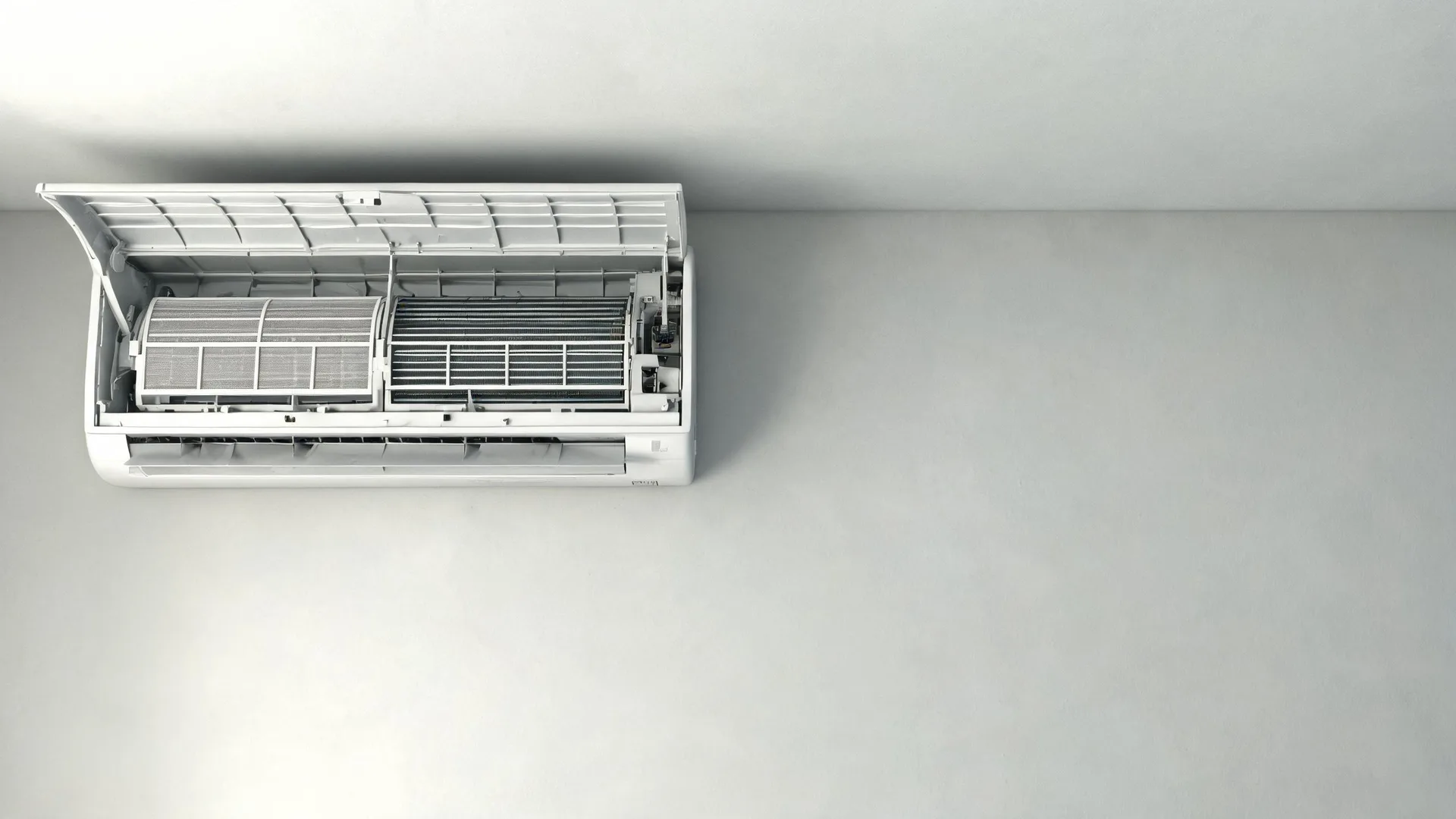
Old wall sleeves and mounts don't always transfer

A mini-split needs its own line set and its own spot for the outdoor unit, so an old PTAC sleeve or window unit bracket usually can't be reused as is. The wall gets a small hole drilled for the line set and the old opening either gets patched or repurposed. Worth asking the contractor to walk through what stays, what gets patched, and what gets removed before work starts.

A mini-split's price comes down to what the crew has to do to get refrigerant from the outdoor unit to the indoor heads, and how many heads there are. Each indoor unit needs its own line set run through the wall, its own mounting bracket, and its own spot picked for airflow, so a system with several zones costs more in labor than the equipment alone would suggest. Line set length matters too. A longer run between the outdoor condenser and an indoor head means more refrigerant, more line hanger supports, and more time spent insulating and sealing the run so it doesn't sweat inside the wall cavity. Where the outdoor unit can go affects it as well. A straight shot through an exterior wall costs less to run than a line that has to snake through an attic or down between floors to reach a condenser on the other side of the house. Electrical work adds its own cost if the panel doesn't already have the capacity or the right breaker for the new unit. None of this is guesswork a contractor can skip. It's what determines whether a job is a few hours of straightforward work or a day spent routing lines through tight spaces.

Whitfield County falls in climate zone 3A, and the federal standard sets what any new split system heat pump has to do here. A mini-split sold now has to pull at least 14.3 Btu of cooling from every watt-hour of power it uses over the summer, and deliver at least 7.5 Btu of heat per watt-hour over the winter. That's not a target a contractor aims for. It's the floor a unit manufactured from 2023 on has to clear before it can be installed at all. The standard doesn't carve out a separate rule for ductless systems, so a mini-split is held to the same split-system minimums as any other heat pump.