




A dark modern bedroom with grey bedding, a wall-mounted air conditioning unit, and a cat resting on the bed.

Mini Split Installation in Douglasville, GA

Tell us about the job

Takes about a minute. No obligation.

New system or replacementMini-splitDouglas County, GA
Step 1 of 2

What ZIP code is the job in?

Douglas County saw 141 severe weather events between 2015 and 2024. Most of that was damaging wind, 122 times, with 2 tornadoes, 5 hail events, 6 tropical storms or hurricanes, and 3 winter storms mixed in. A mini split's outdoor unit sits outside through all of it, exposed to wind-thrown branches and hail. Statewide, 31% of Georgia households lost power for a day or more in 2024. Where the unit goes and how it's mounted is worth planning around that.

6 months
November through April, your system heats
5 months
May through September, it cools
34°F
the average winter night it heats against
88°F
the average summer afternoon it cools against
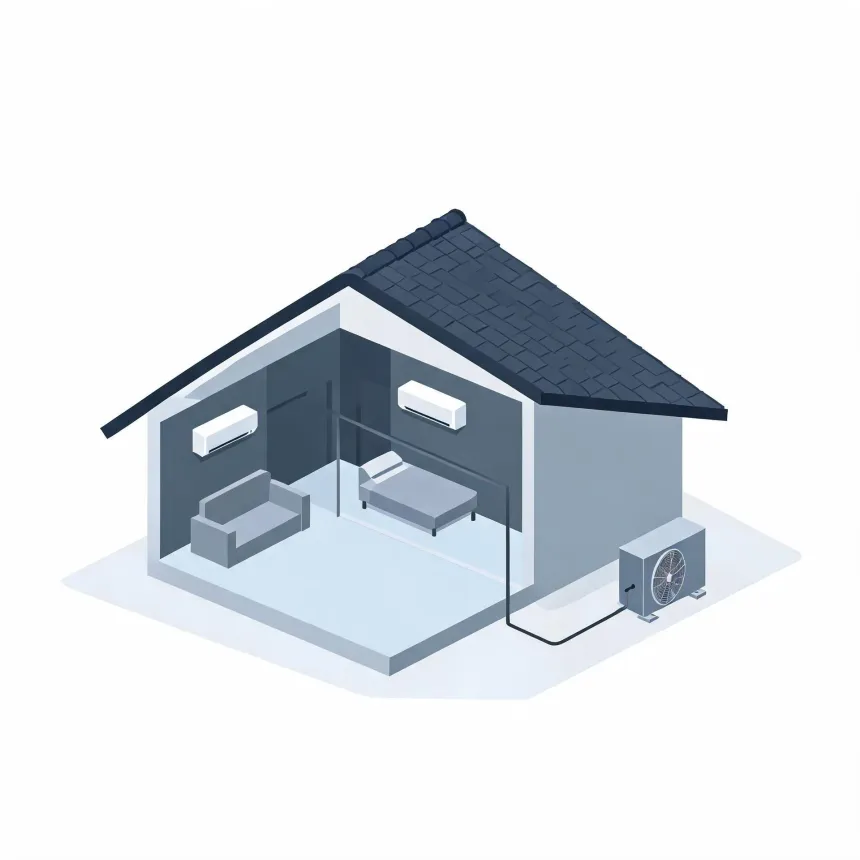
Isometric illustration of a cutaway house showing two wall-mounted indoor air conditioning units connected by a line to an outdoor condenser unit beside the building, with a sofa and bed inside.
Your system heats November through April and cools May through September.

NOAA nClimDiv, 1991–2020 normals

Over half the homes in Douglas County heat with gas.

A mini split here usually works alongside that gas furnace, cooling the house and covering the mild months, not replacing it.

Five months of cooling, pushed hard

Cooling runs May through September
Summer afternoons average 88°F
122 damaging wind events from 2015 to 2024

April is the month to get this done. Cooling starts in May and runs through September, so a spring install means the system is in and tested before it has to work. Wait until the house is already warm and you're scheduling around a system straining to keep up, and around every other homeowner who waited too. Get it done in April and it's ready when May arrives, not fighting to catch up.

Plan this install around the storms, not just the heat

The outdoor unit will sit through wind, hail and whatever else the next storm brings, so where it's mounted and how it's secured is part of the install, not an afterthought. And when the power goes with it, a mini split won't run without it. If backup power matters to you, it's worth bringing up before installation, not after the first outage.

Find a contractor
A man in a gray T-shirt and tan work pants, carrying a canvas tool bag, climbs porch steps toward an orange front door beside a potted shrub.
A beige split-system air conditioner outdoor condenser unit mounted on metal wall brackets atop a stucco wall.

Built for the long stretch, not just the sale

Five months of summer, 88 degrees most afternoons. That's the stretch this system has to carry, year after year. Size it to the house and it keeps up without strain. Size it off a low bid and it'll run longer and harder to hit the same temperature, and the parts inside feel that difference first.

Ask what each zone is rated to carry

Every indoor head has a capacity, and a contractor should walk through each room with you and explain why that head matches that space. A unit sized by square footage alone, without accounting for windows, ceiling height or what's next to it, tends to run long cycles and still miss the mark on comfort. Ask how they arrived at the number for each zone, not just the system as a whole.
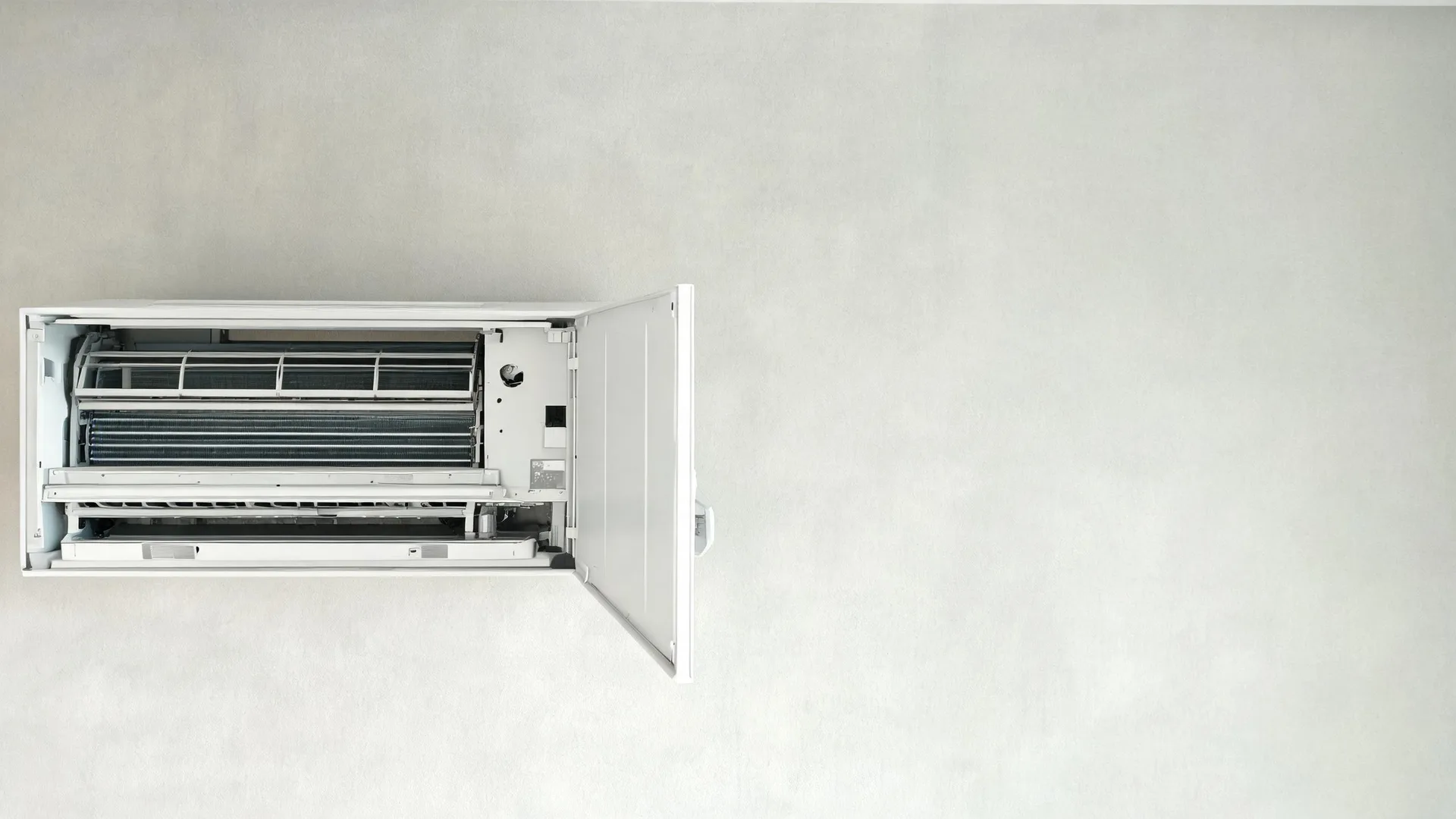
Ask what happens to the line set and mounting

The refrigerant lines run from the outdoor unit through the wall to each indoor head, and how they're routed affects both how the system performs and what a future repair looks like. Ask where the line set will run, how it's insulated, and how the outdoor unit will be secured to its pad or bracket. A system quoted without walking the property first is a guess, not a plan.

A mini split is sized by a room by room load calculation, not a guess based on square footage. The contractor measures each room, counts the windows, checks the ceiling height and notes what's on the other side of each wall, then works out how much heat that room gains in summer and loses in winter. That number tells them which indoor head goes where and what the outdoor unit needs to support all of them together. Oversize it and the system cools the air fast but shuts off before it pulls the moisture out, so the room feels cold and still damp. Undersize it and the unit runs constantly, straining to reach the set temperature and never quite getting there. Either way the comfort problem shows up right away, and it doesn't go away on its own.

Electricity here runs 14.39 cents per kilowatt-hour on average. A mini split earns its keep against that number, since it moves heat instead of burning power to create it. The efficiency rating on the unit you choose matters more in a place that runs its AC hard every summer. A lower rated system and a higher rated one can cool the same room, but one of them pulls more watts to do it, afternoon after afternoon. That difference shows up on every bill, not just the first one.