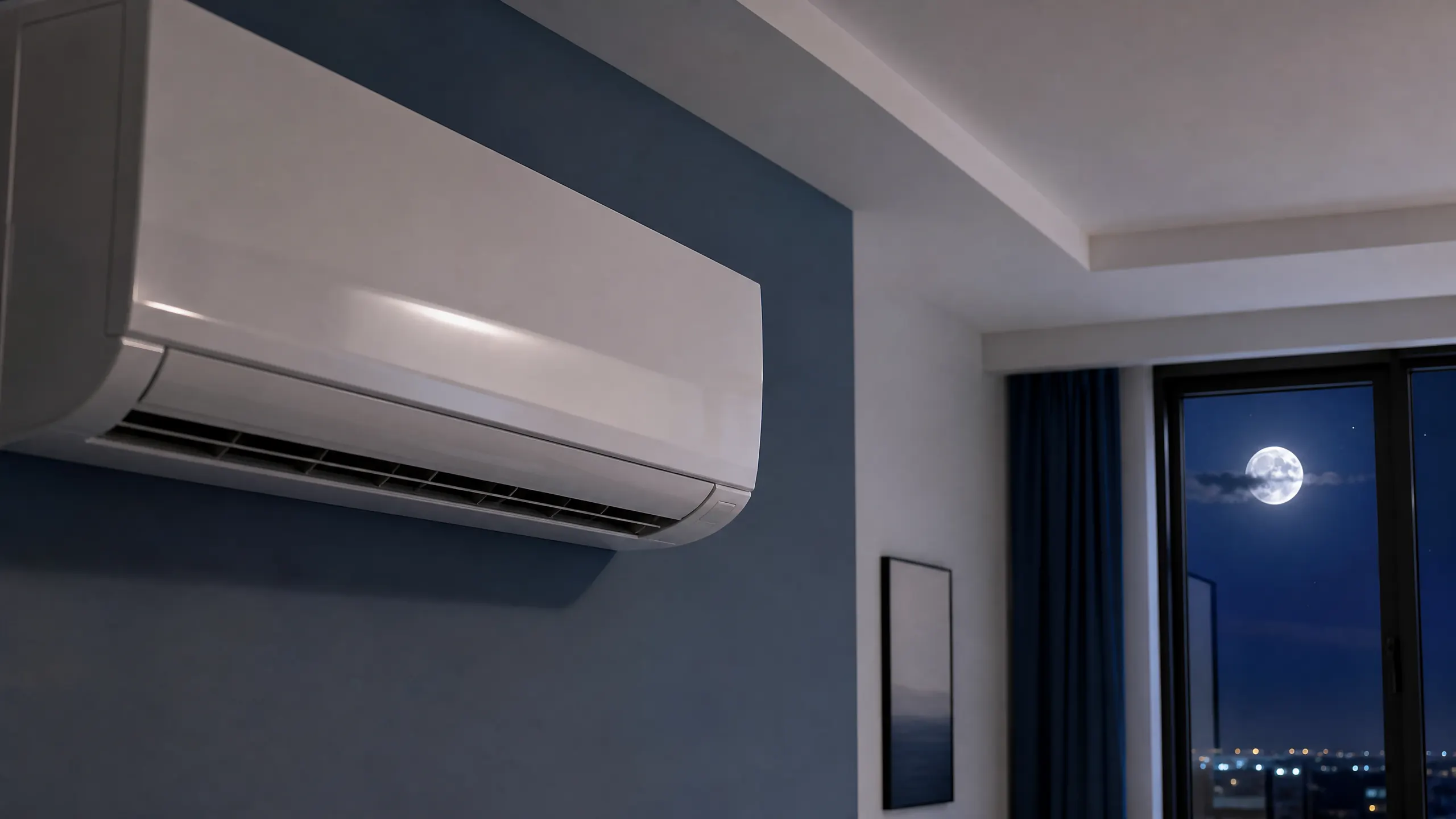




A white wall-mounted split air conditioner on a blue-grey wall, with a moonlit night sky visible through a nearby window.

Mini Split Installation in Fort Oglethorpe, GA

Tell us about the job

Takes about a minute. No obligation.

New system or replacementMini-splitCatoosa County, GA
Step 1 of 2

What ZIP code is the job in?

Electricity heats 80.7% of homes in Catoosa County, and a mini split fits right into that setup. It runs on electricity, same as the system most homes here already have, so there's no gas line to add or remove. Utility gas only heats 15.4% of homes in the county, and LP gas another 2.7%, so most homeowners here are already set up for an electric system. That makes a mini split a straightforward swap rather than a change in how the home gets its heat.

7 months
October through April, your system heats
5 months
May through September, it cools
33°F
the average winter night it heats against
88°F
the average summer afternoon it cools against
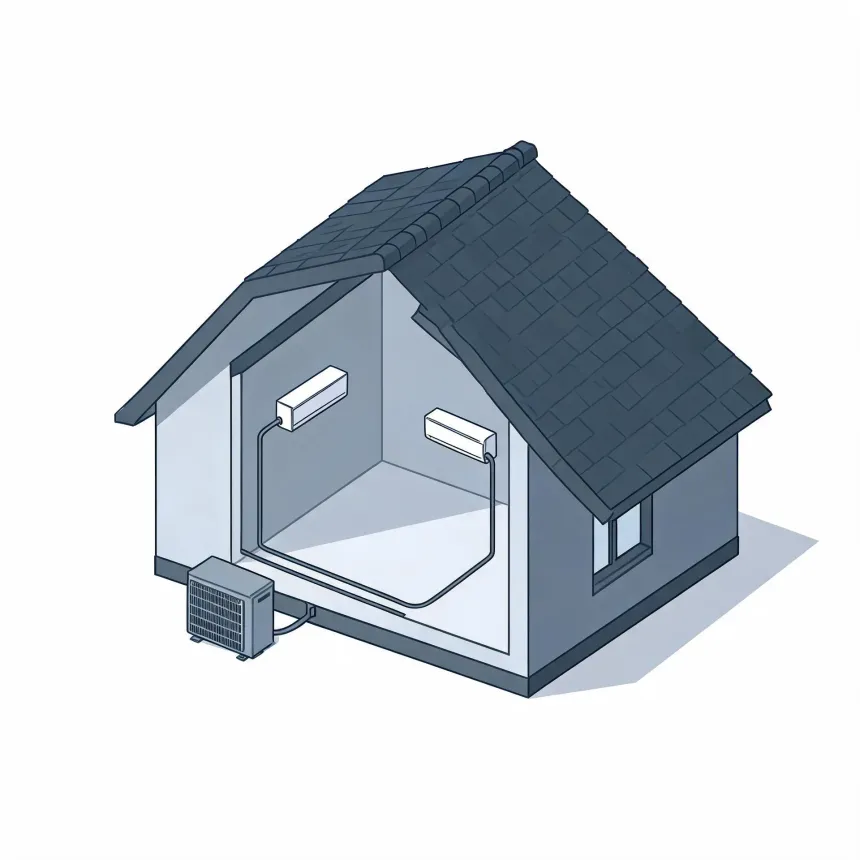
Isometric cutaway illustration of a small house with a shingled gable roof, showing two wall-mounted indoor air conditioning units connected by refrigerant lines to an outdoor condenser unit on the ground outside.
Your system heats October through April and cools May through September.

NOAA nClimDiv, 1991–2020 normals

Cooling runs May through September here.

April is when a mini split should go in, so it's ready for the first warm week instead of catching up partway through one.

Catoosa County weather calls for a sized-right system, not a bigger one

65 severe weather events from 2015 to 2024
31% of homes statewide lost power a day or more in 2024
51 damaging wind events from 2015 to 2024

A mini split that's sized right for the space will cover this job without anything extra. Georgia homes paid 14.08 cents per kilowatt-hour in 2024, and a correctly sized unit keeps that cost down because it isn't working harder than the room needs. Going bigger doesn't cool a room faster, it just cycles on and off more, and that's wear without benefit. The contractor sizing the install will look at the square footage, the windows and how the room is used, then match a unit to that. There's nothing about this county that calls for oversizing or an upgraded efficiency tier beyond what the room actually needs.

Replace it before the season

Replace it before the season starts, so it happens on your schedule, not in a hurry.

Find a contractor
A beige split-system air conditioner outdoor condenser unit mounted on metal wall brackets atop a stucco wall.

Five months of real work, nothing extreme about them

Five months of cooling here, May through September, with afternoon highs averaging 88 in June, July and August. That's the stretch the mini split has to answer for. It's not a short season and it's not an extreme one either. The unit will run most days through the summer and sit idle the rest of the year, which is the kind of workload a correctly sized system handles without strain for a long time.

What happens to the old unit

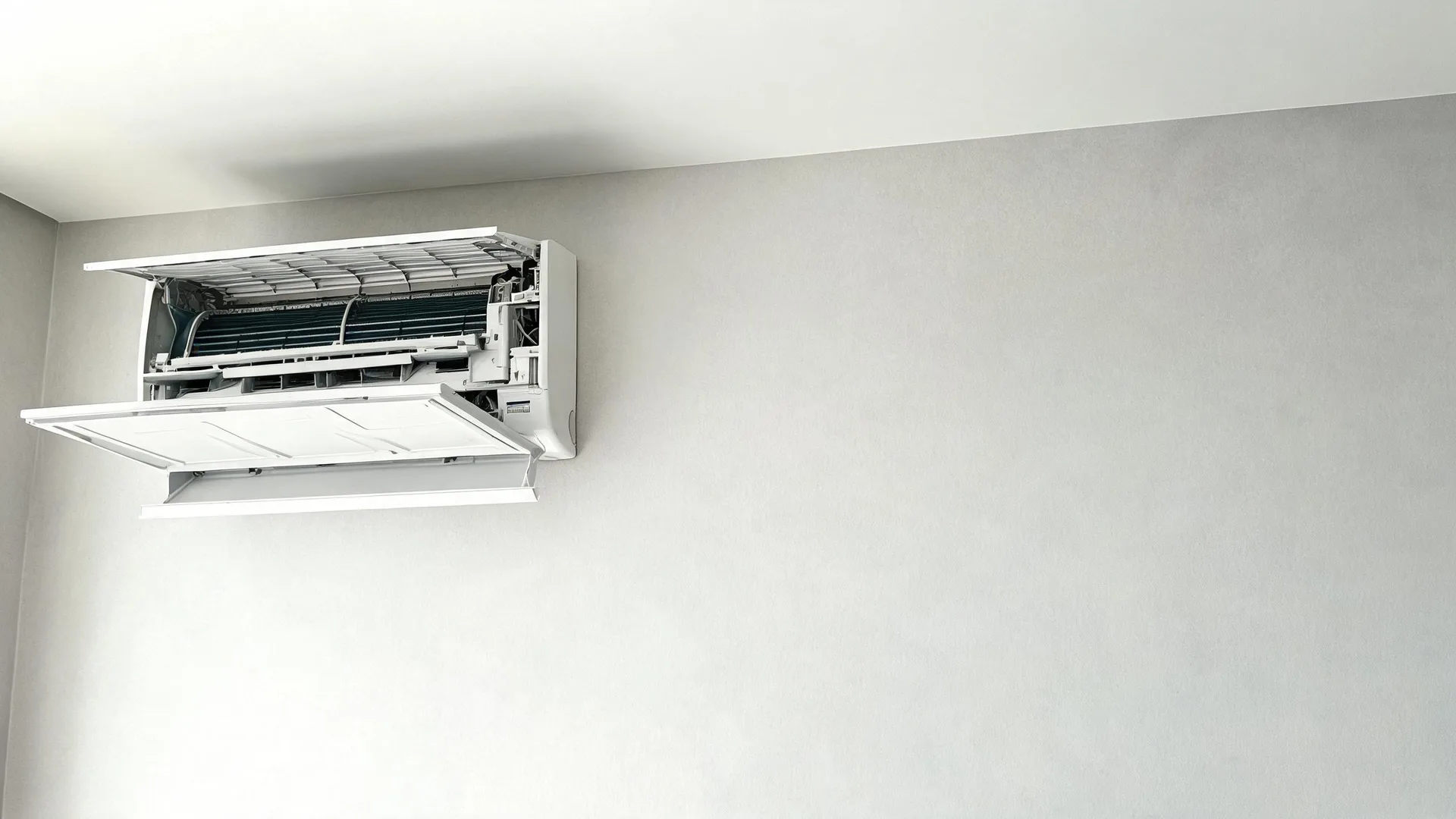
Whoever handles the install will disconnect the old system, recover the refrigerant from the lines, and haul the indoor and outdoor units away. Refrigerant can't legally be vented into the air, so a licensed contractor recovers it with the right equipment and disposes of it properly. If the old system used line sets or a wall sleeve that won't work with the new equipment, those get removed too.
What that means for your walls

If the old system left a hole in the wall or siding where the line set used to run, that gets patched and sealed as part of the swap. An old mounting bracket or pad that doesn't match the new unit's footprint gets pulled rather than worked around. None of that should be left for the homeowner to deal with after the new system is running.

The biggest cost driver is how many zones the system needs to cover and how much indoor unit and line set that takes. A single room with one indoor head is a simpler job than a house needing several heads run off one outdoor unit. Where the outdoor unit can sit matters too, since a longer line set between indoor and outdoor units means more material and more labor to run it cleanly through walls or along the exterior. Electrical work plays into it as well. A dedicated circuit may need to be added for the outdoor unit, and that's a different scope than connecting to wiring that's already in place. The condition of the space the line set has to pass through also factors in, since running it through open framing is a different job than fishing it through a finished wall. None of this is about the unit itself so much as what the space asks of the install.

Installation starts with the outdoor unit, set on a pad or mounted bracket somewhere it can draw air freely and drain condensate away from the foundation. The indoor head goes up next, mounted high on the wall it will serve, with a hole drilled through to the outside for the line set, the drain line and the electrical whip. The line set gets run between the units, flared and connected, then the whole system is pulled down with a vacuum pump to clear out air and moisture before any refrigerant moves through it. Moisture left in the lines causes problems later that are hard to trace back to the install, so that step doesn't get skipped. Once the vacuum holds, refrigerant is released into the lines, the electrical connections get tested, and the system runs through a cycle in both heating and cooling to check airflow and temperature at the head before anyone calls it done.