




Three white clapboard houses with wraparound porches glow with warm interior and landscape lighting beneath Spanish moss-draped oak trees at dusk.

Mini Split Installation in Griffin, GA

Tell us about the job

Takes about a minute. No obligation.

New system or replacementMini-splitSpalding County, GA
Step 1 of 2

What ZIP code is the job in?

Spalding County logged 110 severe weather events between 2015 and 2024, most of it damaging wind, with tornadoes and a handful of hail storms mixed in. A mini split's outdoor unit sits exposed to all of it. Where a contractor mounts that unit, and what if anything shields it, is worth asking about before installation rather than after a storm. Power cuts matter too. Nearly a third of Georgia households went without power for a day or more in 2024, and a mini split won't heat or cool through an outage unless something else backs it up.

5 months
November through March, your system heats
5 months
May through September, it cools
36°F
the average winter night it heats against
89°F
the average summer afternoon it cools against
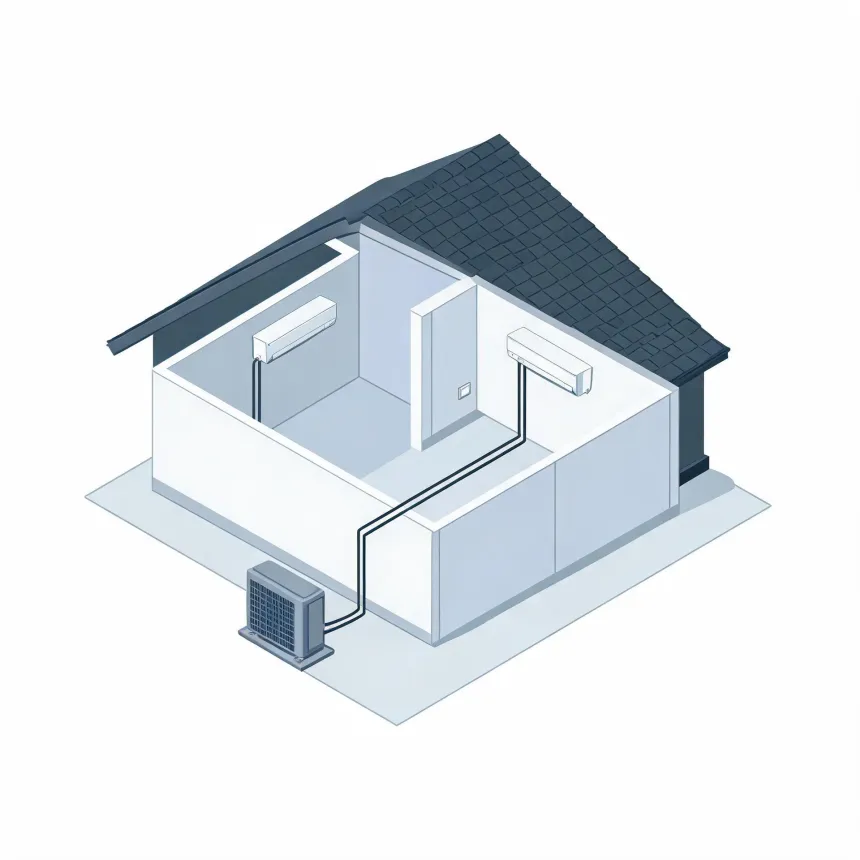
Isometric cutaway illustration of a small house with a dark shingled roof, showing two wall-mounted indoor air conditioning units in separate rooms connected by lines to an outdoor condenser unit on the ground outside.
Your system heats November through March and cools May through September.

NOAA nClimDiv, 1991–2020 normals

Electricity heats just over half the homes in Spalding County.

A mini split runs on electricity already, so it fits the setup most houses here have.

April is the month to get this done, before May asks anything of it

Cooling runs May through September
Summer afternoons average 89°F
89 damaging wind events from 2015 to 2024

Griffin sits in climate zone 3A, warm with mild winters and cooling that runs most of the year. Any mini split installed here counts as a split-system heat pump under federal rules, ducted or not. That means it has to hit 14.3 SEER2 for cooling and 7.5 HSPF2 for heating. With the AC running more months than it sits idle, the SEER2 number matters most here. A system that meets these minimums may also qualify for the federal tax credit on heat pumps, worth checking before you sign anything.

Five months of 89 degree afternoons is what this system has to handle

Cooling runs May through September here, with afternoon highs averaging 89°F across June, July and August. That's five months of steady work for a mini split, every year it's in the house. A unit sized or installed wrong will struggle to keep up on the hottest afternoons, and the parts in it will wear sooner for it.

Find a contractor
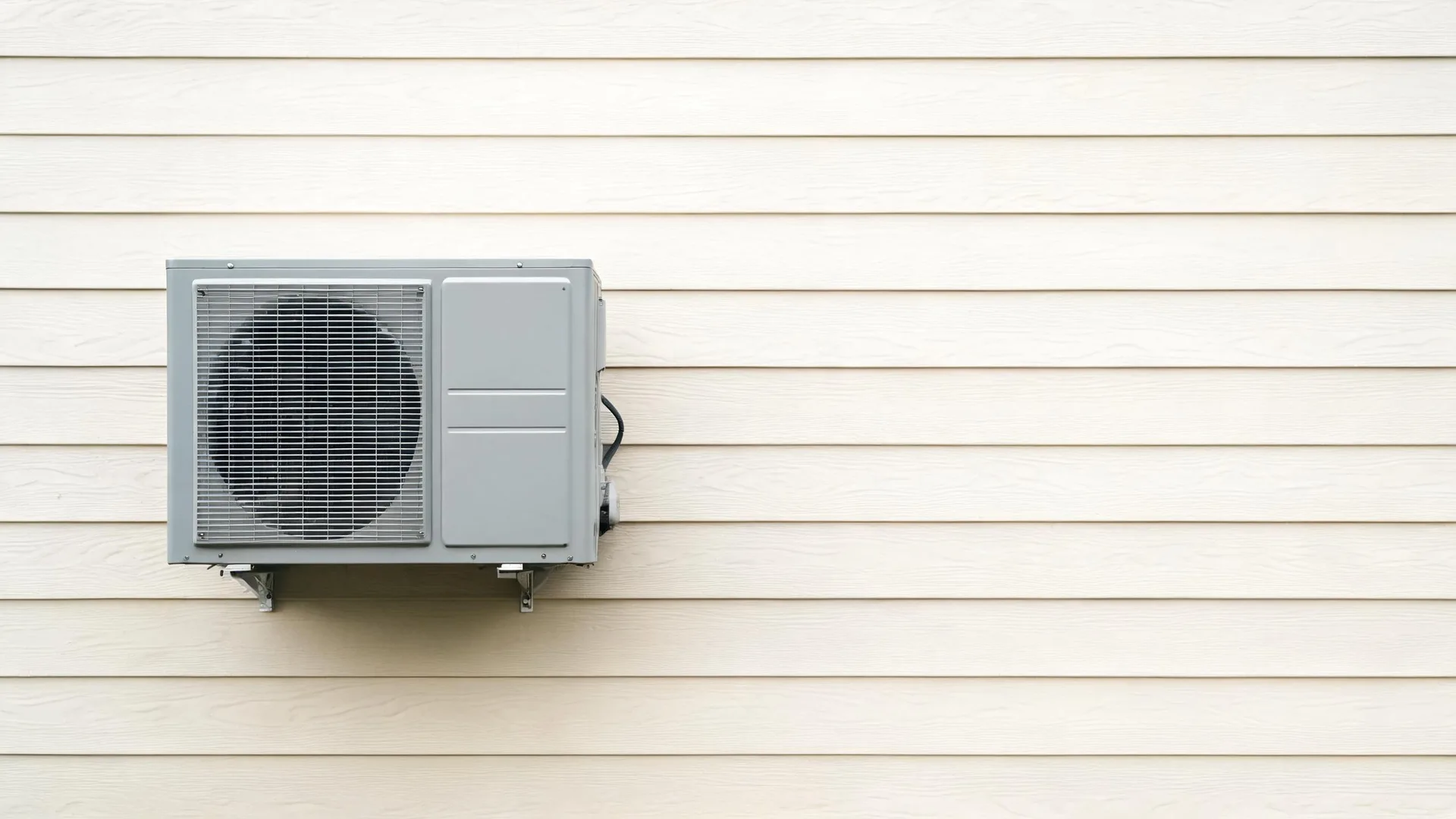
A white outdoor air conditioner condenser unit mounted on metal wall brackets against gray horizontal siding, with a blue sky and white clouds behind it.

Size it for what May through September actually asks of it

Ask about the sizing before the crew shows up, not after. A mini split that's too small will run flat out all five months and still lose ground on the hottest afternoons. One that's too big cools the room fast, shuts off, and leaves the house damp. Either way the compressor is cycling harder than it should for years of 89 degree summers. Get the load calculated for the actual room or house, not estimated by eye.

How many rooms you're conditioning

A single zone covering one room costs less to put in than a multi-zone system feeding several indoor heads off one outdoor unit. Each indoor head needs its own line set and its own spot on the wall or ceiling, and the outdoor unit has to be sized to run all of them at once. More zones means more labor and more material before the system ever turns on.
What it takes to run the lines

The line set carrying refrigerant between the outdoor unit and each indoor head has to pass through a wall, and how far it has to travel from there matters. A short, straight run costs less than one that has to snake through framing, drop down an exterior wall, or cross a long distance to reach the outdoor unit's mounting spot. Where that outdoor unit ends up, and how much wall or roof work it takes to get the lines to it, shapes the job as much as the equipment does.

Sizing a mini split comes down to a load calculation, not a chart that matches square footage to a model number. The calculation accounts for how many windows a room has, which way they face, how the walls are insulated, and what else is giving off heat in that space. Skip that step and guess from floor area alone, and the unit is wrong more often than it's right. Too small, and the compressor runs at full output for hours trying to reach a setpoint it can't hold. Too big, and it blasts the room down to temperature in minutes, shuts off, and never runs long enough to pull moisture out of the air, so the room feels cool but damp. A contractor doing this right will ask about the room before they talk about equipment.

Installation day starts with the spots already picked out, inside and out, so most of the time goes to mounting and running lines rather than deciding where things go. The indoor head gets hung on a bracket against the wall, and a hole gets drilled through to the outside for the line set, the drain, and the electrical whip to pass through together. Outside, the condenser sits on a pad or wall bracket, and the refrigerant lines get connected and then pressure tested before anything runs. That test matters more than people think, since a slow leak at a bad connection can take months to show up as weak cooling. Once the lines hold pressure, the system gets charged, the electrical gets tied in, and the crew runs it through a cycle in both heating and cooling before they call it done. A clean install leaves no refrigerant joints hidden behind a wall where a future leak can't be reached.