






Two illuminated white colonial-style houses with wrap-around porches, flanked by oak trees draped in Spanish moss, photographed at night.

Mini Split Installation in Hinesville, GA

Tell us about the job

Takes about a minute. No obligation.

New system or replacementMini-splitLiberty County, GA
Step 1 of 2

What ZIP code is the job in?

Georgia homes paid 14.08 cents per kilowatthour in 2024. That rate applies to every hour a system runs, so the efficiency of a mini split matters more here than it would somewhere with cheaper power. A mini split uses a variable-speed compressor instead of switching fully on and off like a window unit or an old central system. It runs at a lower level most of the time and only ramps up when the room actually needs it. On a bill paid at Georgia rates, that difference is worth checking into before you decide which system to put in.

5 months
November through March, your system heats
6 months
May through October, it cools
41°F
the average winter night it heats against
91°F
the average summer afternoon it cools against
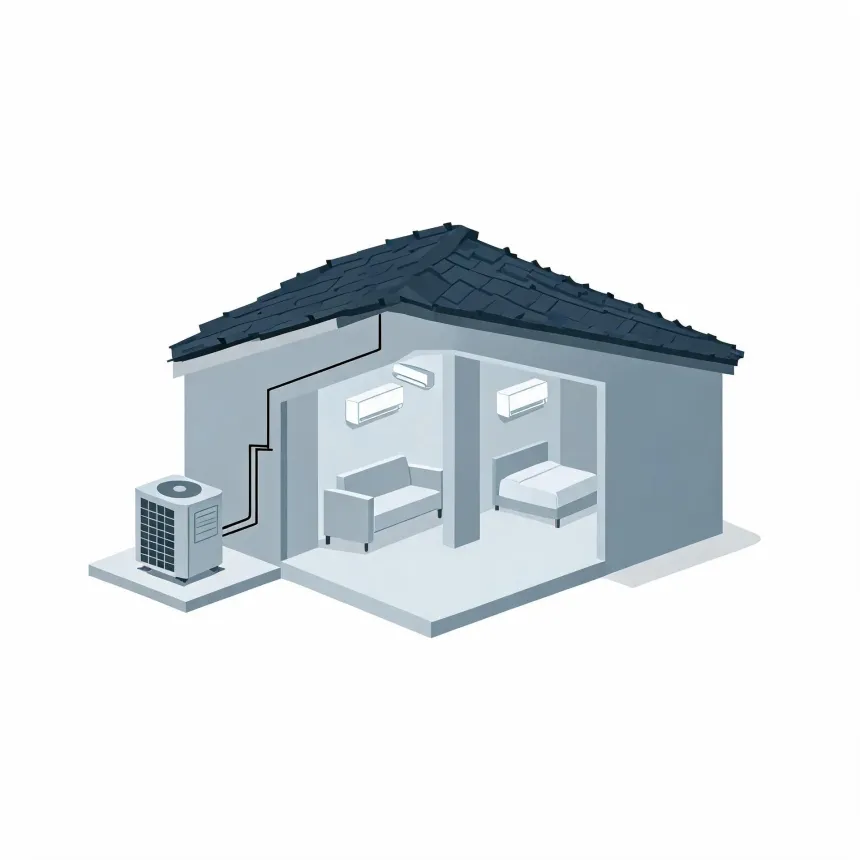
Isometric illustration of a cutaway single-story house with a dark shingled roof, showing three wall-mounted indoor air conditioning units in two rooms connected by lines to an outdoor condenser unit on a pad outside.
Your system heats November through March and cools May through October.

NOAA nClimDiv, 1991–2020 normals

Electricity heats 87.2% of homes in Liberty County.

A mini split runs on electricity too, so it fits the setup already in your walls.

Six months of cooling make this worth doing before May

Cooling runs May through October
Summer afternoons average 91°F
Power costs 14.08 cents a kWh statewide
Outages are common here. Plan for one.128 severe weather events hit Liberty County between 2015 and 2024, and almost a third of Georgia homes lost power for a day or more in 2024.

Liberty County sits in climate zone 2A, a hot and humid zone where cooling carries most of the load over the year. Any mini split installed here has to be a split system under the federal standard, and since January 2023 that means 14.3 SEER2 for cooling and 7.5 HSPF2 for heating at minimum. There's no separate, lower bar for ductless units. That floor is also what qualifies a system for the federal tax credit, so the efficiency you need to meet and the efficiency that pays you back line up.

Six months of hard running a year, every year

Six months a year, from May through October, the compressor is working. Afternoon highs average 91°F through June, July and August, so most of its runtime falls in the hottest stretch of the day. A unit sized or installed wrong will run that whole stretch harder than it should.

Find a contractor
A man in a dark cap, gray T-shirt and brown work pants climbs porch steps toward an orange front door, carrying a worn canvas tool bag, with a potted shrub beside the entry.
A white mini-split air conditioner outdoor condenser unit mounted on metal brackets against a beige stucco exterior wall, with a blue sky and scattered clouds in the background.

Sized wrong, it runs wrong for as long as it's installed

A mini split that's too big cools the room fast and shuts off before it pulls the moisture out of the air. The room feels cold and clammy at the same time, and the compressor is cycling on and off all day instead of running steady. That start and stop wears on the compressor more than a long steady run ever would. Go too small and it never shuts off at all, straining through the hottest part of the day without catching up. Getting it right means a room by room load calculation, not just matching the number on the old unit. Window area, insulation, which way the room faces, what's on the other side of the wall. Each indoor head is sized to the room it serves, so a install with multiple zones lives or dies on that math being done separately for each one.

The old equipment has to go somewhere

Taking out a window unit or a central system means dealing with refrigerant first. Refrigerant can't just be vented into the air, it has to be recovered into a tank with the right equipment before the old lines or unit come apart. Old ductwork, if the home had it, can either stay in place for a backup system or get capped off and left alone. None of that is a job for whoever happens to be around that day.
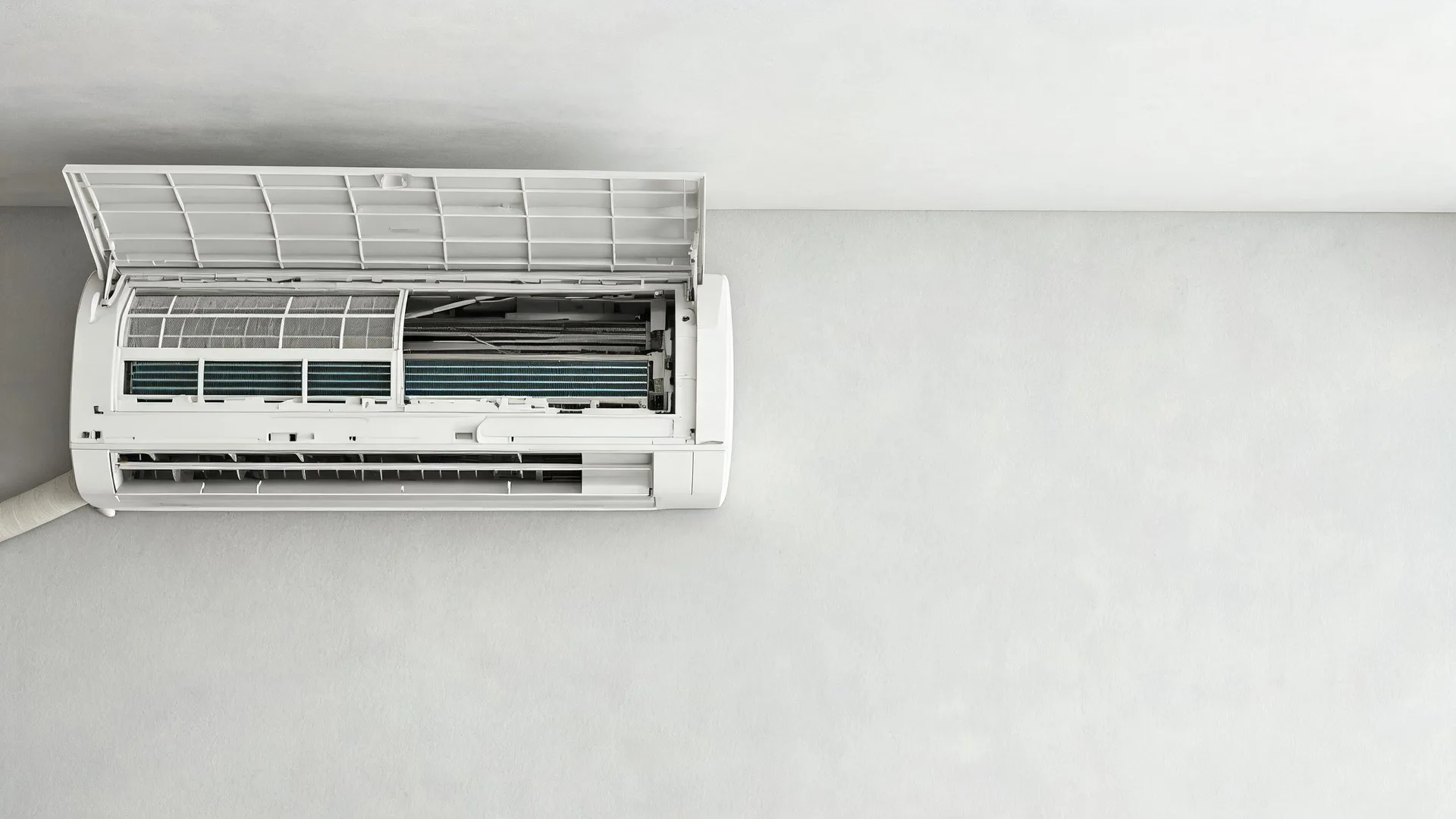
A removed system changes what the walls and breaker panel are carrying

Once a central system or window units come out, the electrical load they used to draw is gone, and the new mini split draws its own, usually through a dedicated circuit and disconnect box mounted near the outdoor unit. Old line sets and drain lines either get reused if they're in good shape and the right size, or come out complete. Whatever gets pulled out has to be disposed of properly, especially anything that held refrigerant.

Comparing systems means asking what's behind the brochure number. Every unit has a rated efficiency, but that number comes from lab conditions, not the room it's going into. Ask how many zones the system supports and whether the outdoor unit can actually run them all at once without one zone starving another when the rest are calling for cooling too. Ask what happens if one indoor head needs service, whether the rest keep running or the whole system shuts down. Check the warranty terms on the compressor separately from the warranty on parts, since they're often different lengths and some only hold if a licensed contractor did the installation and handles any later service. Ask what refrigerant the system uses, since older refrigerants are being phased out and that affects whether parts stay available down the road. And ask who's doing the load calculation for each room, because a system sized off square footage alone is just a guess.

Installation starts outside, running the line set between the outdoor unit and each indoor head. That line carries refrigerant lines and a drain line, and the path matters, since every bend and every foot of length affects how the system performs once it's charged. A small hole gets drilled through the exterior wall for the lines to pass through, then the indoor head mounts to a bracket on the wall and connects in. Once everything's in place, the system gets vacuumed down to pull out air and moisture before refrigerant goes in, then charged to the exact weight the manufacturer specifies for that line length. A system that skips the vacuum step or gets charged by feel instead of by weight will run, but it won't run right, and that shows up later as poor cooling or a compressor that fails early. Last comes power to the outdoor unit and a test run on each zone to check airflow and temperature drop at the head.