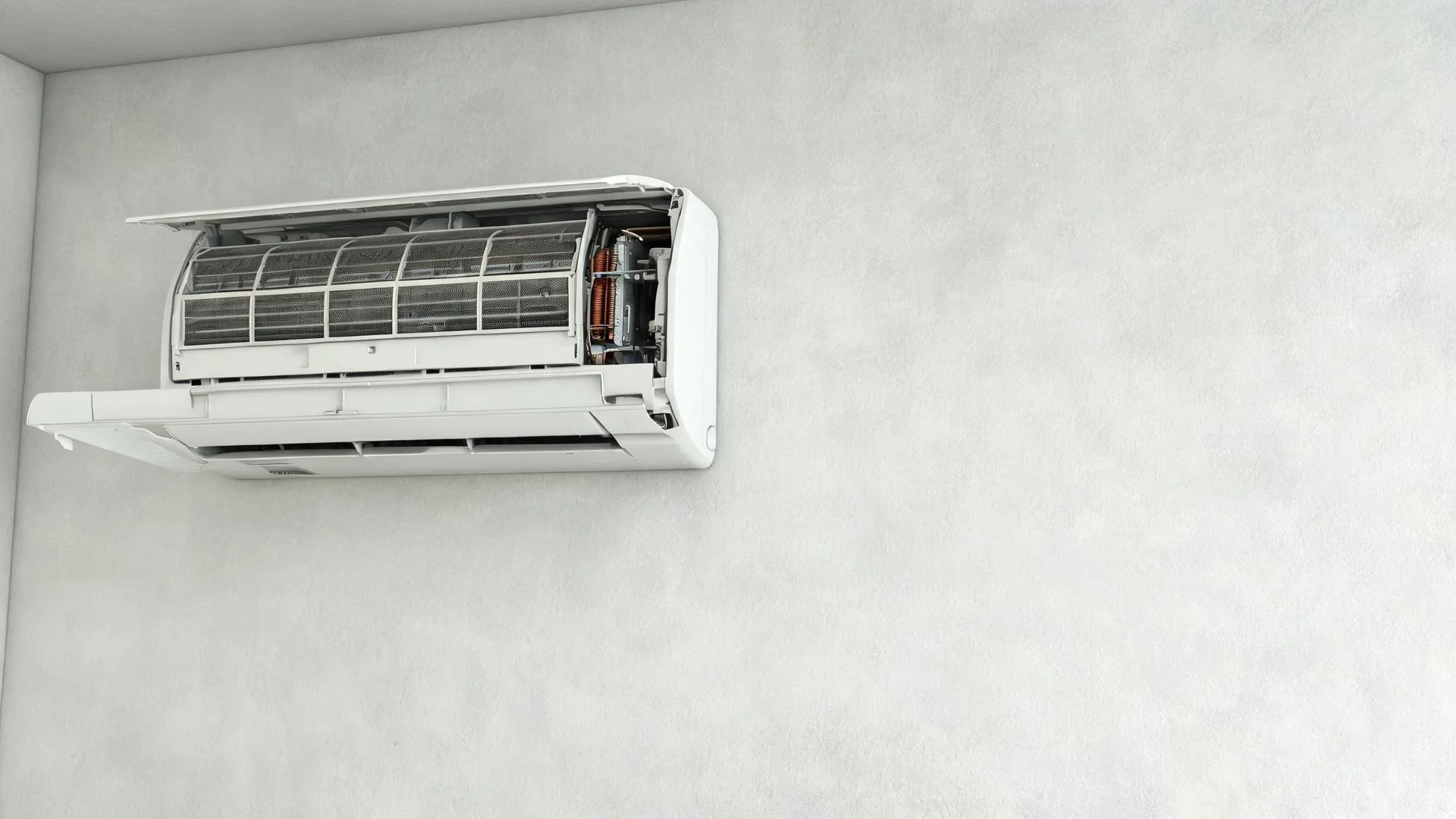
Electricity here runs 15.65 cents a kilowatt-hour
That is what homes in Bibb County paid on average in 2025. A mini-split that runs on electricity feels that rate every time it cycles on.
Takes about a minute. No obligation.
That is what homes in Bibb County paid on average in 2025. A mini-split that runs on electricity feels that rate every time it cycles on.
A mini-split with a higher efficiency rating moves the same heat or cool air for less power drawn. At this rate per kilowatt-hour, that difference shows up on every bill it generates.
NOAA nClimDiv, 1991–2020 normals
Your mini-split will run five months straight most years, through afternoons that average 91°F with a dew point near 68°F.
A unit sized for that load holds up. One that isn't will struggle through every one of those months.




Bibb County falls under zone 3A in the 2021 energy code, warm with a long cooling season, and that puts a floor under what a mini-split here can be. Any split-system heat pump built on or after January 1, 2023 has to clear 14.3 Btu of cooling for every watt-hour it draws, and 7.5 Btu of heat for every watt-hour in winter. A mini-split counts as a split system under that standard, even though the standard doesn't single out ductless units by name. That rules out the lower end of what used to be on the market. A system meeting the minimum today is already built for a climate like this one, not just allowed in it.
The rating on the unit you install is the number that follows you onto every bill, for as long as it runs. That is worth settling before anything else about this job. Ask what efficiency the installer is quoting and what it will draw at that rate per kilowatt-hour.
Find a contractorFive months of that heat is what the installer needs to know before they size anything. Get this wrong in either direction and the unit pays for it every summer it runs. Oversized, it shuts off before it pulls the moisture out of the air, so the house feels damp even at the temperature you set. Undersized, it runs flat out through every one of those 91°F afternoons and never gets ahead of the heat. A contractor who does a load calculation for your house, not a guess based on square footage, is sizing for the five months that actually tax the system.
A load calculation weighs more than floor space. It accounts for the windows, how many walls face the sun, the ceiling height, and what's on the other side of every exterior wall. Two rooms the same size can carry entirely different loads. Skip that work and size off square footage alone, and the number you land on is a guess wearing a decimal point.
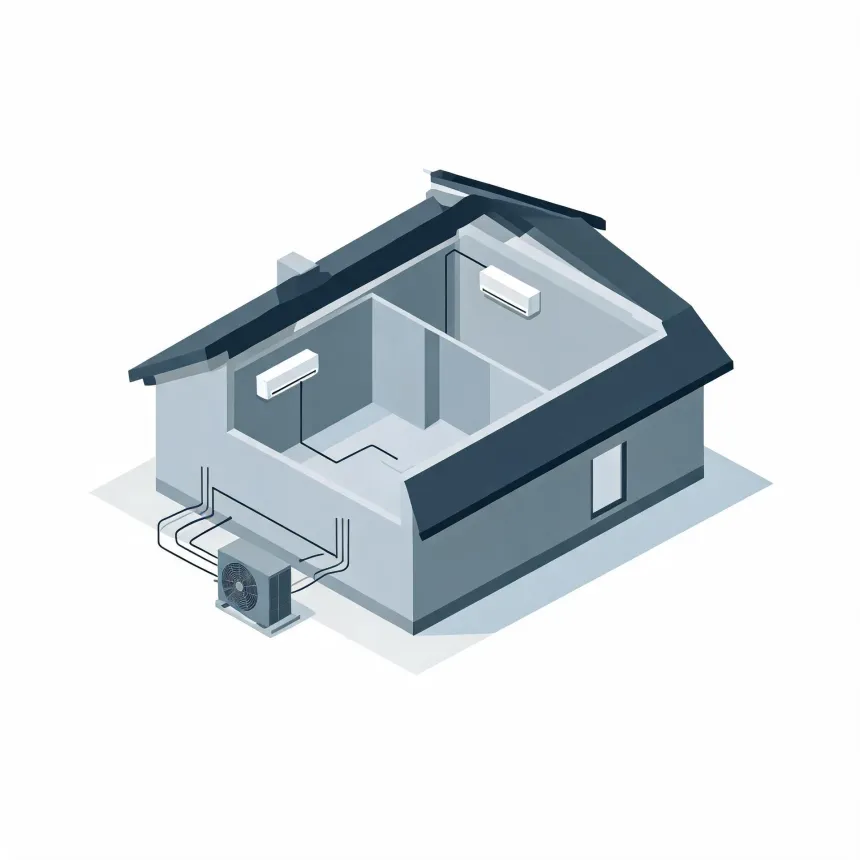
A mini-split system can run one indoor head or several off a single outdoor unit, and each head has to be sized to the room it serves. Put one oversized head in a small room and it will cool the air fast, shut off, and leave the room clammy. The outdoor unit's capacity has to match the sum of what the heads actually need, not get rounded up for a margin that was never there to begin with.
The price of a mini-split install comes down to what has to happen before the unit ever gets mounted. Running a line set means drilling through the wall, setting the outdoor pad or bracket, and running refrigerant line, power, and a condensate drain between the two halves. A straight shot through one wall to a nearby pad costs less labor than a run that has to clear multiple floors or snake through a chase to reach the outdoor unit. Every indoor head needs its own line set back to the outdoor unit, so a four-head system costs more to install than a single-zone one even when the equipment itself is similar money. Once the lines are run, the system has to be vacuumed down to pull moisture and air out of the refrigerant lines before it's charged. Skip that step or rush it, and the unit can run fine for a while before it fails early.
Installation starts with where the lines go, not with the equipment. The installer walks the house, picks a spot for each indoor head, and figures out the shortest sensible path to an outdoor unit location that has room for airflow on all sides. Once that's set, they drill through the wall, run the line set, power, and condensate drain, then mount the indoor head and set the outdoor unit on its pad or brackets. Before any refrigerant moves, the system gets pulled down with a vacuum pump to clear moisture and air out of the lines. Only after it holds that vacuum does the installer open the valves and let refrigerant into the system. Then it gets powered on, tested across modes, and checked for airflow at every head before anyone calls the job done.