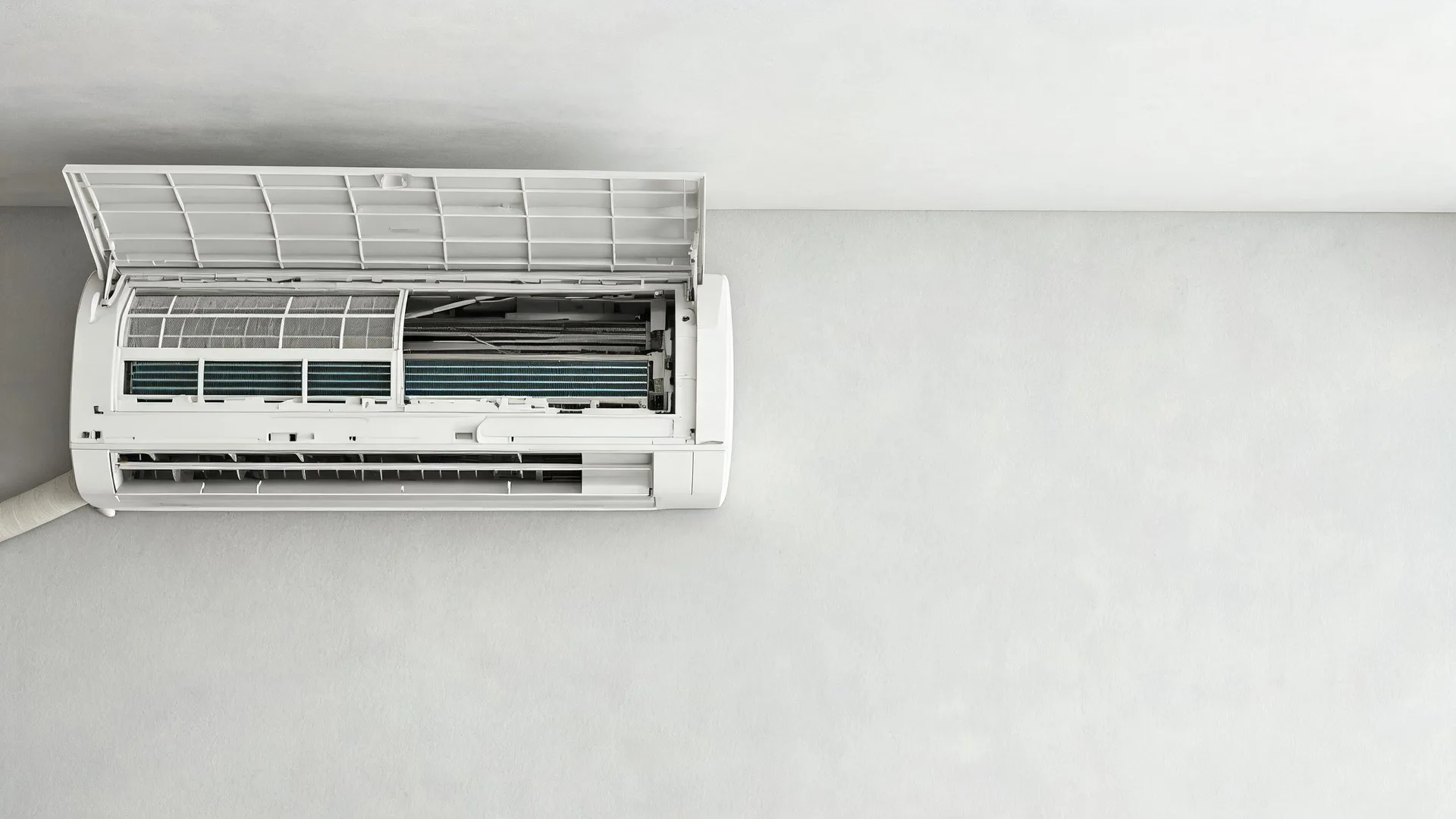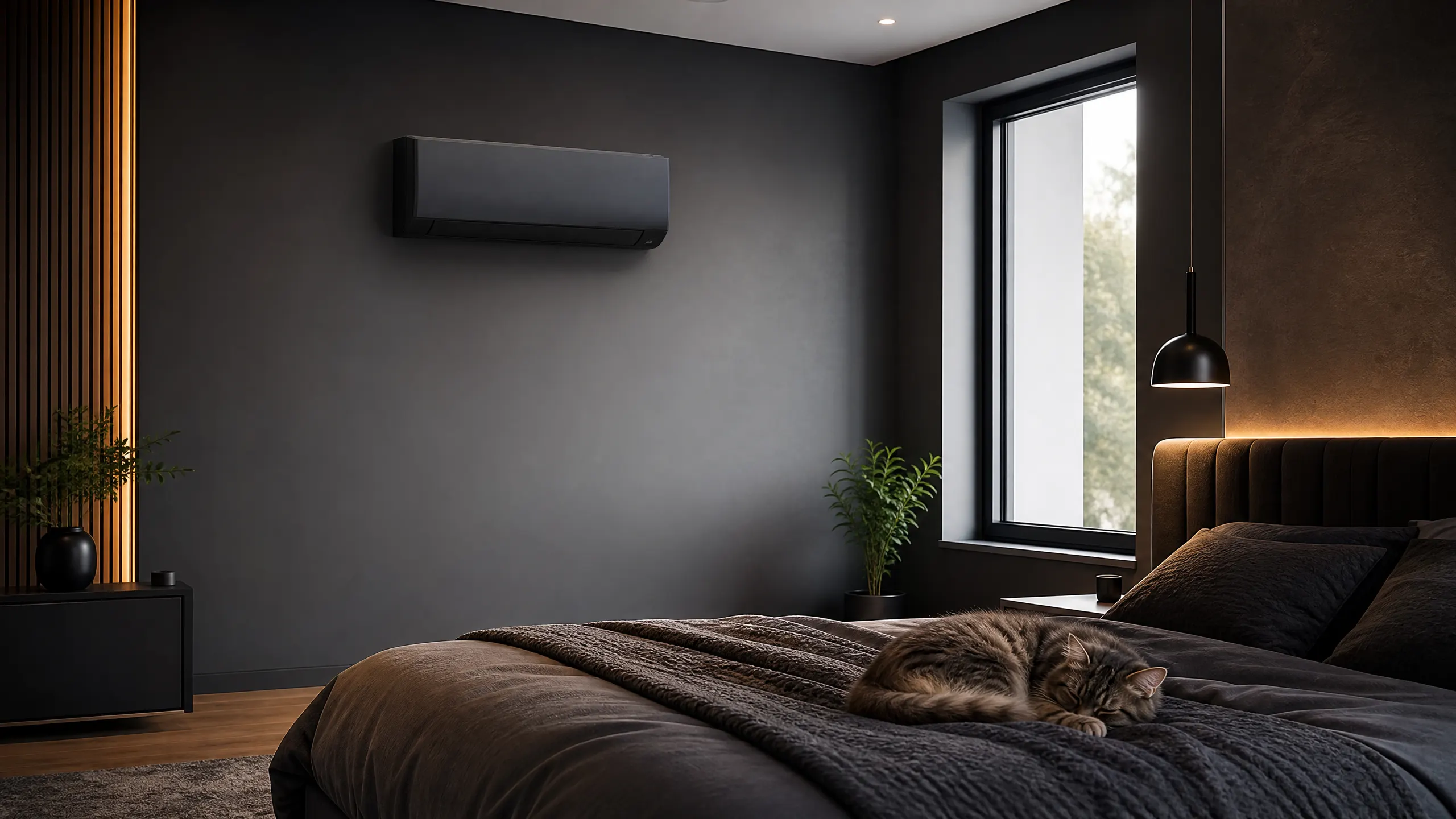
A tabby cat sleeps on a dark quilted bed in a moody, minimalist bedroom with a black wall-mounted air conditioning unit.

Mini Split Installation in Monroe, GA

Tell us about the job

Takes about a minute. No obligation.

New system or replacementMini-splitWalton County, GA
Step 1 of 2

What ZIP code is the job in?

Walton County sees its share of severe weather

Walton County recorded 191 severe weather events between 2015 and 2024, including 176 damaging wind events, 3 tornadoes, and 6 tropical storms or hurricanes. Hail showed up too, with 4 events in that span.

Power doesn't always stay on through it

Nearly a third of Georgia households, 31%, went at least 24 hours without power in 2024. A mini-split depends on electricity to heat and cool, and an outdoor unit sits outside where wind and hail can reach it.

6 months
November through April, your system heats
5 months
May through September, it cools
35°F
the average winter night it heats against
89°F
the average summer afternoon it cools against
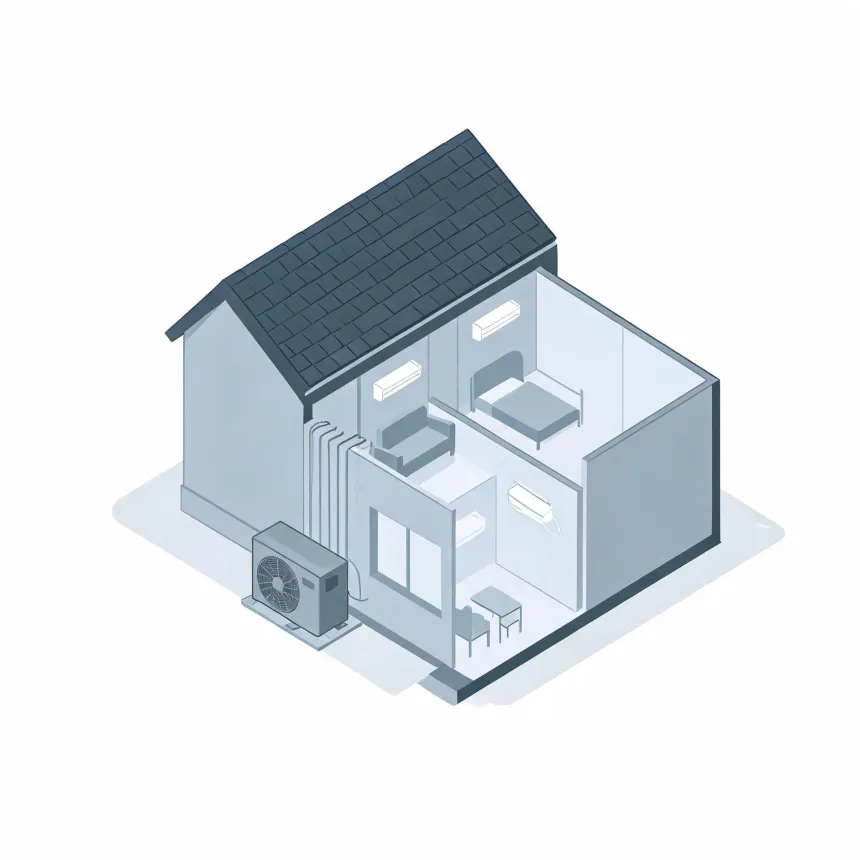
Isometric illustration of a cutaway house with a dark shingled gable roof, showing interior rooms with a bed, chairs and table, three wall-mounted mini-split indoor units connected by line sets to an outdoor condenser unit on a pad outside.
Your system heats November through April and cools May through September.

NOAA nClimDiv, 1991–2020 normals

Electricity in Walton County runs 13.96 cents per kilowatt-hour, and a mini-split run here for both heating and cooling all year.

An efficient mini-split earns back more on a power bill this size than it would somewhere cheaper.

Five months of 89 degree afternoons, and the wind doesn't skip Monroe

Cooling runs May through September
Summer afternoons average 89°F
176 damaging wind events from 2015 to 2024

Walton County falls in climate zone 3A, warm with a long cooling season and a short winter. Any mini-split put in here has to clear the federal minimum for that kind of system. For units built from 2023 on, that means pulling at least 14.3 Btu of heat out of the house for every watt-hour of power it uses while cooling, and putting back at least 7.5 Btu for every watt-hour while heating. That's the floor, not a target one brand hits and others miss. It narrows the field before style or brand ever comes up. A system meeting it also qualifies for the federal tax credit available on heat pumps.

Plan this installation around the power going out

Where the outdoor unit goes and how it's mounted matters here. A spot clear of falling limbs and protected from direct wind beats one picked for convenience. Ask what happens to heat and hot water if the power drops, and whether a backup option makes sense for this house.

Find a contractor
A white mini-split air conditioner outdoor condenser unit mounted on metal brackets against a beige stucco exterior wall, with a blue sky and scattered clouds in the background.

Get it in before May, not during it

Cooling runs May through September here, five months straight, which makes April the month to get this installed. Put it in before the first hot stretch and the contractor has time to size the unit and mount the outdoor half properly, instead of rushing a job while the house is already uncomfortable. Winter matters here too. Overnight lows average 35°F across December, January and February, cold enough that this system is doing real heating, not just taking the edge off a furnace. Going in ahead of either season means it gets set up and checked before it has to carry that load.

The rating is measured two ways

A mini-split carries separate ratings for cooling and heating. The cooling number tells you how much heat it moves out of the house per unit of power it draws. The heating number tells you the same thing in reverse, how much heat it moves into the house. A unit can be strong on one and average on the other, so both numbers matter, not just the one printed biggest on the brochure.

It only holds up if the system is sized and installed right

The rating is measured in a lab, with the refrigerant charge correct and the airflow where it should be. An outdoor unit crammed against a wall with no clearance, or a line set charged wrong, will run worse than its rating says. A higher rating on the label does not make up for a system too big or too small for the space it's heating and cooling.

Sizing a mini-split starts with a load calculation, not a tape measure around the house. A contractor works out how much heat the space gains in summer and loses in winter, counting the windows, the insulation, the ceiling height, which walls face the sun. Square footage alone leaves out too much to be reliable. Too big and the unit cools the air fast, shuts off, and never runs long enough to pull the moisture out, so the room feels cold and damp at once. Too small and it runs flat out on the hardest days without ever catching up. Either mistake also wears the compressor harder, since neither short-cycling nor constant full-load running is what it was built to do. A unit sized right cycles on and off at a steady pace and holds the room wherever the thermostat is set.

Electricity heats 68.4% of homes in Walton County, more than every other fuel combined. Gas accounts for most of the rest, with utility gas at 27.2% and LP gas at 2.5%. A mini-split fits a home already set up to heat with electricity, since there's no gas line or furnace to work around. For a lot of houses here, it's a straight swap for whatever electric heat is already running, baseboard or an older heat pump, not a change in how the house gets its power. That's one less system to plan for when the question is what happens if the power goes out.