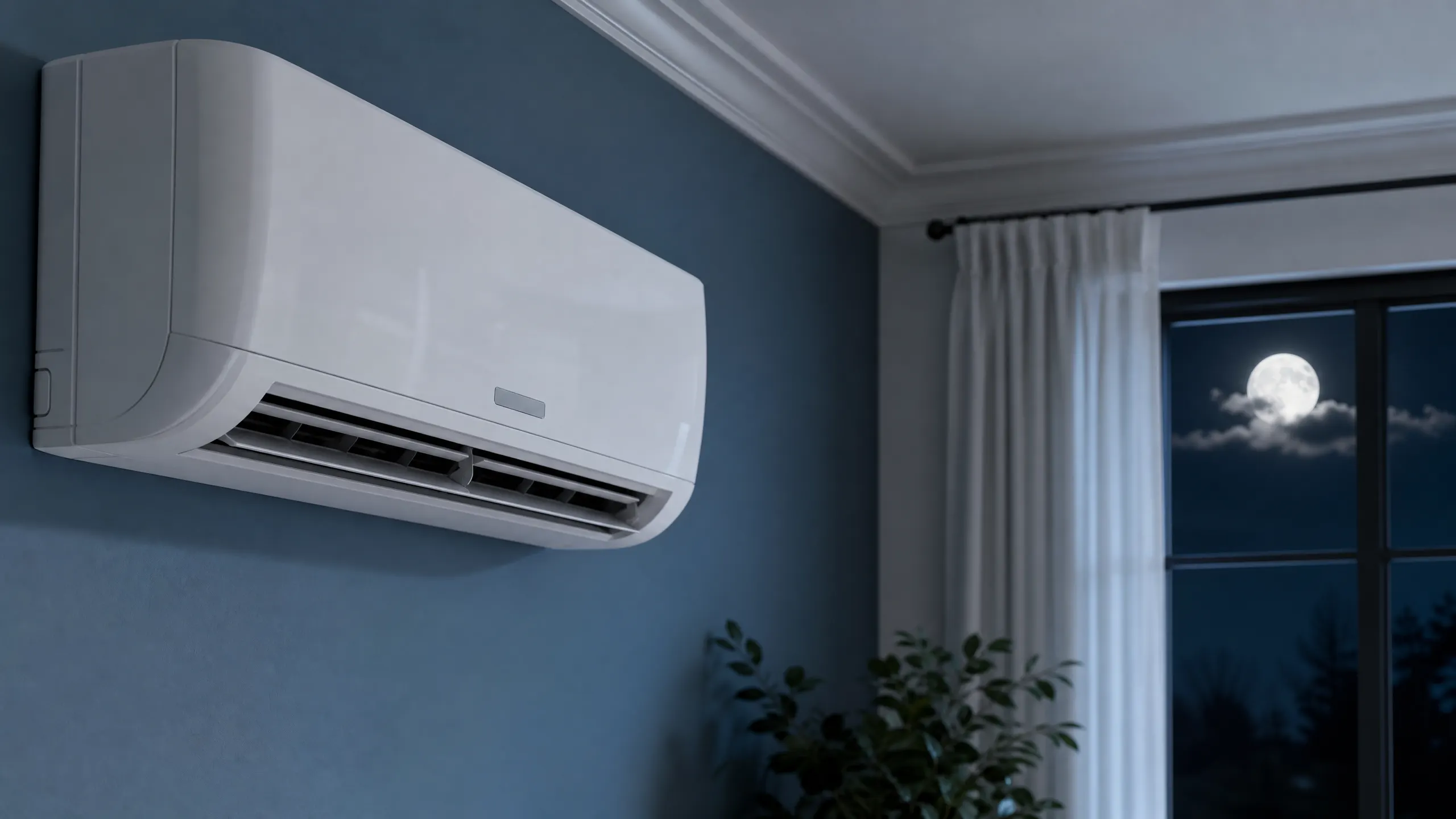





A white wall-mounted split-system air conditioner on a blue-grey wall, with a full moon visible through a curtained window at night.

Mini Split Installation in Peachtree City, GA

Tell us about the job

Takes about a minute. No obligation.

New system or replacementMini-splitFayette County, GA
Step 1 of 2

What ZIP code is the job in?

Electricity in Fayette County runs 14.47 cents per kilowatt-hour on average. A mini split moving heat uses less power than a system that burns electricity to make heat, and that gap shows up every month on the bill. The efficiency rating on the unit you install matters more here than in a place where power is cheap. Two systems can cool the same house and cost different amounts to run, and the difference is the equipment, not the house.

5 months
November through March, your system heats
5 months
May through September, it cools
35°F
the average winter night it heats against
89°F
the average summer afternoon it cools against
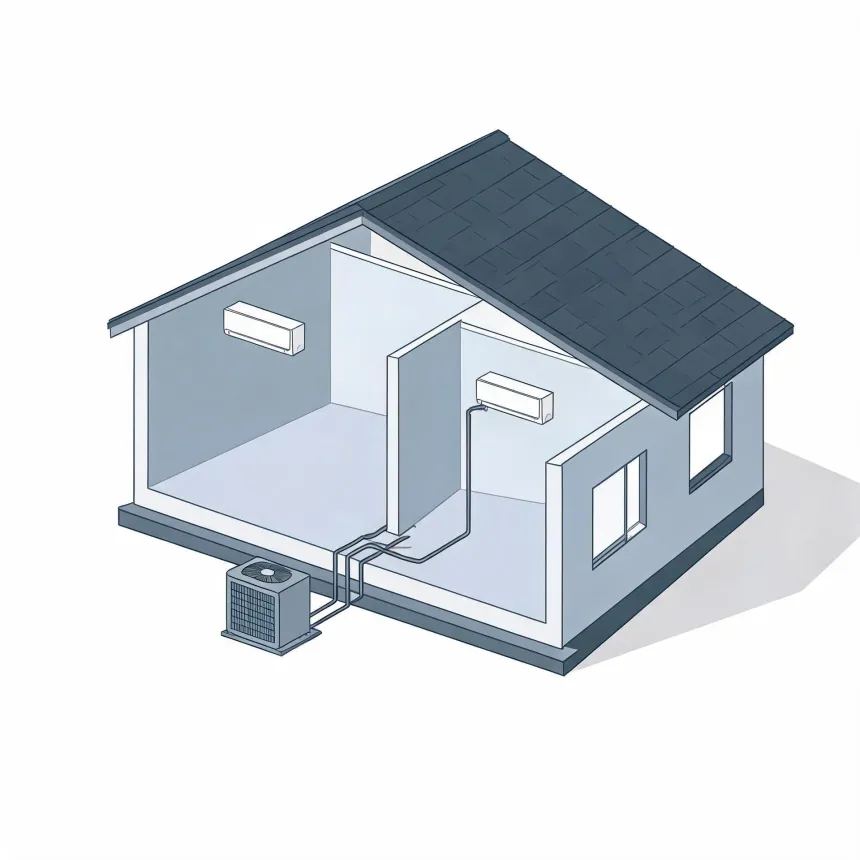
Isometric cutaway illustration of a small house with a dark shingled roof, showing two wall-mounted indoor units connected by lines running to an outdoor condenser unit beside the building.
Your system heats November through March and cools May through September.

NOAA nClimDiv, 1991–2020 normals

Gas heats 63.5% of homes in Fayette County.

A mini split here usually adds cooling, or backs up a gas furnace, more than it replaces one.

Five months of 89 degrees asks a lot of one unit

Cooling runs May through September
Summer afternoons average 89°F
Power here costs 14.47 cents per kilowatt-hour
May is when it has to workCooling runs May through September here, so April is the month to get it in.

Fayette County falls under zone 3A, and any split-system heat pump sold here has to clear a federal minimum: at least 14.3 Btu of cooling for every watt-hour it uses, and at least 7.5 Btu of heat the same way. That floor applies to the mini split going in your home the same as any other split system. It limits what a contractor can legally install, but plenty of units on the market clear it by a wide margin. The number to look at is the one on the spec sheet for the model you're quoted, not just the minimum. A unit sitting right at the floor and one sitting well above it can carry a very different bill once summer sets in.

The unit you pick decides what summer costs you

Ask for the efficiency number on the model you're quoted, and check it against the federal floor before you sign off. That number follows you onto every bill for as long as the unit runs.

Find a contractor
A beige split-system air conditioner outdoor condenser unit mounted on metal wall brackets atop a stucco wall.

The load calculation has to account for the full five months

Set the load calculation aside from the square footage guess. A contractor sizing this unit has to account for a system that runs five straight months, not a few hot stretches between mild days. Oversize it and the unit short cycles, shutting off before it pulls the moisture out of the air, so the house feels damp even at the right temperature. Undersize it and it runs flat out through June, July and August without ever catching up on a 89 degree afternoon. Either mistake wears the parts you paid for faster than a unit sized to the house.

SEER2 is the rating, not the runtime

The number on the label is measured under one set of test conditions. Run the unit in a heat wave or in a cold snap and the real efficiency moves around, usually down from what's printed. It's still the right number to compare between models, because every maker tests against the same standard. Just don't expect the unit to hit that exact number on the hottest day it works.
The rating only holds if the install is right

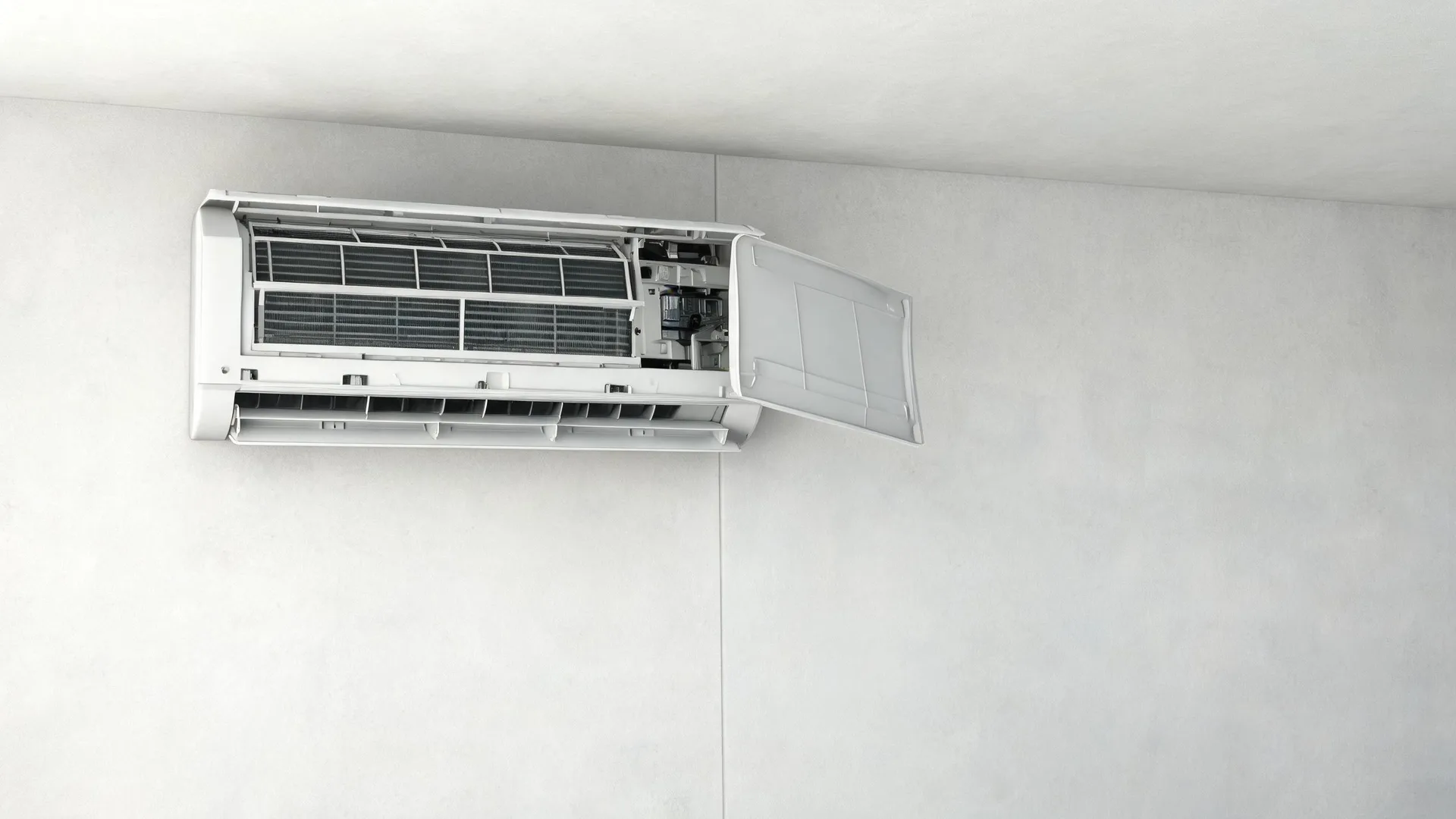
A mini split rated well can still run worse than its label if the line set is too long, the refrigerant charge is off, or the indoor head is in the wrong spot for how air moves through the room. The rating describes the equipment by itself, not the equipment hung on your wall by whoever shows up. Ask who's doing the charge and the lineset sizing, not just which unit they're quoting.

Installation cost is mostly the line set and the wall. The indoor head and outdoor unit are connected by refrigerant lines run through a wall, and the length and path of that run changes the labor involved. A straight shot through an exterior wall to a unit sitting right outside is the simplest case. A run that has to go up through an attic, across a chase, or down multiple floors takes longer to pull and insulate, and it needs more refrigerant to fill it. Electrical work adds to it too, since a mini split needs its own dedicated circuit, and whether that circuit already exists or has to be run from the panel changes the job. The condensate line carrying water away from the indoor head also has to run somewhere with a real slope the whole way, and a tricky path for it adds time. None of that shows up on the unit's price tag, but it shows up on the invoice.

Fayette County saw 87 severe weather events between 2015 and 2024, most of it damaging wind, with hail, tornadoes, tropical storms and a couple of winter storms mixed in. Across Georgia, 31% of households lost power for a day or more in 2024. An outdoor compressor sits outside through all of that, so where it goes and what shields it from wind-blown debris is worth deciding before install day, not after a storm. An outage matters more for a mini split than it would for a gas furnace, since the heads and the compressor both need power to run. If gas backs up the house for heat, the mini split is what goes quiet first when the power drops, and hot water depends on whichever system heats it in your home.