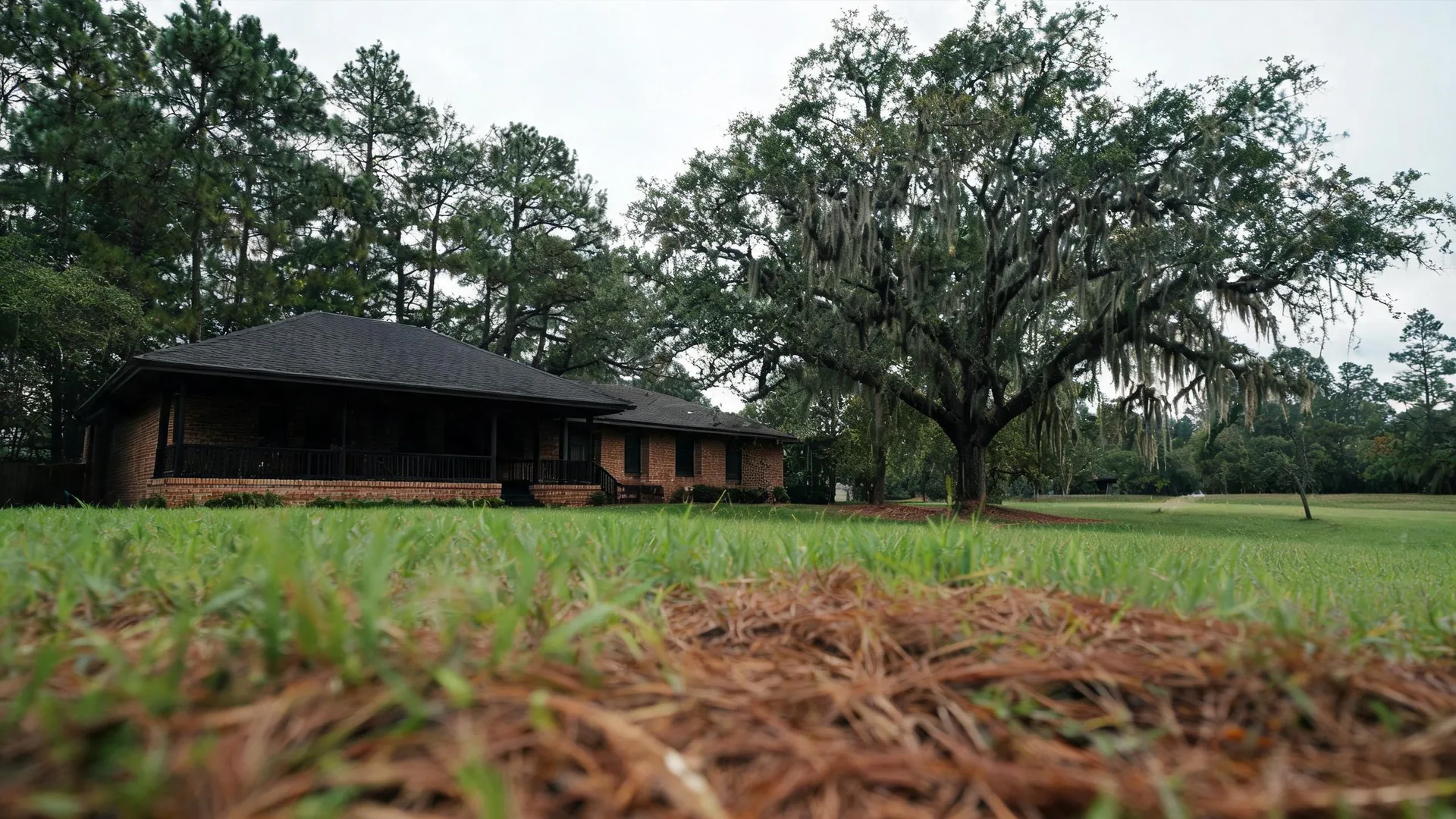




Low-angle view across a lawn with pine straw in the foreground toward a single-story brick house with a dark shingled roof and covered porch, beside a large moss-draped oak and pine trees under an overcast sky.

Mini Split Installation in Rincon, GA

Tell us about the job

Takes about a minute. No obligation.

New system or replacementMini-splitEffingham County, GA
Step 1 of 2

What ZIP code is the job in?

Effingham County saw 161 severe weather events between 2015 and 2024, most of it damaging wind. Hail and falling limbs both show up in that count, and a mini split's outdoor unit sits outside where either one can reach it. Where it goes matters. Keep it clear of roof runoff and away from branches that could come down on it. Power is the other piece. A mini split needs electricity to run, for heat or for cooling, and a good share of Georgia households went a full day or more without power in 2024. If an outage would leave you without heat or air for longer than you want, that's worth planning for before the system goes in.

5 months
November through March, your system heats
6 months
May through October, it cools
39°F
the average winter night it heats against
91°F
the average summer afternoon it cools against
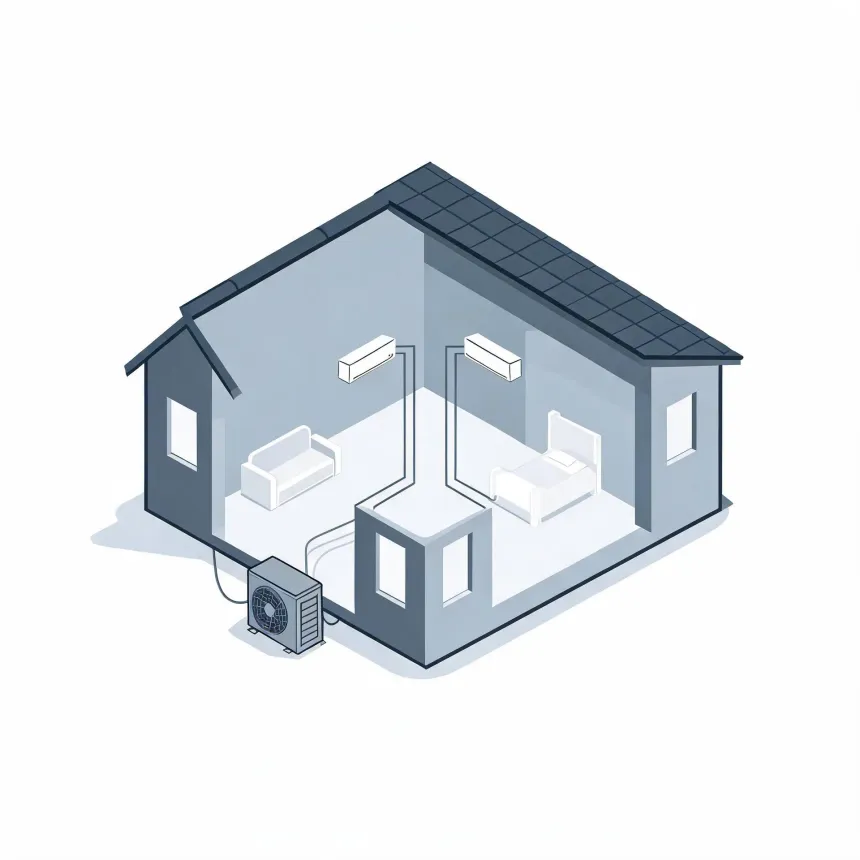
Isometric cutaway illustration of a small house showing two wall-mounted indoor air conditioning units connected by lines to a single outdoor condenser unit beside the building, with a sofa in one room and a bed in another.
Your system heats November through March and cools May through October.

NOAA nClimDiv, 1991–2020 normals

Cooling runs here from May through October, six months straight.

Get the mini split in before May and it's already running when the first hot day hits, not scrambling to catch up.

Most homes in Rincon already run on electricity, and a mini split fits right into that

91% of homes heat with electricity
Cooling runs May through October
Summer afternoons average 91°F

Six months of cooling is a long stretch for one outdoor unit, and the afternoon heat it's pulling against averages 91°F through June, July and August. That's the daily load for the whole stretch, not just a handful of hot afternoons. A mini split sized too small for the space will run flat out trying to close that gap, and it'll show wear sooner for it. Sizing it to the room, not just the square footage on paper, is what keeps it from working that hard every single day.

Power costs more here, so efficiency pays you back on every bill

Georgia electricity ran 14.08 cents per kilowatt-hour in 2024, and a mini split here runs against that rate for the whole cooling stretch. An efficient system pulls less power to do the same job, so that difference shows up on every bill, not just one.

Find a contractor
A beige split-system air conditioner outdoor condenser unit mounted on metal wall brackets atop a stucco wall.

Size it for the load it's actually working against

Get a load calculation done for the room, not a guess off the square footage. A contractor sizing it right will look at windows, where the room sits on the house, and what's already running against that six month stretch of cooling. Skip that step and the unit you end up with is either undersized and running flat out from May to October, or oversized and short cycling, neither of which does it any favors.

How many zones, and on what

A mini split system can run one indoor head or several off a single outdoor unit. More zones means more rooms controlled on their own thermostat, but it also means the outdoor unit is sized and the line set runs planned around that number from the start. Ask what the quote assumes, because adding a zone later isn't as simple as plugging in another head.
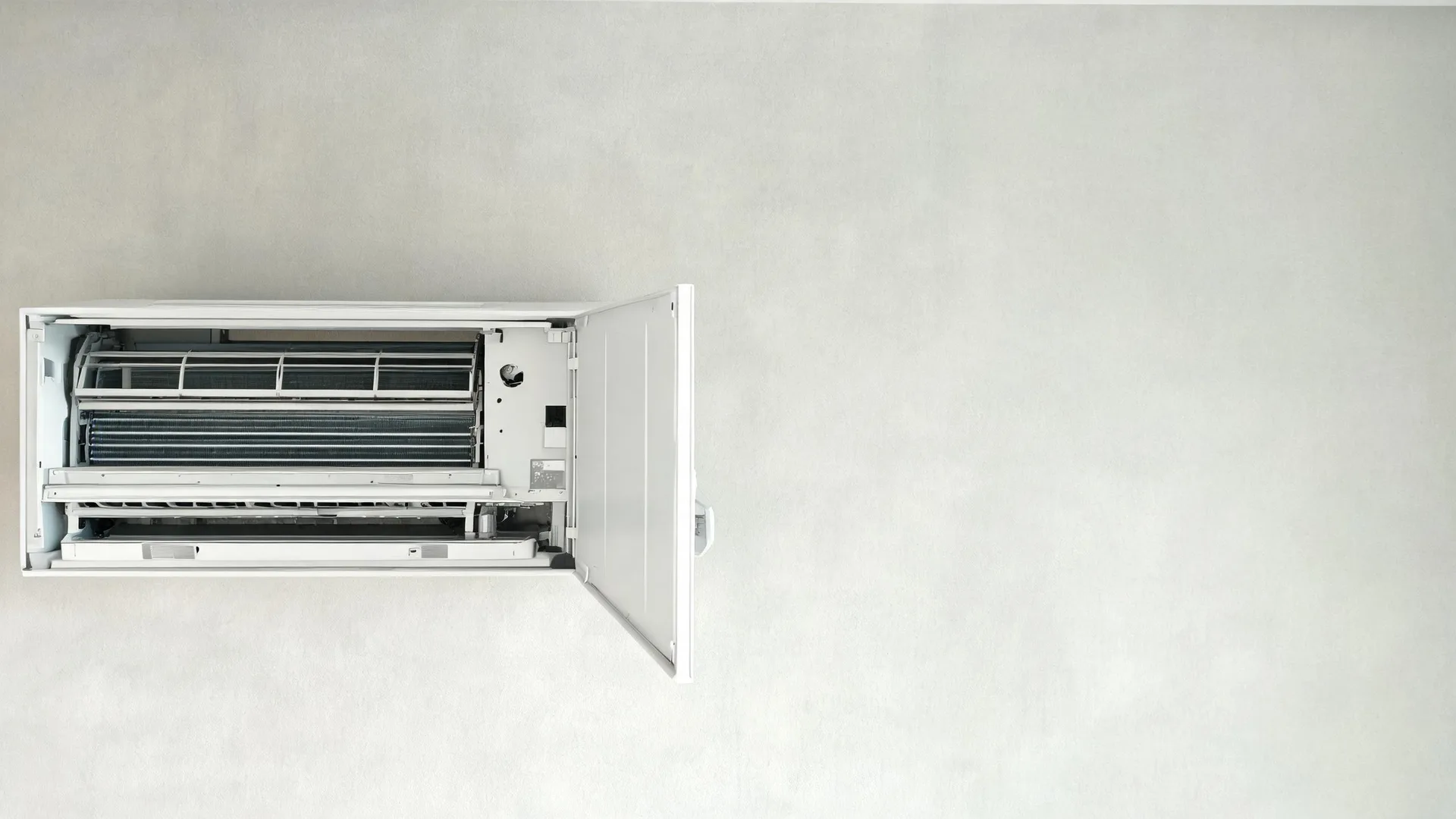
Where the lines run and where the unit sits

The line set carries refrigerant between the outdoor unit and each indoor head, and it has to pass through a wall somewhere. Ask where that penetration goes, where the outdoor unit lands, and how much line length the job needs. A longer run than the system is rated for cuts into how well it heats and cools, so this isn't just a cosmetic question.

A load calculation looks at more than floor space. It accounts for ceiling height, how many windows the room has and which direction they face, how much insulation is behind the walls, and what else is already putting heat into the room, lighting, appliances, a run of ductwork overhead. Rooms the same size on paper can need different sized heads once those factors are weighed. Undersize it and the compressor runs long and hard trying to reach a setpoint it can't hold. Oversize it and the unit cools the air fast, shuts off before it pulls the moisture out, and starts back up shortly after. That short cycling wears on the compressor and leaves the room feeling damp even when the thermostat reads satisfied. The right size runs longer, steadier cycles, and that's what keeps the room even and the equipment lasting as long as it's built to.

Installation day starts with the outdoor unit going on its mounting pad or wall bracket, set level so the compressor drains and runs the way it's built to. Inside, each indoor head gets mounted high on the wall, and the line set runs from there through the wall penetration to meet the outdoor unit. Once the lines connect, the system gets evacuated with a vacuum pump to pull out moisture and air, because any left behind in the line set drags down how the refrigerant performs. Only after it holds a vacuum does refrigerant get released into the lines. The crew will check line set connections for leaks, run the system through both heating and cooling to confirm each head responds to its own thermostat, and check that condensate drains clear instead of pooling near the indoor unit. The last step is usually the quietest part, just watching it run a full cycle to make sure it shuts off and restarts the way it should.