





Two illuminated white Southern-style houses with wraparound porches and staircases, framed by a Spanish moss-draped tree on a quiet street at night.

Mini Split Installation in Savannah, GA

Tell us about the job

Takes about a minute. No obligation.

New system or replacementMini-splitChatham County, GA
Step 1 of 2

What ZIP code is the job in?

Chatham County logged 343 severe weather events between 2015 and 2024, most of it damaging wind and tropical storms blowing in off the coast. An outdoor condenser mounted where wind-driven debris or flying branches can reach it is going to take a hit sooner or later. Where a contractor places the unit, and what if anything shields it, is worth deciding now rather than after a storm. A mini split system also depends on power to run at all, and almost a third of Georgia households were without power for a day or more in 2024. If a backup plan matters to you, heat and hot water during an outage is a question worth raising before installation, not after.

5 months
November through March, your system heats
6 months
May through October, it cools
42°F
the average winter night it heats against
91°F
the average summer afternoon it cools against
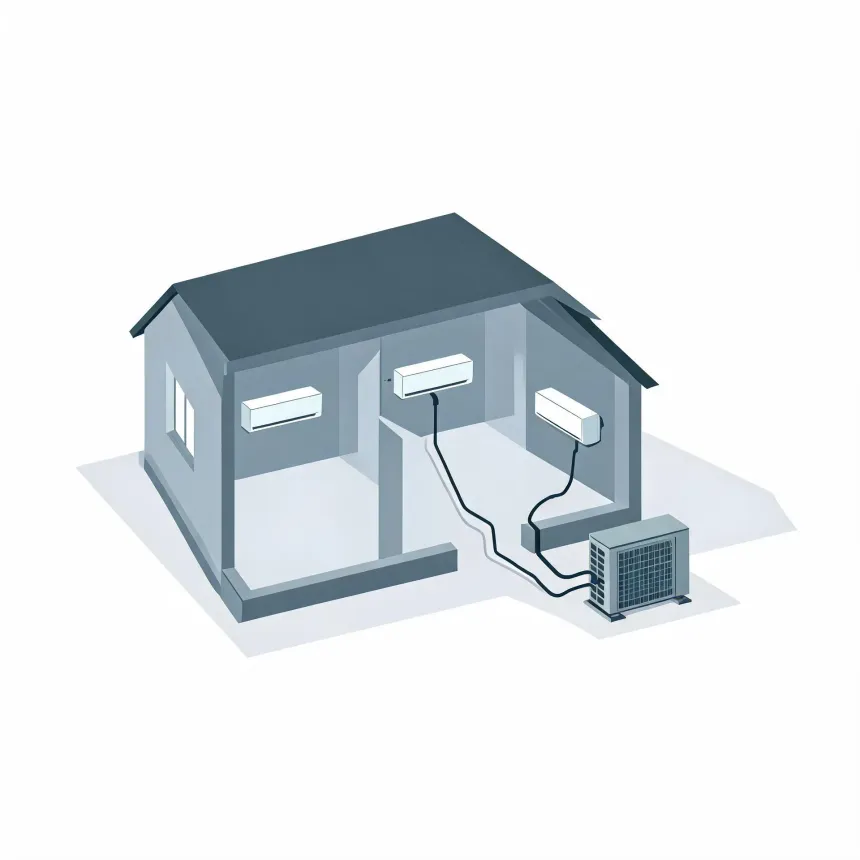
Isometric illustration of a cutaway single-story house with three wall-mounted indoor air conditioning units connected by lines to an outdoor condenser unit on the ground outside.
Your system heats November through March and cools May through October.

NOAA nClimDiv, 1991–2020 normals

Georgia households paid 14.08 cents per kilowatt-hour in 2024.

A mini split that holds its efficiency rating earns back the difference on every bill it runs.

Get it installed in April, before cooling starts in May

Cooling runs May through October
Summer afternoons average 91°F
246 damaging wind events from 2015 to 2024
Electric heat is already the rule here70.9% of Chatham County homes heat with electricity, a mini split included

A mini split here runs cooling for six months straight, May through October, with afternoon highs averaging 91 degrees in June, July and August. That's a long stretch at a hard setpoint, not a few hot weeks. The compressor and the outdoor coil carry that load every one of those days, and whatever size and setup a contractor puts in has to hold up under it. An undersized system will run flat out trying to keep up and still fall behind on the hottest afternoons. Sizing it right for this house, not the cheapest unit on the lot, is what gets you through June and July without the system struggling.

Any new system here has to meet Georgia's minimum efficiency

Chatham County falls in climate zone 2A. Any mini split installed now has to meet the federal minimum for a split-system heat pump, 14.3 SEER2 for cooling and 7.5 HSPF2 for heating. That floor narrows what a contractor can legally put in. A federal tax credit is available on top of that for equipment that qualifies, worth asking about before you settle on a unit.

Find a contractor
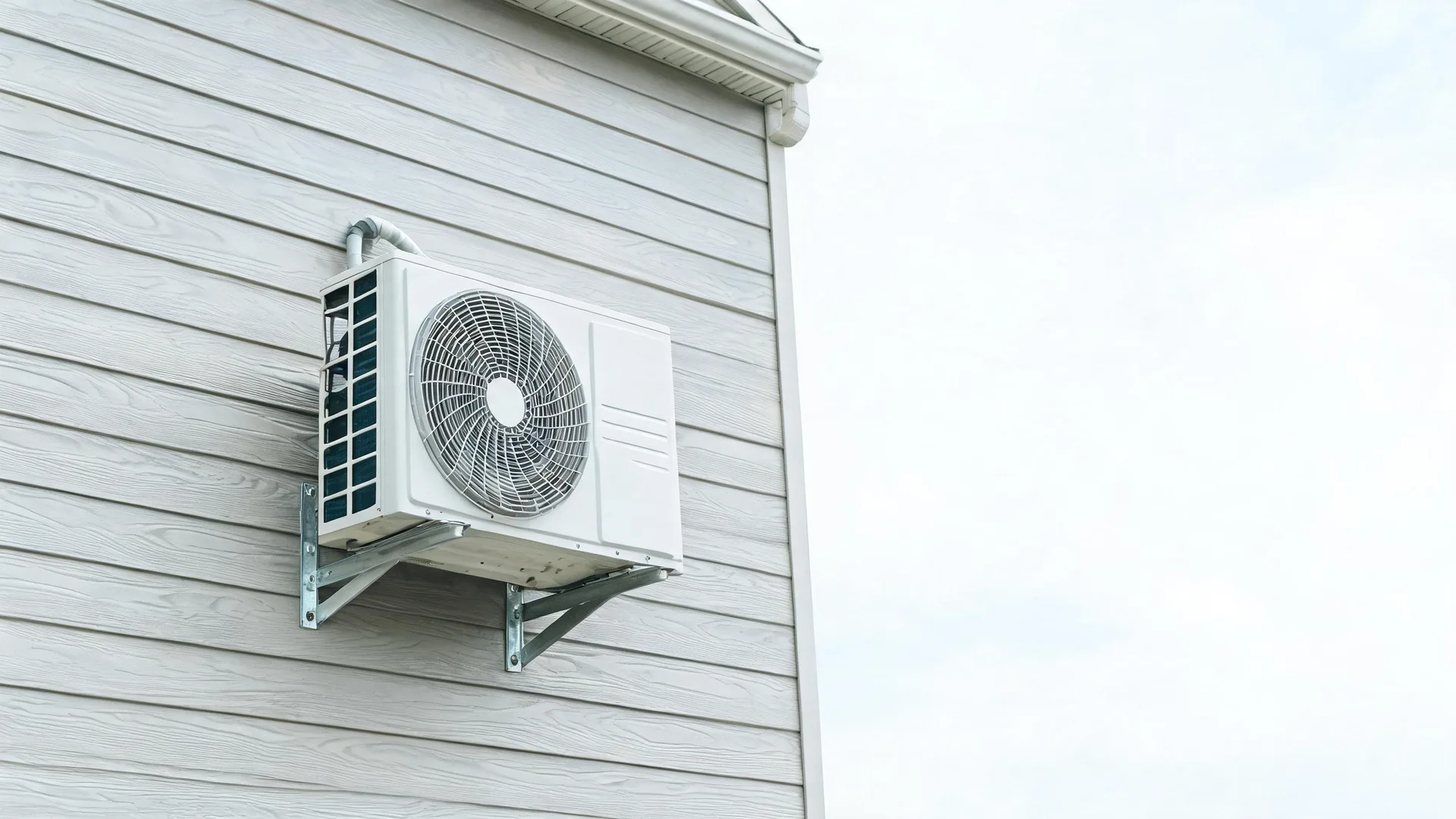
A white outdoor air conditioner condenser unit mounted on metal wall brackets against gray horizontal siding, with a blue sky and white clouds behind it.

Six months of this, every year

Six months a year, every year this unit sits outside, this is the stretch it has to get through. May to October, afternoon highs averaging 91 in the peak months. A system sized right for this house holds its temperature on the worst afternoons in July. One sized wrong runs the whole time trying to catch up.

Sizing is a room by room calculation

A contractor works out the load for each room a head unit will serve. How much window it has. Which way it faces. What's on the other side of the walls. That number decides the head unit, not a guess at square footage. Rooms that look the same size on paper can need different sized units once sun and walls are factored in.
Oversized fails a different way than undersized

A unit too big for the room cools the air fast and shuts off before it pulls the moisture out. The room ends up cold and damp at the same time. It also cycles on and off more often, and that stop start wears on the compressor over the years. Bigger is not the safe mistake. The unit has to match the room, not outmuscle it.

The number on the label, SEER2 for cooling and HSPF2 for heating, tells you how much output the system gets out of the power it uses. A higher number means more cooling or heat for the same electricity, not a bigger or stronger unit. That rating is measured under set conditions in a lab, so the system has to be sized and installed correctly to actually hit it in your house. A mini split hung on the wrong wall, or a line set run too long, will underperform its rating no matter what the label says. The number is also a ceiling, not a guarantee. It holds up over the life of the system only if the coils stay clean and the refrigerant charge is right, which is why the installation itself matters as much as the equipment you pick.

Installation starts outside, deciding where the outdoor unit sits and how the line set gets from there to each head unit. That line set carries refrigerant lines, a drain and wiring through a hole drilled in the wall. A contractor keeps that run as short and straight as they can, because every extra foot is another joint that can eventually leak. Once the line set is in, the head unit mounts on a bracket and the outdoor unit gets set on a pad or wall bracket, leveled so condensate drains the way it should. Before any refrigerant flows, the line set gets pulled down to a vacuum to clear out air and moisture. Skip that step or rush it and the system can lose capacity or wear down the compressor well before it should. Once the vacuum holds, the system gets charged, powered up and run in both heating and cooling to check it before the job is called done.