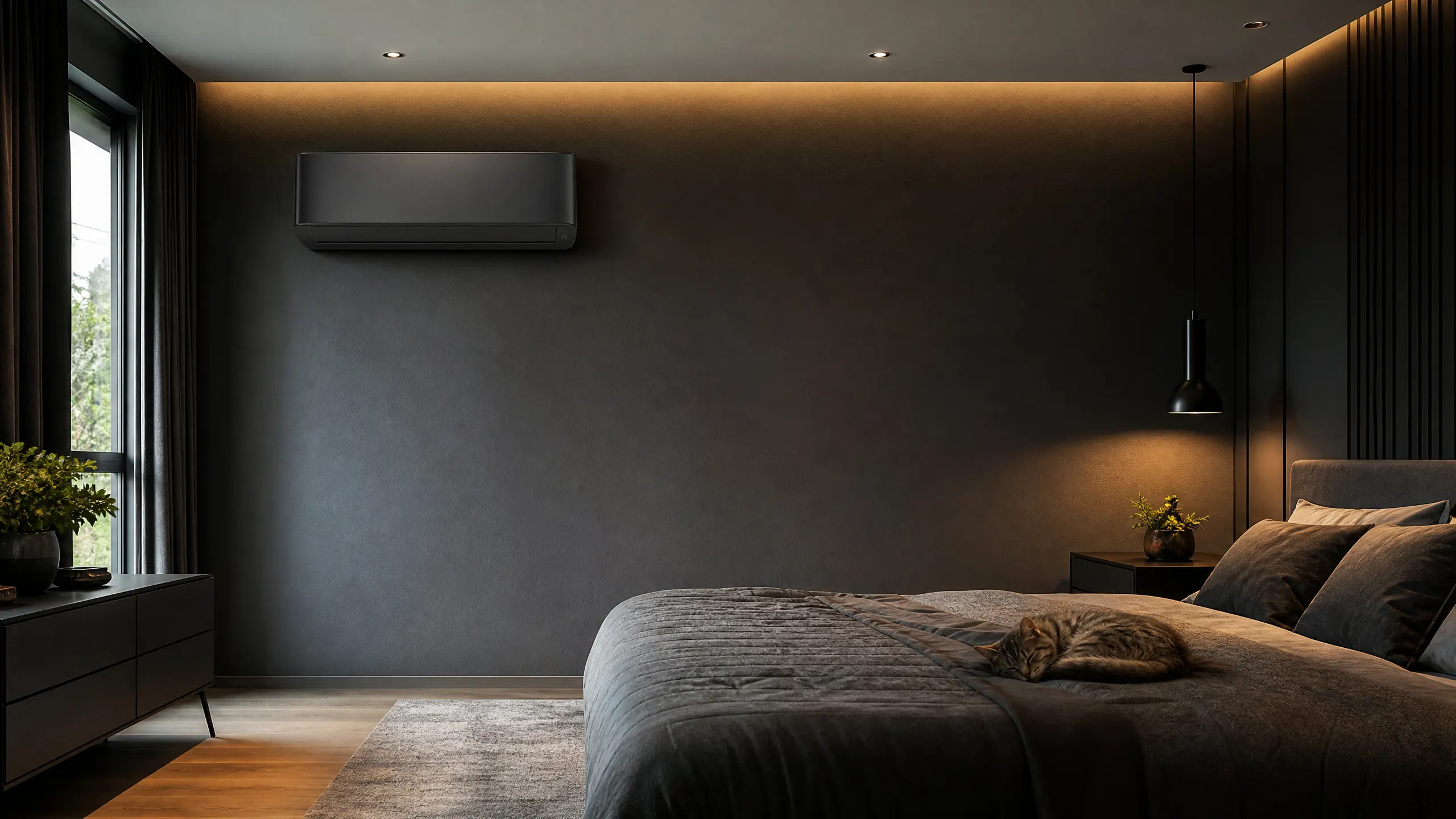





A dark, minimalist bedroom featuring a sleeping cat on a grey-quilted bed, a wall-mounted air-conditioning unit, warm cove ceiling lighting, and a pendant lamp illuminating the bedside table.

Mini Split Installation in Statesboro, GA

Tell us about the job

Takes about a minute. No obligation.

New system or replacementMini-splitBulloch County, GA
Step 1 of 2

What ZIP code is the job in?

Georgia homes paid 14.08 cents per kilowatthour in 2024. A mini split earns its keep against that number, since it moves heat instead of burning power to make it. Run one for cooling most of the year and for heat on the cold nights, and that difference shows up on every bill it touches, not just the big ones. Ask what SEER2 and HSPF2 ratings the unit carries before you decide. Those numbers tell you how much of what you pay for turns into comfort in the room.

5 months
November through March, your system heats
6 months
May through October, it cools
39°F
the average winter night it heats against
91°F
the average summer afternoon it cools against
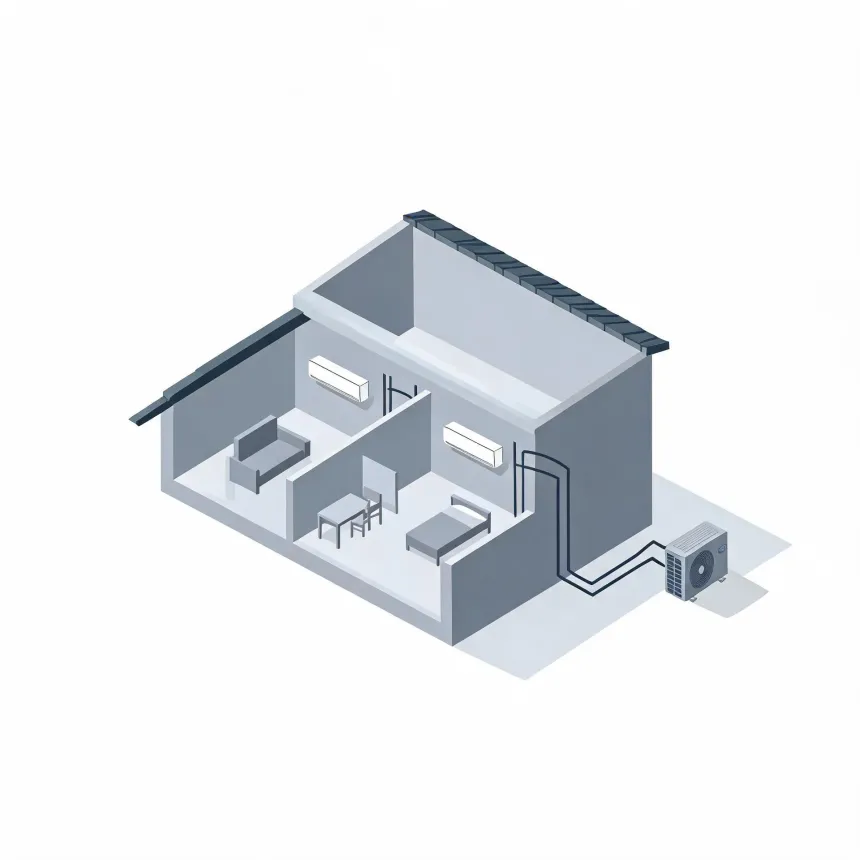
Isometric cutaway illustration of a gray house showing two wall-mounted indoor air conditioning units in separate rooms with furniture, connected by line sets to an outdoor condenser unit on a pad outside.
Your system heats November through March and cools May through October.

NOAA nClimDiv, 1991–2020 normals

Cooling runs May through October here.

Get the mini split installed before April is out, so it's ready on the first hot day instead of catching up to it.

Six months of cooling. Afternoons near 91. This system runs hard here.

Cooling runs May through October
Summer afternoons average 91°F
135 damaging wind events from 2015 to 2024

Electricity heats 90 percent of homes in Bulloch County. A mini split fits that setup without a fight, since it runs on electricity already and doesn't need a gas line brought in or modified. For a home that heats with a gas furnace or propane tank now, a mini split still works, but it usually takes the shoulder season and some of the cold nights rather than the whole job. Either way, ask what the unit is replacing or adding to before the quote comes in. That changes what gets installed and how the system gets sized.

Any mini split installed here has to meet 14.3 SEER2 and 7.5 HSPF2

Bulloch County falls under zone 3A, and the federal standard sets those minimums for every split-system heat pump made since January 2023, ductless included. That rules out anything below it before you even start comparing units. A federal tax credit is available for qualifying equipment, which is worth asking about before you settle on a system.

Find a contractor
A man in a dark shirt jacket and tan work pants, seen from behind, carries a worn canvas duffel bag up stone steps toward an orange front door flanked by a potted shrub.
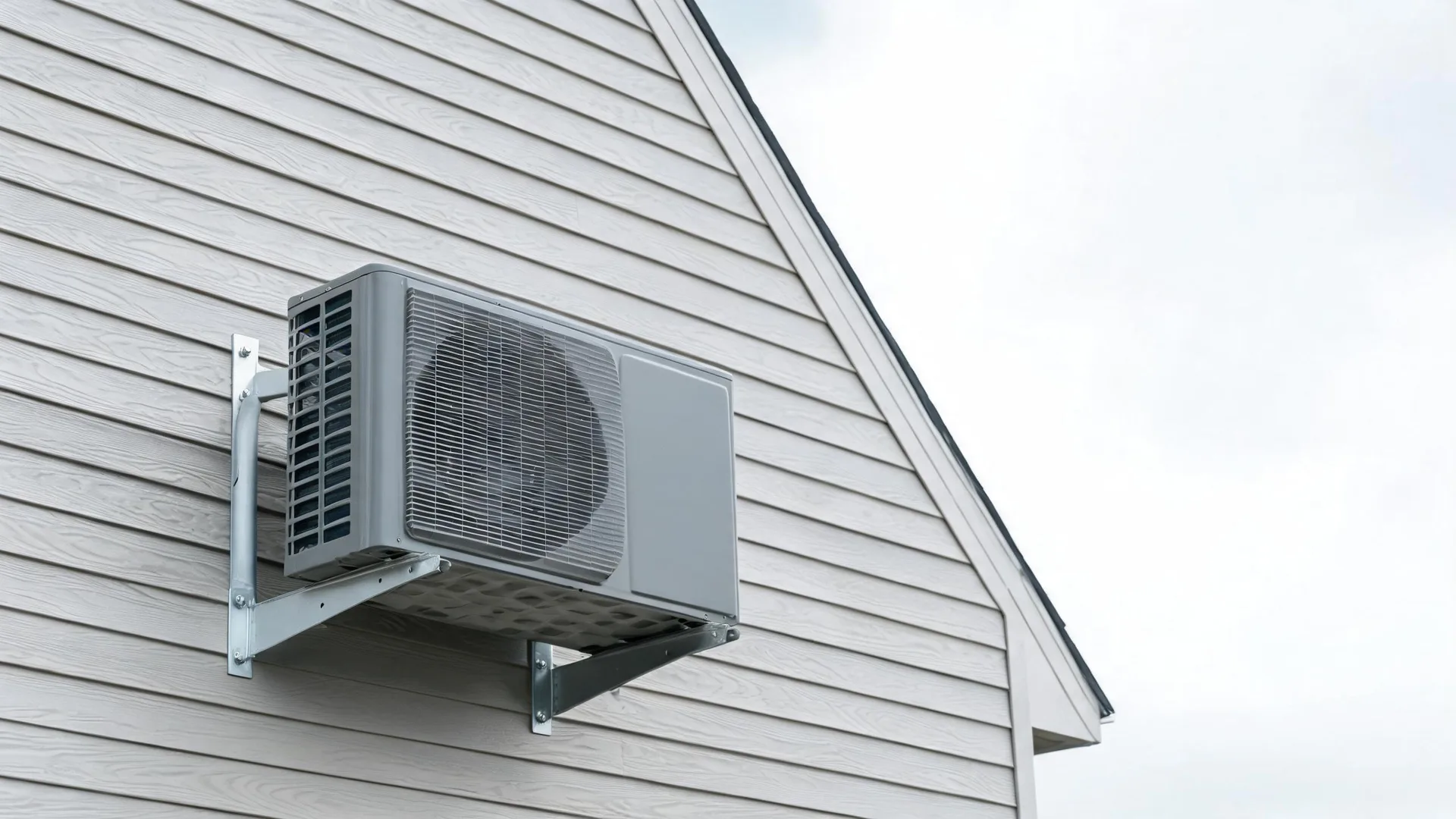
A white mini-split air conditioner outdoor condenser unit mounted on metal brackets against a beige stucco exterior wall, with a blue sky and scattered clouds in the background.

Sized for this, not for an average

Six months of cooling, afternoons near 91, is a heavier load than most systems see. A mini split sized right for that load keeps up without straining. One sized off a rule of thumb, or matched to whatever was there before, runs longer hours to hit the same temperature and shows wear sooner for it. Ask for a load calculation on your home, not a quote based on square footage alone, and don't let the lowest bid be the only reason you pick a unit.

The rating comes from a lab, not your wall

SEER2 and HSPF2 numbers are measured under set test conditions, with the indoor and outdoor units paired the way the lab paired them. A line set run too long, a refrigerant charge that is off, or mismatched indoor and outdoor units will all pull the real number below what the label promises.
One rating covers cooling, the other covers heat

SEER2 tells you about cooling. HSPF2 tells you about heat. A mini split does both jobs from the same unit, and a strong number on one side does not mean a strong number on the other. Check both before deciding what the system will carry for you.

The price of a mini split job comes down to what the crew has to do beyond hanging the indoor and outdoor units. How many zones, for one. A single room needs one line set run and one indoor head. A whole house needs a head in every room you want covered, each with its own line set back to the outdoor unit, and the outdoor unit has to be sized to carry all of them at once. Where the outdoor unit can sit matters too, since a long line set run between indoor and outdoor costs more in material and labor than a short one, and some runs need extra refrigerant to make up for the distance. Electrical work is its own piece of it. A mini split needs a dedicated circuit, and if the panel doesn't have room for one, that's a separate job before the install even starts. The wall or ceiling the indoor unit mounts to matters as well, since running line set through brick or block takes longer than running it through wood frame.

Install day starts outside, with the crew deciding exactly where the outdoor unit sits and how the line set gets from there to each indoor head. A small hole gets drilled through the wall for the line set, so the indoor unit's spot is marked and leveled before anything goes up. Once the heads are mounted, the crew connects the line set, runs the condensate drain so the unit has somewhere for moisture to go, and ties in the dedicated circuit. Before refrigerant goes in, the line set gets pulled down to remove air and moisture. Any left behind strains the compressor and wears on the system over time. With everything charged, the crew checks pressures, confirms each head is calling for heat and cooling the way it should, and walks the house to make sure air is actually reaching the rooms it's meant for.