






Single-story brick and cream-sided houses with covered porches behind a trimmed hedge and lawn, shaded by large oak trees draped with Spanish moss under an overcast sky.

Mini Split Installation in Stockbridge, GA

Tell us about the job

Takes about a minute. No obligation.

New system or replacementMini-splitHenry County, GA
Step 1 of 2

What ZIP code is the job in?

Gas heats just over half the homes in Henry County, and electricity heats most of the rest. A mini split doesn't fit neatly into either category. It runs on electricity, but it moves heat from the outside air instead of generating it with a flame or a resistance coil. In a home that heats with gas, a mini split can take over a room or addition the furnace doesn't reach well, or handle cooling in a space that's relied on a window unit. In a home already on electric heat, it can take over the job directly, heating and cooling from the same unit instead of separate equipment for each.

5 months
November through March, your system heats
5 months
May through September, it cools
35°F
the average winter night it heats against
89°F
the average summer afternoon it cools against
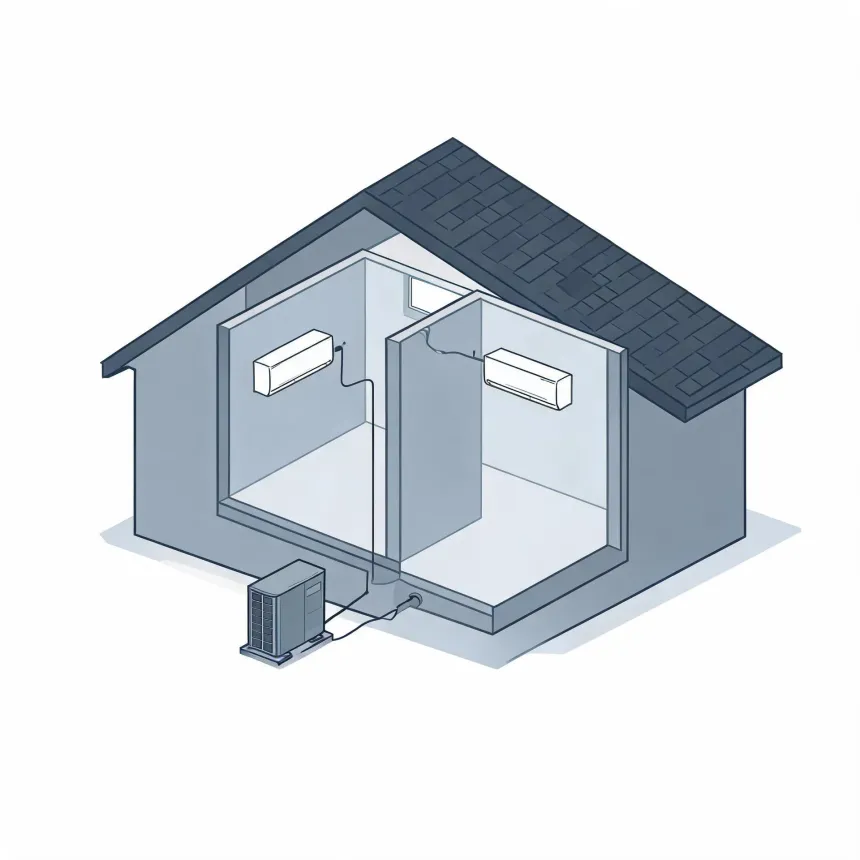
Isometric line illustration of a cutaway house with two rooms, each with a wall-mounted indoor air conditioning unit connected by lines to an outdoor condenser unit on the ground outside.
Your system heats November through March and cools May through September.

NOAA nClimDiv, 1991–2020 normals

Cooling runs May through September here.

Get the mini split installed before May and it's ready on day one, not after the first hot week.

Henry County weather doesn't call for anything bigger than the standard install

62 severe weather events from 2015 to 2024
31% of homes statewide lost power a day or more in 2024
50 damaging wind events from 2015 to 2024
Five months of cooling, every yearAfternoon highs average 89°F through June, July and August here

Henry County sits in climate zone 3A, warm with a long stretch of cooling and a short mild winter. Any mini split installed here counts as a split system under the federal standard, so it has to meet 14.3 SEER2 for cooling and 7.5 HSPF2 for heating. That's the floor, the same one a central split system has to clear. There's no separate, lower bar for ductless. A federal tax credit is available for equipment that qualifies, worth checking before you settle on a unit.

A standard mini split is the right size for this county

A mini split that meets the federal minimum handles what Henry County asks of it. Nothing about the climate here pushes you toward a bigger or more expensive unit than the standard install calls for. At 14.08 cents per kilowatt-hour, what you run it on matters more over time than what size you buy up front.

Find a contractor
A man in a cap, dark shirt and tan work pants, seen from behind carrying a worn canvas tool bag, steps up onto a porch toward an orange front door beside a potted shrub.
A beige split-system air conditioner outdoor condenser unit mounted on metal wall brackets atop a stucco wall.

Comparing units means comparing more than the sticker

Ask what happens on the coldest and hottest days, not just the average ones. A heat pump's output drops as the outdoor temperature does, so the number on the spec sheet at a mild temperature isn't what you get in a cold snap. Ask for the capacity at a low outdoor temperature, not just the rated capacity. Ask whether the system has backup heat and how it decides to use it. Ask about the warranty on the compressor separately from the warranty on parts and labor, since those often run different lengths. Ask who services the brand locally, because a unit with no one nearby to work on it is a different purchase than one with support down the street. And ask for the heat load calculation in writing, not just a quote, so you can see the room was actually measured and not guessed at.

How many rooms, how many heads

A single room needs one indoor head and one outdoor compressor, about as simple as the install gets. Cover several rooms and you're choosing between separate single-zone systems or one multi-zone compressor running several heads off the same outdoor unit. More heads means more line sets, more mounting work, and a compressor sized to carry all of them at once.
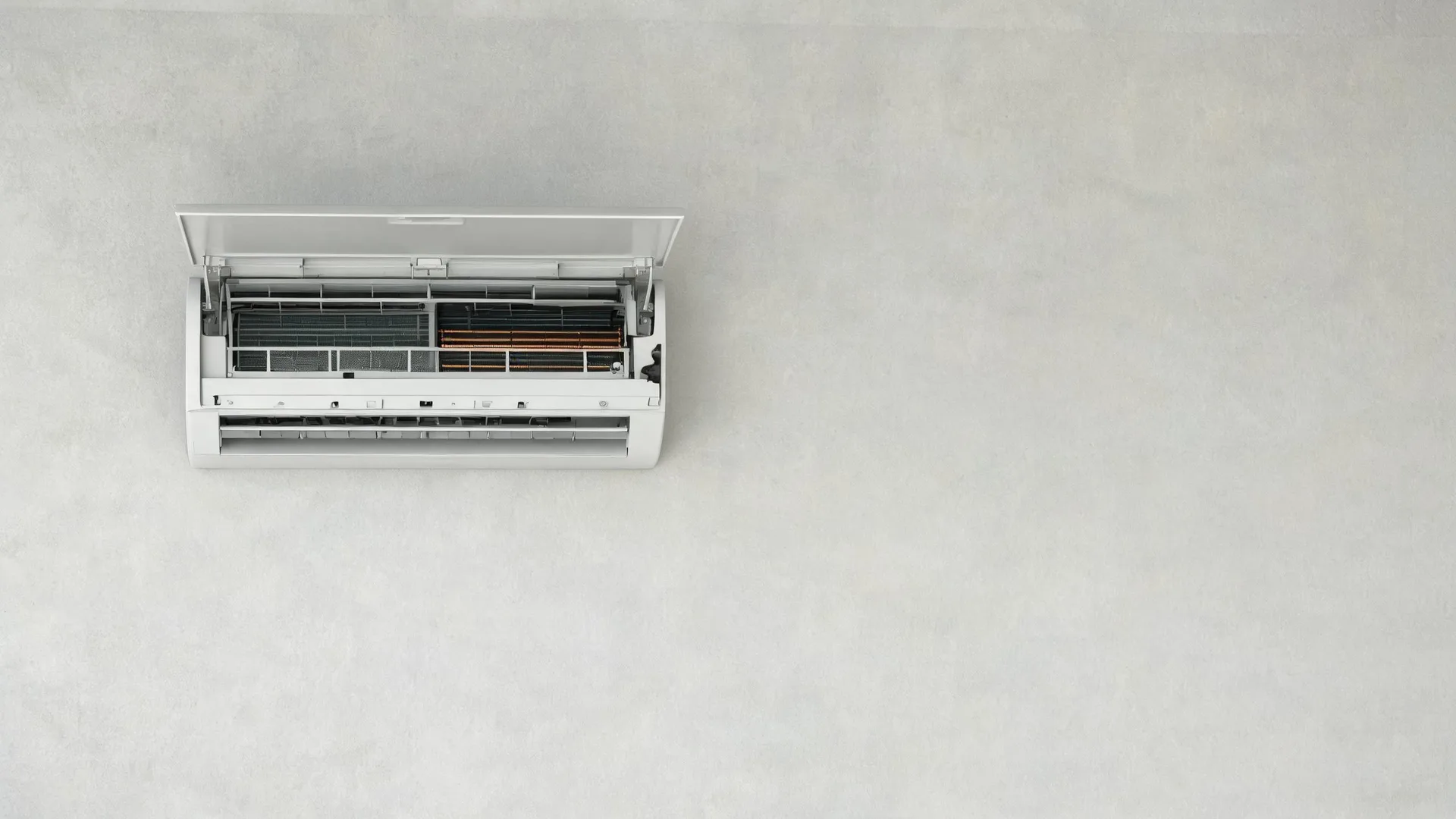
What the crew runs into on the wall

The indoor and outdoor units connect through a line set and a run of wiring, and that path has to go somewhere. A straight shot through an exterior wall is the easy case. A longer run, a trip through brick or stucco, or a condenser that has to sit further from the house all add work before the system ever turns on.

Sizing a mini split is its own calculation, separate from the model or brand. A tech works out the heat load for the room. That means the floor area, the ceiling height, the windows and which way they face, what sits on the other side of the walls. A room that gets afternoon sun through a sliding door can need a different size unit than one the same size without that exposure. Go too small and the unit runs flat out and still can't hold the temperature on the hottest afternoons. Go too big and it cools the room fast, shuts off, then starts again a few minutes later, and that start-stop pattern is harder on the compressor than one long steady run. The load calculation decides the unit. Not the size of the room by itself, and not a guess based on what worked next door.

Installation day starts with the line set, not the unit going on the wall. The crew mounts the indoor head first, then drills a single hole through the wall for the refrigerant lines, the wiring, and the condensate drain to pass through. That penetration gets sealed, inside and out, so no air or water finds its way through later. Outside, the compressor sits on a pad or wall bracket, close enough that the line set run stays within what the system allows. Once everything is connected, the lines get pressure tested and then pulled down to a vacuum, which clears out moisture and air that would otherwise ruin the refrigerant charge. Only after that test holds does the system get charged and switched on.