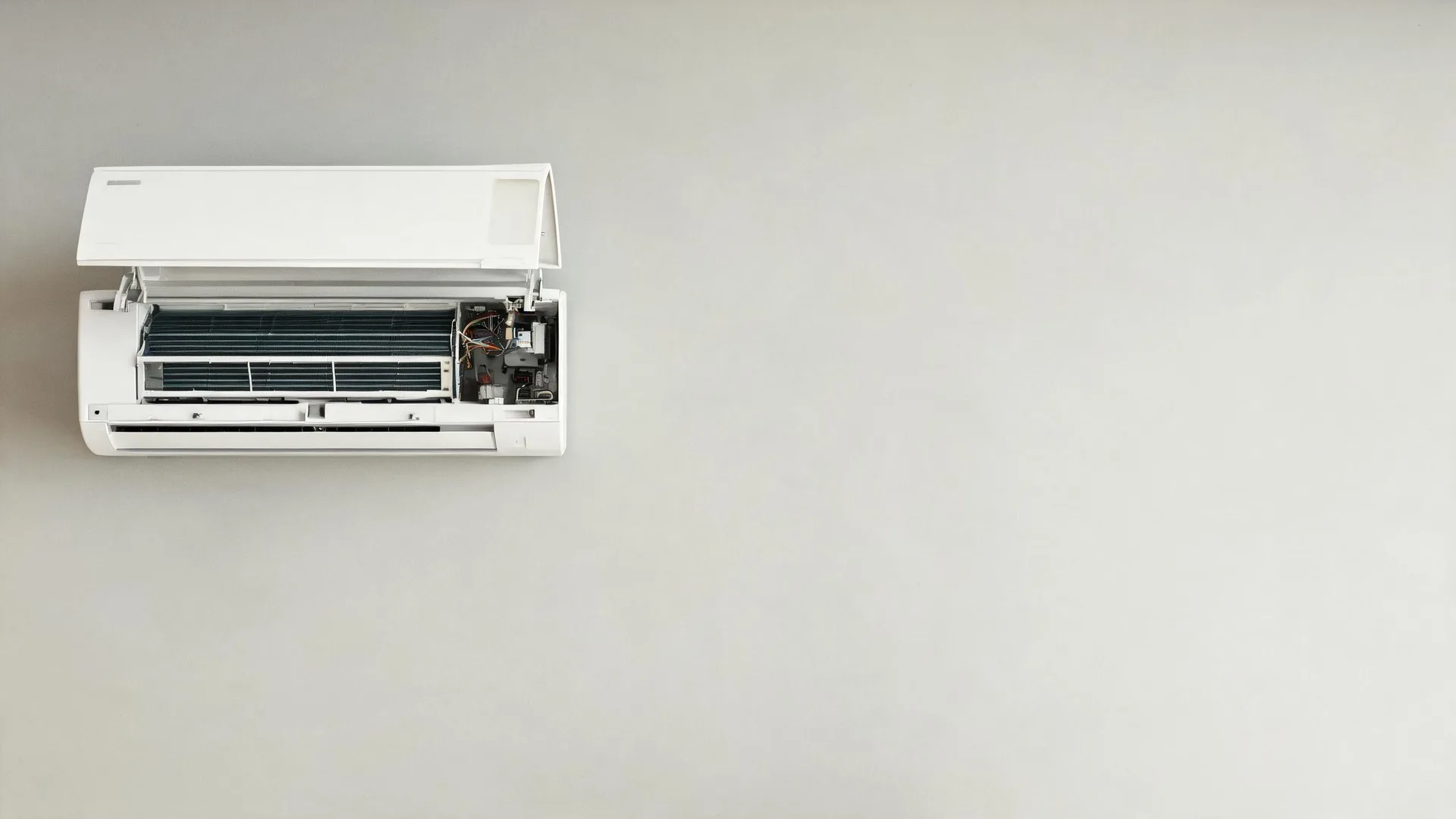
A gray tabby cat sleeps curled up on a dark gray bed in a dimly lit modern bedroom with warm ceiling cove lighting and a wall-mounted air conditioning unit.

Mini Split Installation in Valdosta, GA

Tell us about the job

Takes about a minute. No obligation.

New system or replacementMini-splitLowndes County, GA
Step 1 of 2

What ZIP code is the job in?

Weather here is hard on outdoor equipment

Lowndes County recorded 299 severe weather events between 2015 and 2024, most of them damaging wind. A mini split's outdoor unit sits exposed to that, so where it gets mounted and what shields it matters more here than in a calmer county.

Power loss is a real planning question

Statewide, 31% of Georgia households went at least a day without power in 2024. A mini split heat pump stops heating or cooling the moment the power does, so it's worth asking the installer what backup options exist for this system before you need one.

5 months
November through March, your system heats
6 months
May through October, it cools
41°F
the average winter night it heats against
91°F
the average summer afternoon it cools against
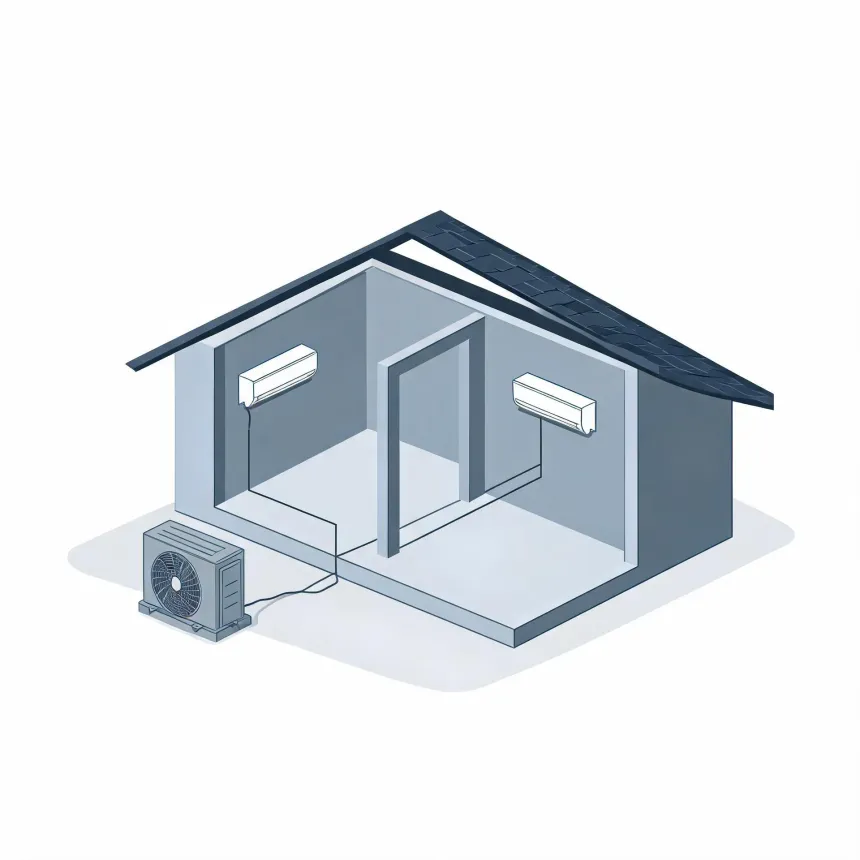
Isometric illustration of a cutaway house showing two wall-mounted indoor air conditioning units connected by lines to a single outdoor condenser unit on the ground outside.
Your system heats November through March and cools May through October.

NOAA nClimDiv, 1991–2020 normals

Electricity heats 90.1% of homes in Lowndes County.

A mini split runs on electricity already, so installing one doesn't mean adding a new fuel line or tank.

Six months of 91 degree afternoons, and the unit sized wrong will run the whole time

Cooling runs May through October
Summer afternoons average 91°F
269 damaging wind events from 2015 to 2024

Georgia homes paid 14.08 cents per kilowatthour in 2024, more than most of the country pays. That rate doesn't change whether the system is a good fit or a bad one, so sizing it right matters more here than somewhere with cheap power. A mini split that's sized correctly only moves as much heat or cold as the room needs, nothing more. One that's oversized or undersized works harder than it should, and that extra work shows up on every bill it touches. Ask the installer for the SEER2 rating before you buy. A higher number there means less electricity spent for the same amount of heating or cooling.

Any system installed here has to meet zone 2A's minimum

Lowndes County falls under zone 2A, a hot, humid climate code where cooling carries most of the year. A mini split installed here is a split system under the federal standard, so it has to meet 14.3 SEER2 for cooling and 7.5 HSPF2 for heating at minimum. That floor narrows what can legally go in, and a federal tax credit is available for qualifying equipment. Ask what meets the standard and what qualifies for the credit before you decide.

Find a contractor
A white outdoor air conditioner condenser unit mounted on metal wall brackets against gray horizontal siding, with a blue sky and white clouds behind it.

The old unit earned its wear

An old system that gets replaced rather than repaired is usually one that's been running long past the point where parts are easy to find or worth sourcing. A compressor that fails after years of daily cycling on and off has earned its wear honestly. The coils have been through repeated expansion and contraction with every heating and cooling cycle, and refrigerant lines have had that much more time to develop a slow leak at a joint. None of that means the old unit was a bad one. It means it did the job it was asked to do for as long as it could do it. Once it comes out, the outdoor unit and refrigerant have to be handled and disposed of properly rather than left on the curb, since the refrigerant inside isn't something that belongs loose in the air or the ground.

A load calculation, not a square footage chart

The right size for a mini split comes from a room by room load calculation, not a rule of thumb based on floor area. The calculation accounts for window area and direction, ceiling height, insulation, and how many walls face outside. Rooms that look the same size on paper can need different capacity depending on what surrounds them.

Oversized cools the air but not the room

A unit that's too big drops the temperature fast and shuts off before it's run long enough to pull moisture out of the air. The room reads cool on the thermostat but feels damp and clammy. Undersized does the opposite. It runs constantly and never quite catches up on the hardest days of the year.

Ask how many zones the system covers and whether one outdoor unit is feeding one indoor head or several. A single zone heats or cools one room or area on its own thermostat. A multi zone setup ties several indoor heads to one outdoor compressor, and that changes what happens when one zone needs more work than the others. Ask what happens if the outdoor unit fails. On a multi zone system, every head connected to it goes down at once, not just the one in the room giving trouble. Ask also about the line set, the refrigerant lines running between the outdoor unit and each indoor head. Longer runs and more bends can affect how well the system performs, so where the outdoor unit sits in relation to each room matters as much as the equipment itself.

Installation starts with where the line set has to run, not where the indoor head looks best on the wall. The installer mounts the indoor unit, mounts the outdoor unit on its pad or bracket, then runs the refrigerant lines and the electrical whip between them. Those lines get connected, and the system is evacuated with a vacuum pump to pull out air and moisture before any refrigerant moves into it. Skip that step and moisture sits in the lines, where it can freeze or react with the refrigerant later. Once the vacuum holds, the system is charged, usually by weight rather than guesswork, and the installer checks the charge against what the line length calls for. Last comes the test run, checking airflow at the head, checking that the outdoor unit cycles properly, and checking for leaks at every joint before calling the job done.