An orange cat rests on a dark grey bed in a minimalist monochrome bedroom.

Mini Split Installation in Warner Robins, GA

Tell us about the job

Takes about a minute. No obligation.

New system or replacementMini-splitHouston County, GA
Step 1 of 2

What ZIP code is the job in?

Weather here is hard on outdoor equipment

Houston County logged 137 severe weather events between 2015 and 2024, most of them damaging wind. A mini split's outdoor unit sits outside year round and takes whatever comes through, including the hail and tornadoes that have hit this county too.

An outage shouldn't mean no heat or hot water

Close to a third of Georgia households went at least a day without power in 2024. Ask the installer what happens to the system when the power drops and comes back, and whether a backup plan makes sense for this house.

5 months
November through March, your system heats
5 months
May through September, it cools
38°F
the average winter night it heats against
91°F
the average summer afternoon it cools against
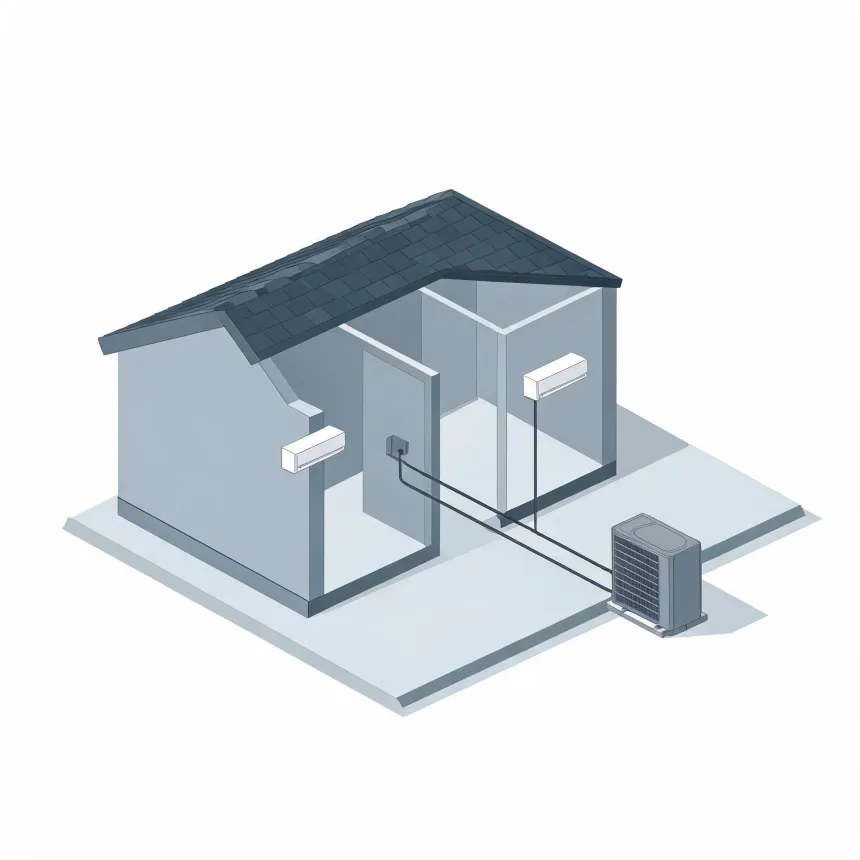
Isometric illustration of a cutaway gray house with a dark shingled roof, showing two wall-mounted indoor air handlers connected by line sets to an outdoor condenser unit on a pad outside.
Your system heats November through March and cools May through September.

NOAA nClimDiv, 1991–2020 normals

Georgia households paid 14.08 cents per kilowatthour in 2024.

A mini split uses less power to heat and cool than older systems, so that rate works less against you.

Five months of 91 degree afternoons, every year, is what this system is up against

Cooling runs May through September
Summer afternoons average 91°F
115 damaging wind events from 2015 to 2024

April is the month to get this done here. Cooling starts in May and runs through September, five months of the outdoor unit working hard every afternoon. Put it in before May and there's time to get it done right, with no one rushing to cool down a house that's already hot. Wait too long and you're on the installer's schedule, not yours, same as everyone else who put it off.

Any system going in here has to clear zone 3A's efficiency minimum

Houston County falls under zone 3A, and a mini split counts as a split-system heat pump under the federal standard. Units made from 2023 on have to hit at least 14.3 SEER2 for cooling and 7.5 HSPF2 for heating, there's no separate rule for ductless. That floor plus the federal tax credit on qualifying equipment narrows down what's worth installing. Worth getting the specifics before you pick a unit.

Find a contractor
A man in a cap, dark long-sleeved shirt and tan work pants carries a worn duffel bag as he climbs concrete steps toward an orange front door, with a potted shrub beside the entry.
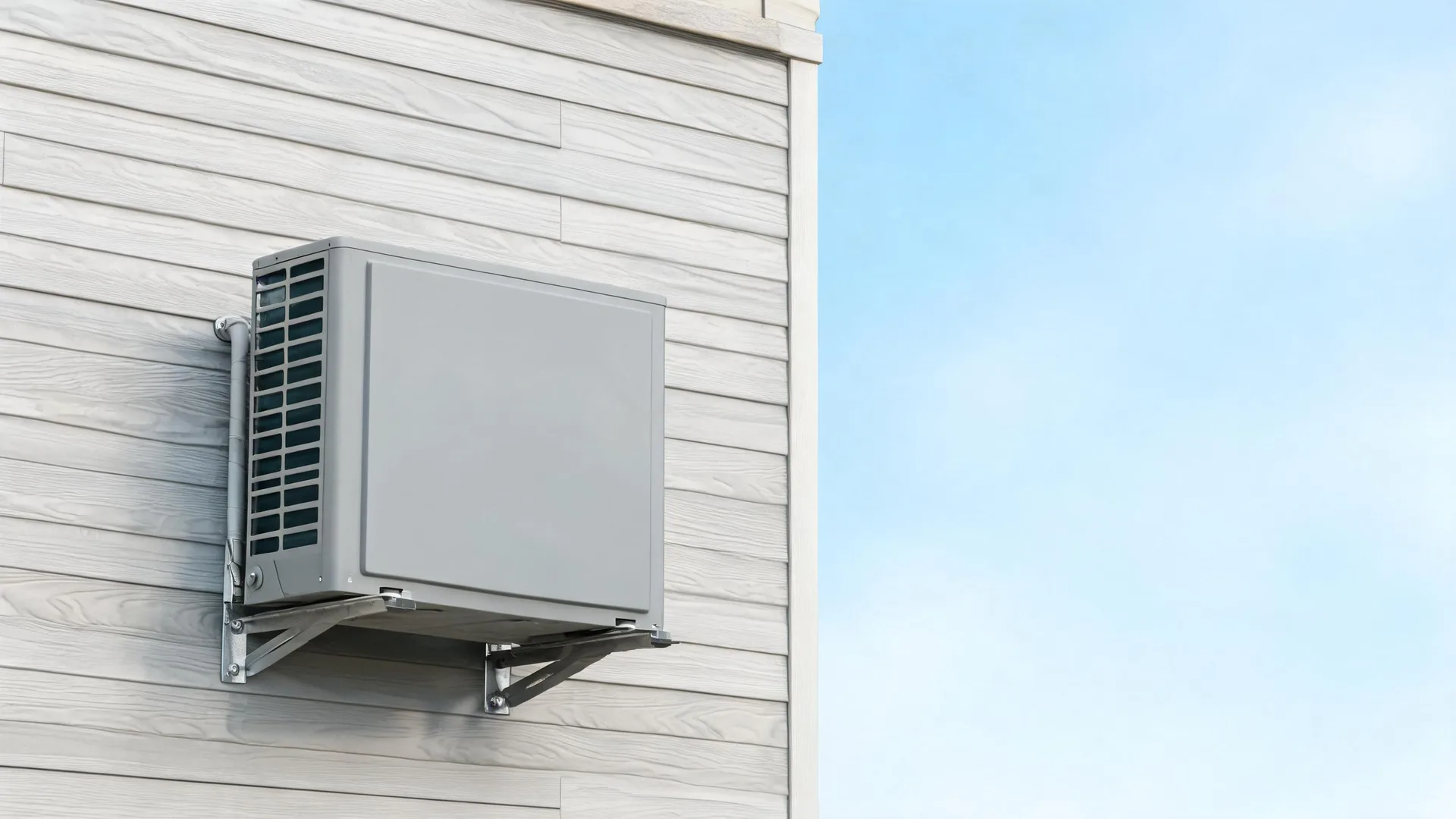
A white mini-split air conditioner outdoor condenser unit mounted on metal brackets against a beige stucco exterior wall, with a blue sky and scattered clouds in the background.

Five months of hard running is a sizing question, not a brand question

Five months of 91 degree afternoons means the outdoor unit runs long hours, day after day, from May through September. Sizing it right for this house matters more here than in a milder climate. An undersized unit never gets a break, and an oversized one cycles on and off too hard. Ask for a load calculation done on the actual house, not a guess based on square footage, and ask what size unit it points to before anyone talks brands.

Ask how many zones and what each one controls

Every indoor head on a mini split can run its own zone, cooling or heating that room alone while others sit idle. That's the whole advantage over central air. Ask how the contractor is dividing the house into zones and why, not just how many heads they're quoting.

Ask what happens where the line set runs

The refrigerant lines between outdoor and indoor units run through a wall, and that penetration gets sealed and insulated by hand. A poor seal there loses efficiency and lets moisture in behind the wall. Ask to see where the line set will enter and how it gets finished, inside and out.

The SEER2 number on the label tells you how much cooling the unit gets out of the power it uses, and HSPF2 does the same for heat. Higher is better on both, but that number comes from a lab test, not from whatever's happening outside on a given afternoon. A unit with a higher rating usually costs more up front and less to run every month after, so it's a trade against time, not a flat better or worse. Units with the same rating on paper can still perform differently in a real house if the line set is too long or a zone is sized wrong for the room it serves. The label tells you what the equipment is capable of. Whether the house actually gets that out of it comes down to the install.

Installation starts with the load calculation and the walkthrough, deciding where each indoor head goes and where the outdoor unit sits. From there the crew runs the line set, the refrigerant lines and the drain line, between the indoor heads and the outdoor unit, usually through a single small hole in the wall behind each head. The outdoor unit gets mounted on a pad or bracket, leveled, and given clear space around it for airflow. Once everything's connected, the lines get pressure tested for leaks before any refrigerant goes in, then the system gets evacuated and charged. Last comes power and controls, then running each zone to check it heats and cools on its own. A clean install leaves the wall penetrations sealed tight and the line sets covered, not hanging bare against the siding.