Most homes here run on electricity
Electricity heats 78.6% of occupied homes in Barrow County, with utility gas a distant second at 18.1%. A mini split fits right into that setup since it runs on electricity too.
Takes about a minute. No obligation.
Electricity heats 78.6% of occupied homes in Barrow County, with utility gas a distant second at 18.1%. A mini split fits right into that setup since it runs on electricity too.
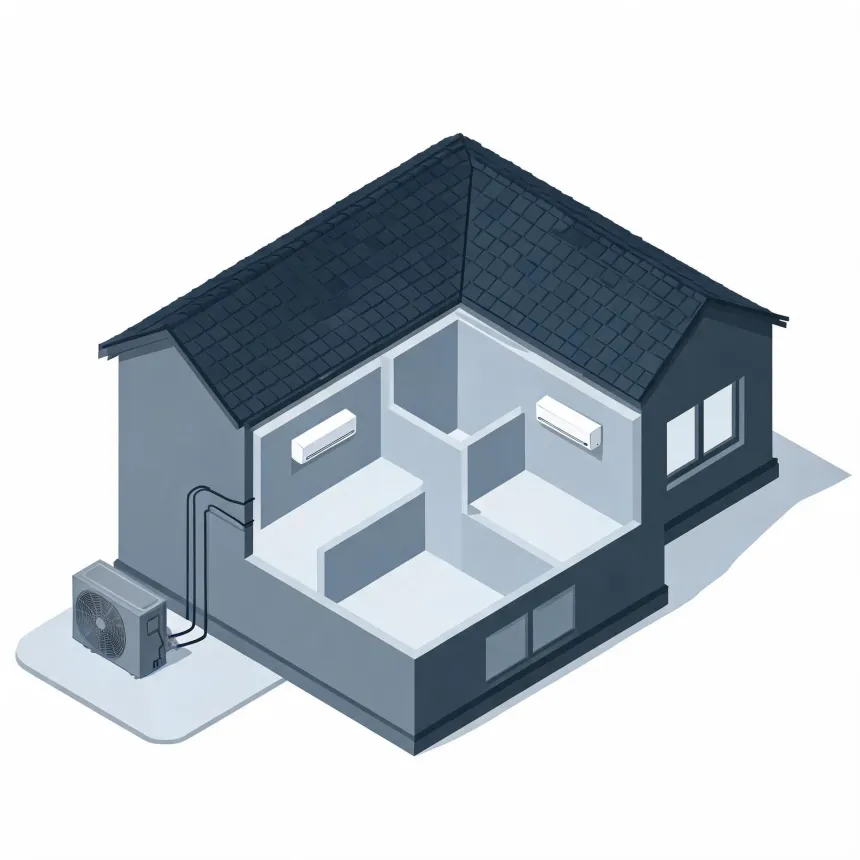
Adding a mini split means running refrigerant lines and electrical, not tying into gas piping. For a home that already heats with electricity, that makes the installation simpler to plan.
NOAA nClimDiv, 1991–2020 normals
A mini split's rated size is measured in BTUs, not in the cents per kilowatt-hour you pay to run it.
At 14.08 cents per kilowatt-hour, a correctly sized unit is what keeps the bill in check here, not a bigger one.



Barrow County logs its share of severe weather, mostly damaging wind, with a few hail events and the rare tropical storm or winter storm mixed in. None of that changes what size mini split a home here needs. Wind can knock out power, and when it comes back on, a mini split starts up on its own with no relighting or resetting. That's a reason to think about a backup plan for an outage, not a reason to size the unit bigger or smaller. The load it has to handle day to day still comes down to the house and the heat outside, and a standard size built for that is what gets installed.
Cooling here runs May through September. Have a mini split installed in April and it's running before the first hot afternoon, on your schedule instead of a rushed one.
Find a contractorWhatever is heated or cooled this place now, a contractor will need to deal with it during installation. If it's a central system, the old equipment gets disconnected and hauled off, and the ductwork either stays in place or gets capped off if the mini split is replacing it outright. If it's window units or electric baseboard, those come out or get left alone, depending on whether the mini split is covering that room or just supplementing it. Old refrigerant lines from a prior system aren't reused. A mini split runs its own line set, sized and charged for the new equipment, run fresh from the outdoor unit to each indoor head. Any old line set gets capped or removed so it's not sitting in a wall doing nothing. If there's an old electrical circuit dedicated to a previous system, an electrician checks whether it can serve the new unit or whether a new circuit is needed. None of this is urgent work the way a breakdown is. It gets scheduled as part of the install, not rushed through after the fact.
The rating on the label tells you how much electricity the unit uses to deliver its cooling or heating, not how strong it is or how big a space it can handle. A unit with a higher rating isn't a more powerful machine, just a more efficient one at moving the same heat. Sizing the unit to the room is a separate question from picking the rating.
An oversized unit with a high rating still cycles on and off fast, cooling the room quickly and shutting off before it settles into a steady run. That short cycling is where the efficiency the rating promises gets lost. A correctly sized unit, run steady, is what actually delivers the efficiency printed on the label.
Comparing quotes is mostly about making sure everyone priced the same job. Ask how many indoor heads the quote covers and which rooms each one serves, since a quote for a single zone and a quote for a multi-zone setup aren't comparable even if the number at the bottom looks similar. Ask what size is going in each room and what that's based on, not just a guess at square footage. Ask where the outdoor unit is going and how far the line set has to run to reach each head, since longer runs take more refrigerant and more labor. Ask whether the quote includes the electrical work, since a dedicated circuit or a panel upgrade changes the job. And ask what's covered if something needs adjusting after it's running, because a mini split that's slightly off on charge or airflow usually shows up in the first season, not on install day.
Install day starts with the outdoor unit and the indoor heads going in, then the line set run between them. That line gets set in place, connected, and pressure tested before anyone opens a valve, because a leak found after the charge is in means starting over. Once the test holds, the line set gets pulled into a vacuum to clear out air and moisture, not just a quick check but enough time to be sure it's dry. Only after that does the refrigerant go in, weighed to the amount the system calls for. The electrical gets tied in and the indoor heads get mounted level, since a head that's off level can drain wrong over time. Last comes the test run, checking that every zone calls for heat or cooling and actually delivers it before anyone calls the job done.